Capital Gurus®

Pros and Cons of a Secured Business Line of Credit

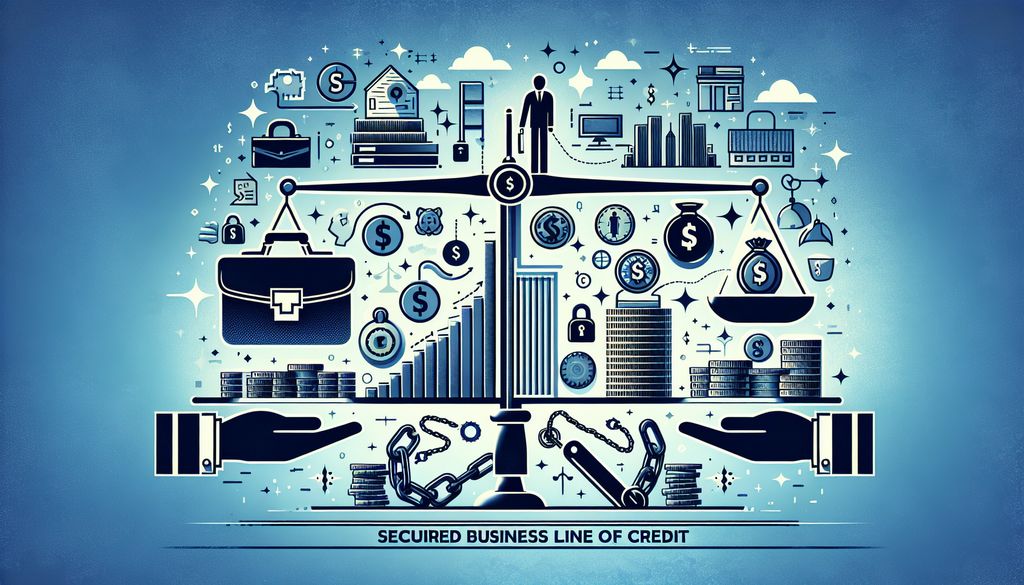
A secured business line of credit offers businesses the flexibility to access funds as needed, providing a safety net for cash flow fluctuations and unexpected expenses. However, there are important considerations to weigh when deciding whether to pursue this financing option. Understanding the pros and cons of a secured business line of credit is crucial for informed decision-making. Let’s explore the key takeaways from this comprehensive guide:

Key Takeaways

  • A secured business line of credit offers flexible access to funds, allowing businesses to draw cash as needed and utilize it for various business purposes.
  • Interest is only paid on the amount used, providing cost savings for businesses.
  • Building a strong relationship with a lender is a potential benefit of securing a business line of credit, offering opportunities for additional banking services.
  • Securing a business line of credit can contribute to building business credit, enhancing the company’s financial profile.
  • While a business line of credit provides flexibility, it may come with a complicated application process and potential fees, requiring careful consideration.

Understanding Business Lines of Credit

What is a Business Line of Credit?

A business line of credit is a versatile financing tool that provides entrepreneurs with the monetary flexibility to manage a variety of operational needs, including but not limited to, purchasing inventory, funding marketing campaigns, or covering unexpected emergency costs. Unlike traditional loans, where you get a lump sum amount and start paying interest immediately, lines of credit only charge interest on the amount you’ve actually borrowed. Their generally lower interest rates, coupled with this flexibility, make them an attractive option for small businesses. Here’s a brief comparison of business lines of credit and business loans:

Types of Lines of Credit

When we consider the financing options available to businesses, lines of credit stand out for their flexibility and accessibility. There are primarily two types of lines of credit: secured and unsecured. Secured lines of credit are backed by collateral, such as inventory or receivables, which provides lenders with an added layer of security. This often results in lower interest rates and can be a viable option for businesses with less-than-perfect credit. On the other hand, unsecured lines of credit do not require specific assets as collateral but may come with higher interest rates and typically require a stronger credit profile.

Tip: Always assess the risk associated with pledging assets when opting for a secured line of credit. It’s crucial to ensure that the benefits outweigh the potential risks involved.

Here’s a quick overview of the types of lines of credit and their characteristics:

  • Secured Business Line of Credit: Requires collateral, generally has lower interest rates.
  • Unsecured Business Line of Credit: No specific collateral required, may have higher interest rates.
  • Revolving Line of Credit: You can borrow, repay, and borrow again up to the credit limit.
  • Non-Revolving Line of Credit: Credit limit does not replenish after payments are made.

Each type offers distinct advantages and may cater to different business needs. It’s important to evaluate which line of credit aligns best with your company’s financial strategy and goals.

Pros and Cons of Lines of Credit

After carefully considering the pros and cons of acquiring a line of credit, we have identified the following key points:

  • Pros

    1. Flexible Access to Funds
    2. Interest Only on the Amount Used
    3. Lender-Borrower Relationship
    4. Building Business Credit
    5. Lower Interest Rates and Fees
  • Cons

    1. Complicated Application Process
    2. Potential Fees
    3. Accumulating Debt

In addition, it’s important to note that while a line of credit offers flexibility and access to funds, it also comes with potential complexities and costs. It’s essential to weigh these factors carefully before making a decision.

Requirements and Qualifications for Securing Credit Without a Personal Guarantee

When we seek to secure a business line of credit without a personal guarantee, we must understand the lender’s perspective. They’re looking for assurance that the business can repay the loan on its own merits. To this end, collateral or business assets may be required to back the credit line. However, not all businesses have sufficient assets for this purpose, which is where a strong business credit history and financials become crucial.

Business financials play a pivotal role in this process. Lenders will scrutinize income statements, balance sheets, and cash flow statements to gauge the company’s financial health. A positive cash flow and stable revenue streams are key indicators that the business can sustain the credit line.

Tip: Building a robust business credit profile is essential. This includes timely bill payments and responsible financial management, which can significantly enhance creditworthiness.

Additionally, the length of time the business has been operational and the personal credit history of the business owner or key stakeholders may also be considered. While the focus is on the business’s ability to repay, a good personal credit score can support the overall credit application.

In some cases, alternative financing options such as invoice factoring, equipment leasing, or merchant cash advances may be explored. These do not typically require personal guarantees and can provide access to capital based on the business’s revenue or the value of its invoices.

It’s important to note that the specific requirements and qualifications will vary depending on the lender and the type of financing sought. Research and understanding the criteria set by each potential lender is crucial before applying for credit without personal guarantees.

Eligibility and Qualifications

Establishing Relationships with Community Banks or Local Lenders

When it comes to securing a business line of credit without a personal guarantee, establishing relationships with community banks or local lenders is crucial. These institutions may be more willing to extend lines of credit based on the strength of the business itself, rather than requiring personal guarantees. Building rapport and trust with these lenders can significantly increase the chances of obtaining business credit without the need for personal guarantees. Additionally, demonstrating the company’s financial stability and showcasing a well-prepared business plan can further enhance the likelihood of securing credit from community banks or local lenders.

Exploring Alternative Financing Options

When exploring alternative financing options, it’s crucial to compare and contrast the different funding options available to small businesses. This comparison should consider factors such as interest rates, repayment terms, and minimum monthly payments. Additionally, it’s important to evaluate whether you’re willing to put up an asset as collateral for a secured loan. To aid in this comparison, consider the following structured list of factors to consider:

  • A minimum credit score requirement
  • A detailed business plan outlining goals and financial projections
  • Possible collateral options
  • Income statements and financial records
  • Proof of business ownership
  • Liquid assets or down payment requirements
  • Personal guarantee or co-signer options

By carefully comparing these factors, small businesses can make informed decisions about the best financing options for their specific needs.

Seeking Out Business Credit Cards with Higher Limits

In our quest to bolster our financial agility, we’ve recognized the value of seeking out business credit cards with higher limits. These cards not only offer greater spending flexibility but also come with a suite of benefits tailored for business needs. For instance, the Divvy Business Card stands out with its generous credit limit of up to $15 million, alongside rewards for purchases—features not commonly found in traditional business lines of credit.

When considering business credit cards, it’s important to weigh the potential for higher credit limits against the cost of borrowing. Here’s a quick comparison to illustrate the differences:

  • Credit Cards: May offer grace periods on purchases, allowing for interest-free short-term borrowing if the balance is paid monthly.
  • Lines of Credit: Typically charge interest from the moment funds are drawn, which accrues until the balance is paid in full.

Tip: Always review the terms and interest rates of credit cards to ensure they align with your business’s financial strategy.

Eligibility for high-limit cards often hinges on the business’s creditworthiness and financial health. It’s crucial to maintain a strong credit profile and a transparent relationship with financial institutions. By doing so, we open the door to more advantageous credit options that can support our business operations and growth.

Building a Strong Relationship with Existing Suppliers

When it comes to building a strong relationship with our existing suppliers, we understand the importance of trust and open communication. By maintaining a positive payment history and demonstrating financial responsibility, we can solidify our reputation and reliability with our suppliers. This not only paves the way for more favorable credit arrangements but also enhances our access to larger lines of credit without the need for personal guarantees. Additionally, we prioritize open channels of communication to address any concerns or issues promptly, ensuring a smooth and mutually beneficial partnership. By following these steps, we can strengthen our relationships with existing suppliers and secure the support we need for our business.

Factors Considered by Lenders

Credit Score

A credit score is a crucial factor in loan approval. A higher credit score indicates lower risk for lenders and increases the chances of loan approval. Conversely, a low credit score may result in higher interest rates or even rejection of the loan application. Lenders also carefully review a business’s financial statements to assess its financial health. They analyze income statements to understand revenue generation and profitability trends. Balance sheets provide insights into the company’s assets, liabilities, and equity. Cash flow statements help evaluate whether the business can generate sufficient cash flow to repay the loan. Additionally, lenders may assess the borrower’s industry experience, management team, and business plan to determine if the loan is a suitable investment.

Financial Statements

When applying for a business line of credit, we understand the importance of providing thorough financial accounts and reports to analyze our business’s financial health. This may comprise income tax returns, cash flow statements, accounts payable, and profit and loss statements. Providing accurate and up-to-date financial data is vital for showing our business’s trustworthiness. Lenders often want to see proof of continuous income creation to verify that our organization can return the borrowed cash. Proof of income and profitability, like as sales records, invoices, or bank statements, may be sought throughout the application process. Your personal and corporate credit history plays a vital part in the approval procedure. Lenders will evaluate your credit ratings, payment history, and any prior defaults or.

Industry Experience and Business Plan

When it comes to securing a business loan, industry experience and a well-developed business plan play a crucial role in the evaluation process. Our understanding of the industry and the strategies outlined in our business plan demonstrate our preparedness and commitment to success. Additionally, our detailed financial projections and risk analysis provide lenders with the confidence they need to support our business venture. By showcasing our expertise and vision, we position ourselves as a reliable investment for potential lenders. It’s essential to convey a clear understanding of our industry and a comprehensive business plan to secure the financing we need.

In addition to industry experience and business plans, lenders also evaluate other factors such as credit score, financial statements, and collateral. These elements collectively contribute to the overall assessment of our creditworthiness and the risk associated with lending to our business idea. By addressing each of these factors with diligence and precision, we can enhance our chances of securing the necessary funding for our business venture.

Types of Loans for Small Businesses

SBA Loans (Small Business Administration)

When we consider financing options for small businesses, SBA loans stand out as a reliable choice. These loans are made by private lenders but are backed by the Small Business Administration (SBA), which reduces the risk for lenders and can lead to more favorable terms for borrowers. SBA loans are particularly attractive due to their low interest rates and extended repayment terms, making them a viable option for long-term growth and stability.

Eligibility for SBA loans requires meeting certain criteria, which can include a strong credit history, a solid business plan, and sometimes collateral. While the process can be rigorous, the benefits are substantial. For instance, SBA 7(a) loans, the most common type, can be used for a wide range of business needs, from working capital to equipment purchases.

Tip: Before applying for an SBA loan, ensure you have all your financial statements in order and understand the specific requirements of the loan program you’re interested in.

Here’s a quick overview of the types of SBA loans available:

  • 7(a) Loan Program: Versatile loans for various business purposes.
  • 504 Loan Program: Long-term financing for major fixed assets.
  • Microloan Program: Smaller loans up to $50,000 for specific small-scale needs.

Remember, while SBA loans offer numerous advantages, they are not the only financing option available. It’s crucial to assess your business’s specific needs and explore various funding sources to determine the best fit.

Business Line of Credit

A business line of credit is a flexible form of financing that allows us to borrow money as needed, rather than receiving funds as a lump-sum payment such as with a small business loan. Instead of paying interest on the entire credit line, we owe interest only on the funds we use. This type of loan is ideal for managing cash flow fluctuations or unexpected expenses. It provides us with the flexibility to access funds when necessary, and the ability to repay and reuse the funds as needed. Here’s a brief comparison of business line of credit vs. business loan:

Aspect Business Line of Credit Business Loan
Repayment Structure Flexible Fixed
Interest Accumulation On funds drawn On entire amount borrowed
Access to Funds As needed Lump sum
Ideal for Short-term needs Long-term investments

In summary, a business line of credit offers us the flexibility and control to manage our finances effectively, making it a valuable financing option for our business.

Equipment Financing

Equipment financing is a type of loan that is used to purchase equipment. The equipment is used as collateral for the loan, so it can be a good option for businesses that don’t have a lot of collateral. With this type of loan, you borrow money to purchase the equipment and then make payments over time, typically 1-5 years. It’s advantageous for businesses that rely heavily on specialized machinery or technology. When considering equipment financing, it’s important to evaluate the cost of the equipment, the repayment terms, and the impact on cash flow. Additionally, businesses should ensure that the equipment being financed aligns with their long-term operational needs and growth plans.

Here’s a comparison of equipment financing with other types of loans:

Loan Type Repayment Terms Collateral Required
Equipment Financing 1-5 years Equipment
SBA Loans Varies Business assets
Business Line of Credit Revolving Varies

When comparing equipment financing with other types of loans, businesses should consider the specific needs of their operations and the long-term impact on their financial stability. It’s essential to assess the total cost of ownership, including interest and fees, to make an informed decision.

Using Personal Funds to Loan Money to Your Business

Benefits of Using Personal Funds

When we consider infusing our business with personal funds, we’re looking at a strategy that offers several advantages. Firstly, it provides immediate access to capital, bypassing the often lengthy and bureaucratic process of securing a business loan. This can be particularly beneficial in times of urgent need or when taking advantage of time-sensitive business opportunities.

Moreover, using personal funds means we avoid the potential costs associated with business loans, such as interest rates and processing fees. It also eliminates the need for collateral, which is often required for secured loans. By using our own money, we retain full control over the financial aspects of our business without the added pressure from lenders or investors.

However, it’s important to recognize that this approach does carry risks, primarily the exposure of personal assets to business liabilities. We must carefully weigh these risks against the benefits to ensure that our personal financial health remains secure while supporting our business endeavors.

Immediate access to capital
No interest rates or processing fees
No collateral required
Full financial control

Tip: Always have a clear and formal repayment plan in place when loaning personal funds to your business to maintain clear financial boundaries.

Pros and Cons of Getting a Line of Credit

Pros

When we consider the advantages of a secured business line of credit, several key benefits stand out. Firstly, it provides us with the flexibility to access funds as needed, without having to reapply each time. This is particularly useful for managing cash flow and addressing unexpected expenses. Moreover, we only pay interest on the amount we actually draw, which can lead to significant cost savings compared to other financing options.

Another major pro is the potential for lower interest rates due to the collateral backing the credit line. This security can also make it easier for businesses with less established credit histories to obtain financing. Additionally, a secured line of credit can help us build a strong business credit profile, which is beneficial for future financial endeavors.

Here are some of the pros at a glance:

  • Flexible access to funds
  • Interest only on funds drawn
  • Lower interest rates with collateral
  • Easier qualification for less established businesses
  • Builds business credit profile

Tip: Always assess the value of the collateral you’re offering against the credit limit you’re receiving to ensure it’s a favorable trade-off.

Cons

When considering a line of credit for our business, it’s important to weigh the pros and cons carefully. Here’s a brief overview of the key points to consider:

  • Pros

    • Quick access to funds when needed
    • Helps avoid overborrowing
    • Interest is only paid on borrowed funds
  • Cons

    • May require a personal guarantee
    • Difficult to obtain for newer businesses or bad-credit applicants
    • Often has annual fees, draw fees, and other costs

It’s essential to assess our business’s specific needs and financial situation to determine whether a line of credit is the right choice for us. Additionally, building a strong relationship with existing suppliers can also be beneficial in managing our business’s financial needs.

Secured vs. Unsecured Business Lines of Credit

Secured Business Line of Credit

When we consider financing options for our business, a secured business line of credit often emerges as a viable choice. This type of credit requires us to pledge assets as collateral, providing lenders with a safety net in case of default. Common forms of collateral include inventory, accounts receivable, or real estate equity.

Secured lines of credit typically offer larger credit limits and lower interest rates than their unsecured counterparts, making them an attractive option for businesses that can provide the necessary security. However, it’s crucial to assess our ability to meet the repayment terms to avoid risking our assets.

Tip: Before opting for a secured line of credit, ensure that your business cash flow is robust enough to handle potential debt service without jeopardizing operations.

Here are some key considerations for a secured business line of credit:

  • Larger credit limits due to collateral backing
  • Lower interest rates as the lender’s risk is mitigated
  • The need for valuable assets to pledge as collateral
  • The risk of losing assets in the event of default

Understanding these factors will help us determine if a secured business line of credit aligns with our financial strategy and risk tolerance.

Unsecured Business Line of Credit

An unsecured business line of credit offers a flexible financing solution for businesses that may not have significant assets to use as collateral or prefer not to secure their borrowing against company assets. We understand the importance of maintaining liquidity and protecting personal property, which is why we consider this option particularly beneficial for small business owners.

With an unsecured line of credit, you’re granted access to a predetermined amount of funds without the need to pledge specific assets. This means you can draw upon these funds as needed, paying interest only on the amount you utilize. It’s essential to recognize, however, that unsecured lines typically come with higher interest rates compared to secured options, reflecting the increased risk to the lender.

Tip: Always assess your business’s financial health and risk tolerance before deciding on an unsecured line of credit. It’s crucial to ensure that the flexibility does not come at an unsustainable cost.

Eligibility for an unsecured business line of credit often hinges on your creditworthiness and business track record. Lenders may also require a personal guarantee, which could impact your personal credit if the business fails to make payments. Here’s a quick checklist to consider when evaluating if an unsecured business line of credit is right for you:

  • Strong personal and business credit scores
  • Solid business performance history
  • Understanding of the higher interest rates and potential personal guarantee implications

By carefully weighing these factors, we can make informed decisions that align with our business objectives and financial strategies.

Comparison of Business Lines of Credit

Top Business Lines of Credit

When it comes to selecting the best business lines of credit, we’ve done the legwork to identify options that cater to a variety of needs. Whether you’re seeking flexibility, a secured line, or a solution tailored for startups, there’s a line of credit out there for you.

For those valuing flexibility, Bluevine Business Line of Credit stands out with competitive APRs starting at 6.20% and loan amounts up to $250,000. Established businesses might prefer the robust offerings from big banks like Wells Fargo BusinessLine.

Startups can find solace in Fundbox Line of Credit, which understands the unique challenges new businesses face. And if a secured line of credit aligns with your needs, American Express® Business Line of Credit offers a compelling option.

Tip: Always compare the APRs, terms, and fees across multiple lenders to ensure you’re getting the best deal for your business’s financial situation.

Remember, each lender has its own set of qualification requirements, so it’s crucial to review these before applying to ensure you meet the criteria and maximize your chances of approval.

What is a Business Line of Credit?

A business line of credit is a fixed amount of capital that a firm may draw from when required and pay back later. Unlike a standard term loan, a line of credit gives flexibility as firms may utilize the cash as and when they need it for different company expenditures, such as inventory, supplies, or operational costs. The fundamental difference between a line of cash and a term loan is that a line of credit is revolving, meaning that after the borrowed amount is paid back, the funds become available again for future usage. This type of financing provides businesses with the monetary flexibility to manage a variety of operational needs, including but not limited to, purchasing inventory, funding marketing campaigns, or covering unexpected emergency costs. Lines of credit only charge interest on the amount you’ve actually borrowed, making them a versatile financing tool for small businesses. A business line of credit is a revolving type of business loan, allowing businesses to withdraw funds whenever the need arises, as long as the credit limit isn’t exceeded. Interest then accumulates on the funds that are drawn, usually at a variable rate. Repayments are made daily, weekly, or monthly, making it useful for small business owners looking to cover short-term needs. In contrast, a small business term loan is a lump sum of money given with a fixed interest rate and paid back through fixed monthly payments. A business line of credit is similar to a business credit card, allowing small businesses to access funds when needs arise instead of the lump sum a business loan would provide. Interest rates on business lines of credit are typically lower than those of a business credit card. Lenders set credit limits and interest rates based on factors like how long the current owner has been in business, the business’s credit history, and the business’s financial statements. A business line of credit is a versatile financing tool that provides entrepreneurs with the monetary flexibility to manage a variety of operational needs, including but not limited to, purchasing inventory, funding marketing campaigns, or covering unexpected emergency costs. Unlike traditional loans, where you get a lump sum amount and start paying interest immediately, lines of credit only charge interest on the amount you’ve actually borrowed. Their generally lower interest rates, coupled with this revolving feature, make them a popular choice for small businesses.

Types of Lines of Credit

A business line of credit is a flexible form of financing that allows business owners to borrow money as needed, rather than receiving funds as a lump-sum payment such as with a small business loan. Instead of paying interest on the entire credit line, borrowers owe interest only on the funds they use. There are two main types of business lines of credit: secured and unsecured. Secured lines of credit are typically easier to qualify for and have lower interest rates. But they require collateral that the lender can repossess if you are unable to make your required payments. Unsecured lines of credit, on the other hand, don’t require specific collateral, but they may have higher interest rates and stricter qualification criteria. Here’s a comparison of the two types:

Type of Line of Credit Qualification Interest Rates
Secured Easier Lower
Unsecured Stricter Higher

Pros and Cons of Lines of Credit

When we consider the financial tools available for businesses, lines of credit stand out for their versatility and accessibility. Pros of a business line of credit include flexible access to funds, which allows businesses to draw cash as needed for any lawful purpose. This flexibility is particularly beneficial for managing cash flow gaps or unexpected expenses. Moreover, only paying interest on the amount used can lead to significant savings, especially when compared to other financing options like credit cards.

However, there are also Cons to be mindful of. The application process can be complicated and time-consuming, often requiring detailed financial documentation. Additionally, while lines of credit provide quick access to funds, they may come with various fees, such as maintenance, annual renewal, and draw fees. It’s also worth noting that lines of credit may have higher interest rates than traditional term loans and could lead to accumulating debt if not managed carefully.

Tip: Establish a clear repayment strategy to avoid the pitfalls of accumulating debt and ensure that the line of credit remains a beneficial tool for your business.

In summary, a business line of credit can be a powerful financial instrument if used wisely. It’s crucial to weigh these pros and cons against your business’s specific needs and financial situation before deciding.

Who Should Get a Line of Credit?

When we consider the suitability of a business line of credit, it’s clear that this financial tool is not a one-size-fits-all solution. It is particularly beneficial for businesses that require flexible access to capital. Here are some scenarios where a line of credit might be the right choice:

  • Businesses experiencing seasonal fluctuations in cash flow that need to bridge the gap during off-peak times.
  • Companies with short-term operational costs, such as inventory purchases or emergency repairs, that need immediate funding.
  • Organizations that have customers with longer payment cycles, ensuring they have the necessary working capital to continue operations.
  • Enterprises that prefer having a safety net of funds available for unforeseen expenses without the need to apply for a loan each time.

Tip: Always assess your business’s financial health and borrowing needs before deciding to apply for a line of credit.

It’s important to note that while a line of credit offers flexibility, it also requires discipline to manage effectively. Businesses should have a clear understanding of their repayment capacity and avoid overextending their credit utilization.

Alternatives to Lines of Credit

When considering alternatives to lines of credit, it’s important to evaluate the specific financing needs of your business. While a business line of credit offers flexibility and cost-effective financing, there are other options to consider based on your unique requirements. Here are a few key points to keep in mind:

  • Small Business Loans: Unlike a business line of credit, small business loans provide a lump sum of cash, making them suitable for large purchases and long-term financing needs.

  • Invoice Financing: This option allows businesses to leverage unpaid invoices for immediate cash flow, making it ideal for managing accounts receivable.

  • Merchant Cash Advances: For businesses with consistent credit card sales, merchant cash advances offer a quick infusion of capital based on future credit card sales.

  • Equipment Financing: Businesses in need of specific equipment can explore equipment financing, which allows for the purchase of necessary machinery without a large upfront cost.

  • SBA Loans: Small Business Administration loans provide longer repayment terms and lower interest rates, making them suitable for various business purposes.

When exploring these alternatives, it’s essential to assess the specific financial requirements and long-term goals of your business to determine the most suitable financing option.

Where to Get a Line of Credit

When we’re considering where to obtain a business line of credit, it’s essential to explore various avenues to find the best fit for our company’s needs. Traditional banks are often the first port of call due to their established reputation and potential for lower interest rates. However, we shouldn’t overlook online lenders, which can offer more flexible terms and faster approval times.

  • Traditional Banks
  • Online Lenders
  • Credit Unions
  • Community Banks

Each of these institutions has its own set of advantages, and it’s crucial to compare them based on factors such as the ease of application, interest rates, credit limits, and repayment terms. It’s also beneficial to consider any existing relationships your business may have with financial institutions, as these can sometimes lead to more favorable terms.

Tip: Before applying for a line of credit, ensure you have a clear understanding of your business’s financial situation and creditworthiness. This will help you present a strong case to potential lenders and secure the best possible terms.

How to Manage a Business Line of Credit

Effectively managing a business line of credit is essential for maintaining financial health and ensuring that this tool serves its purpose as a flexible financing option. We must regularly review the terms and usage of our credit line, keeping a close eye on interest rates, repayment schedules, and credit utilization. This vigilance allows us to make informed decisions about future borrowing and adjust our borrowing habits based on our business’s performance and market conditions.

Integrating the business line of credit into our overall financial management strategy is crucial. We should have a clear strategy for how we will use the funds before tapping into the credit line, avoiding borrowing more than necessary or for non-essential purposes. Here are some key steps we recommend for managing your business line of credit:

  • Plan your borrowing: Before drawing from your line of credit, determine the specific needs and how the funds will support your business goals.
  • Monitor and adjust: Keep track of your borrowing and repayments, and adjust your strategy as your business needs change.
  • Integrate with financial management: Ensure that your line of credit is part of a broader financial plan, aligning with other financial tools and resources.

Tip: Establish internal guidelines for borrowing to prevent overextending financially and to maintain a healthy credit score.

By following these practices, we can capitalize on the flexibility of a business line of credit while managing risks and borrowing responsibly.

Frequently Asked Questions

We hope our comprehensive guide has provided you with valuable insights into business lines of credit. As we wrap up, remember that the right financial tools can be pivotal for your business’s growth and stability. Whether you’re considering a secured or unsecured line of credit, it’s crucial to weigh the pros and cons and understand the commitment you’re making.

To further assist you, we’ve compiled a list of essential considerations:

  • Assess your business’s financial health and funding needs.
  • Understand the terms and conditions of the credit line.
  • Plan for the management and repayment of borrowed funds.
  • Consider the potential impact on your business credit score.

Tip: Always keep a keen eye on your business’s cash flow and be proactive in managing your line of credit to avoid over-leveraging.

We encourage you to ask questions, seek advice, and thoroughly evaluate your options before making a decision. If you have any lingering questions, don’t hesitate to reach out to financial advisors or the lending institutions for clarity. Your business’s financial well-being is paramount, and making informed choices will set you on the path to success.

When it comes to financing your business, a business line of credit can be a flexible and convenient option. At Apply – Capital Gurus®, we understand the diverse needs of businesses and offer tailored solutions to help you succeed. Our business lines of credit provide quick access to funds, allowing you to manage cash flow, cover unexpected expenses, and seize growth opportunities. Whether you’re a small startup or an established enterprise, our team is dedicated to supporting your financial goals. Apply for a business line of credit today and take the next step towards achieving your business objectives.

Conclusion

In conclusion, a secured business line of credit offers flexible access to funds, interest only on the amount used, and the opportunity to build business credit. However, it comes with a complicated application process, potential fees, and the requirement for collateral. Prospective borrowers should carefully consider the pros and cons to make an informed decision for their business financing needs.

Frequently Asked Questions

How does my line of credit payback work?

With a Capital Gurus
Line of Credit, draws are consolidated into one loan with one easy weekly payment. As you pay back your
principal, you replenish available funds. Depending on the funding provider, your line of credit may have no draw fees; some providers charge a monthly maintenance fee. All fees are disclosed in your offer before you sign. Adjust the payment amount and term to ensure a comfortable weekly payment.

Can I get a credit line increase?

There are some times when you could really use access to additional funds. Based on your cash flow, net income and payback
history, you may be eligible for a credit line increase.

How much will it cost?

The total cost of your line of credit will vary based on a number of factors, including your personal and business credit scores,
time in business and annual revenue and cash flow.

What other small business loans can I get in addition to my line of credit?

You may have a project that could benefit from other types of small business loans beyond your business line of credit. At Capital
Gurus we understand, and we offer term loans that provide lump-sum funding up to $250,000. Reach out to your dedicated loan
advisor if you think a term loan could help your business.

How can I use my line of credit to build business credit?

Depending on the funding provider, your on-time payments may be reported to business credit bureaus. Ask your funding specialist whether the provider behind your offer reports payment history — when it does, paying on time helps your business build a strong
credit profile.

What are the types of business lines of credit?

Secured business line of credit. This type of line of credit requires businesses to put up specific assets as collateral. Since a
line of credit is a short-term liability, lenders typically ask for short-term assets, like accounts receivable or inventory.
Unsecured line of credit. While this type of line of credit doesn’t require specific collateral, your lender will likely place a
general lien on your business and require a personal guarantee from you. You’ll likely need a stronger credit profile to qualify
and interest rates may be higher. Additionally, keep in mind that unsecured lines of credit typically come with a lower credit
limit.
Revolving line of credit. With this type of line of credit, you replenish your available funds as you repay what you borrow. This
gives you access to future funding without needing to reapply. Capital Gurus business line of credit is a revolving line of
credit.
Non-revolving line of credit. A non-revolving line of credit is just like a revolving line of credit except your available funding
doesn’t replenish as you make payments. You’re given a capped credit limit, and when you reach that amount, you exhaust your
funding.

What is a business line of credit and how does it work?

A business line of credit is a type of funding that allows you to borrow from a set amount of money. You’re given a credit limit,
and within it you can draw what you need, when you need it. You only pay interest and fees on what you borrow. Compared to a term loan, a business line of credit is typically used to cover recurring business expenses or bridge cash flow gaps. With Capital Gurus, you replenish your available funds as you repay what you borrow. This is known as a revolving business line of credit. To help you build your credit, we report your payment history to the business credit bureaus.

What are the eligibility criteria for obtaining a line of credit at Capital Gurus?

Apply now to see how much working capital your business may qualify for in just a few minutes. All you need to qualify is 1 year in business, $10k+ in monthly revenue, and a 625 FICO Score.
Declined for a Business Loan? Take These Next Steps

Securing a loan for your business is a crucial step in obtaining the necessary funds to start or grow your company. If you’ve been declined for a business loan, it’s essential to take the right next steps to increase your chances of approval. This article provides valuable insights into the factors considered by lenders, application process duration for an SBA loan with bad credit, requirements for obtaining a business loan, government-backed programs and grants, choosing between traditional banks and alternative lending options, types of loans available for small businesses, and using personal funds to loan money to your business. By understanding these key areas, you can navigate the loan process more effectively and improve your chances of securing the funding you need.

Key Takeaways

  • Assess your financial situation thoroughly
  • Improve your credit score by paying bills on time and reducing credit card balances
  • Explore alternative lending options
  • Prepare thoroughly for reapplication
  • Understand the reasons for the rejection

Steps to Increase Approval Chances

Prepare a comprehensive business plan

After preparing a comprehensive business plan, we need to ensure that our growth and marketing strategies are updated with details. This includes a business forecast with details on future cash flow and costs. Additionally, we should have documentation of underserved representation, especially for loans aimed at women-owned businesses. It’s important to be prepared to include documents that were used when creating the business plan, as banks require evidence of profitability and the ability to repay the loan. Choosing a lender is the next step, and it’s crucial to narrow down the search to those that offer the type of financing we are looking for and are likely to approve our loan application based on our qualifications.

Offer collateral or personal guarantees

When applying for a business loan, we understand the importance of offering collateral or personal guarantees to increase our chances of approval. Collateral provides lenders with security and reassurance, while a personal guarantee demonstrates our commitment to repaying the loan. It’s essential to carefully consider the implications of both options and ensure that we are in a strong financial position to fulfill these obligations. Additionally, we should be prepared to provide structured, quantitative data to support our collateral or personal guarantee, such as real estate, equipment, or other tangible assets. This will help strengthen our loan application and showcase our dedication to securing the necessary funding for our business.

Demonstrate positive cash flow

We understand the importance of demonstrating a healthy cash flow to lenders. It’s a clear indicator of our business’s ability to sustain operations and manage financial obligations. To effectively showcase this, we maintain meticulous records and ensure our financial statements reflect a positive cash flow. Here’s a simple breakdown of what we focus on:

  • Revenue Streams: Diversifying and maintaining consistent income sources.
  • Expense Management: Keeping costs under control to maximize profitability.
  • Debt Servicing: Demonstrating the capacity to meet current and future debt payments.

Tip: Regularly review and optimize your cash flow management strategies to maintain lender confidence.

By presenting a solid track record of positive cash flow, we not only reassure lenders of our repayment capabilities but also position ourselves as a lower-risk investment. It’s essential to have at least three months of business bank statements on hand, as many lenders will request this documentation to assess our financial health.

Seek assistance from SBA-approved lenders

When seeking assistance from SBA-approved lenders, it’s crucial to carefully evaluate the lender’s expertise and track record in working with small businesses. Look for lenders who understand the unique challenges faced by businesses with bad credit and have a history of successfully supporting such businesses. Additionally, consider the lender’s application process and approval timeline to ensure it aligns with your business needs and goals. By choosing the right SBA-approved lender, you can significantly improve your chances of securing the financing your business needs.

Factors Considered by Lenders

Credit Score

When it comes to business loans, our credit score is a critical factor that lenders consider. A higher credit score indicates lower risk for lenders and increases our chances of loan approval. Conversely, a low credit score may result in higher interest rates or even rejection of the loan application. It’s important to prioritize timely payments for all financial obligations and aim to keep our credit utilization below 30% to demonstrate responsible credit management. Additionally, reducing credit card balances and monitoring our credit report for inaccuracies are essential strategies for improving our credit score.

Financial Statements

We understand the importance of financial statements in the eyes of lenders. These documents are a testament to the financial health and operational success of your business. They typically include a balance sheet, income statement, and cash flow statement, each providing crucial insights into your company’s financial stability.

  • Balance Sheet: Offers a snapshot of your company’s financial position at a specific point in time, detailing assets, liabilities, and shareholders’ equity.
  • Income Statement: Reflects the company’s financial performance over a period, showing revenue, expenses, and profits or losses.
  • Cash Flow Statement: Tracks the flow of cash in and out of your business, highlighting your company’s liquidity and ability to sustain operations and repay debts.

Tip: Ensure your financial statements are accurate, up-to-date, and professionally prepared. This can significantly bolster your credibility with potential lenders and increase your chances of loan approval.

Industry Experience and Business Plan

When evaluating loan applications, lenders carefully consider several key factors to assess the creditworthiness and viability of the business. Our industry experience and business plan play a crucial role in demonstrating our understanding of the market and competition. Additionally, our financial statements provide insights into our revenue generation and profitability trends. A well-developed business plan showcases our goals, strategies, and financial projections, while positive cash flow demonstrates our financial stability. Collateral, if required, provides lenders with reassurance and an additional source of repayment in case of default. By addressing these factors, we can present a strong case to lenders and increase our chances of securing a business loan.

Application Process Duration for an SBA Loan with Bad Credit

Factors Influencing Application Process Duration

The application process for an SBA loan with bad credit can vary in duration depending on several factors. Firstly, the complexity of the loan request and the completeness of the required documents can impact the time it takes to process the application. Additionally, the workload and efficiency of the lending institution can also affect the timeline. It is important to note that while a bad credit score may not disqualify an applicant from obtaining an SBA loan, it may result in additional scrutiny and documentation requirements, which can further prolong the application process.

Factors Affecting Timeline:

  1. Completeness and accuracy of application: Providing all required information and documents accurately can help expedite the approval process.
  2. Complexity of the loan request: Loans with more complex structures or larger amounts may require additional time for evaluation and analysis.
  3. Responsiveness of both parties: Timely communication and prompt provision of requested documents from the borrower and lender can help speed up the approval process.
  4. Workload of the lender: The workload of the lender can impact their ability to review and approve loan applications within a specific timeframe.

It’s important for borrowers to ensure they submit a complete and accurate application, maintain good creditworthiness, and promptly respond to any requests from the lender to minimize delays in the approval process.

Tips to Expedite the Application Process

When seeking to expedite the application process for a business loan, it’s crucial to maintain a positive and proactive approach. By promptly responding to any requests for additional information, we can streamline the process and demonstrate our commitment to securing the loan. Additionally, collaborating with experienced professionals, such as accountants or attorneys specializing in business loans, can ensure that all necessary paperwork is properly prepared and submitted. Effective communication between applicants and lenders is key to expediting the approval process, as it allows for the swift resolution of any outstanding queries or concerns. Furthermore, a strong credit profile, coupled with a well-prepared and organized application, can positively influence the approval timeline. Remember, preparation and collaboration are essential in expediting the application process and increasing our chances of securing the loan.

Requirements for Obtaining a Business Loan

Credit Score and History

Understanding your credit score and history is pivotal when seeking a business loan. Lenders scrutinize this information to gauge your financial responsibility and predict future behavior. Here’s how we can strengthen our credit profile:

  • Regularly monitor your credit report to identify and correct any inaccuracies. Each major credit bureau provides a free report annually.
  • Build a positive credit history by ensuring timely payments and keeping credit utilization low. This demonstrates to lenders our commitment to financial discipline.
  • Address negative items on your credit report proactively. This may involve negotiating with creditors or setting up payment plans to resolve outstanding debts.

Tip: Aim to keep your credit utilization ratio below 30% to maintain a healthy credit score.

By taking these steps, we not only improve our chances for loan approval but also potentially secure more favorable terms. It’s a continuous process that requires attention and action, but the benefits to our business’s financial health are well worth the effort.

Business Plan

After preparing a comprehensive business plan, we must ensure that it includes an executive summary, market analysis, and financial projections. This demonstrates to lenders that we have thoroughly researched and planned our venture. Additionally, we should assess our personal finances, including credit score, debt-to-income ratio, and savings, to determine our financial stability and increase our chances of securing a loan. It’s important to have a well-crafted business plan and a strong financial position to improve our approval chances.

Collateral

After being declined for a business loan, it’s important to consider alternative options to increase our approval chances. One key consideration is the use of collateral, which can significantly impact our ability to secure a loan. Collateral provides lenders with reassurance and can open up more choices for us. It’s essential to carefully evaluate the types of collateral that can be used, such as real estate, equipment, or inventory, and understand their impact on securing a loan. Additionally, building relationships with potential lenders and seeking assistance from SBA-approved lenders can also improve our chances of obtaining the necessary funding for our business. By taking these next steps, we can position ourselves for success and increase our likelihood of securing the financing we need.

Government-Backed Programs and Grants

Small Business Administration (SBA) Loans

When we’re faced with the challenge of securing funding, SBA loans stand out as a viable option for many small businesses. These loans, partially guaranteed by the U.S. Small Business Administration, offer a range of benefits including lower interest rates and favorable repayment terms. They are available in amounts from less than $50,000 up to $5 million, catering to a wide spectrum of business needs.

Here’s a quick overview of the types of SBA loans available:

  • 7(a) Loan Program: The most versatile, covering a variety of business expenses.
  • 504 Loan Program: Specifically for purchasing major fixed assets.
  • Microloan Program: For smaller needs up to $50,000.

Tip: To increase your chances of approval, ensure you have a solid business plan and all necessary documentation prepared before applying.

While the SBA guarantees a portion of these loans, remember that the application process can be rigorous and may require a personal guarantee. It’s essential to weigh the pros and cons and consider how an SBA loan aligns with your business objectives and financial situation. Should you decide to proceed, patience and thorough preparation will be your allies in navigating the application process.

Grants for Research and Development

Government-backed grant programs, such as the Small Business Innovation Research (SBIR) program and the Small Business Technology Transfer (STTR) program, allocate federal research funds to small businesses engaged in R&D activities. These grants provide funding that does not need to be repaid, allowing entrepreneurs to invest in developing their ideas without taking on additional debt. The grants are typically offered by government agencies or private organizations with an interest in promoting innovation. They play a crucial role in supporting new business ideas and fostering technological advancements.

Choosing Between Traditional Banks and Alternative Lending Options

Traditional Banks

We understand that when it comes to securing a business loan, traditional banks are often the first port of call. They offer the familiarity of established institutions, potentially lower interest rates, and the possibility of building a long-term banking relationship. However, it’s important to recognize that traditional banks may have more stringent eligibility criteria, which could include a thorough review of your financial statements, a solid business plan, and a strong credit history.

Pros of Traditional Banks:

  • Stability and trust in well-known institutions
  • Competitive interest rates for qualified borrowers
  • Opportunities for additional financial services and advice

Cons of Traditional Banks:

  • Rigorous application process with extensive documentation
  • Longer wait times for loan approval and funding
  • Higher credit and collateral requirements

If you’re considering a traditional bank for your business loan, prepare diligently. Ensure your financial documents are in order, your business plan is comprehensive, and you understand the bank’s lending criteria. This preparation can be the key to a successful application.

Alternative Lending Options

When we consider alternative lending options, we’re looking at a diverse landscape that can offer quicker access to capital compared to traditional banks. These options include online lenders, peer-to-peer (P2P) platforms, and lending marketplaces that match your business with potential lenders based on your qualifications.

Here are some of the pros of alternative lending:

  • Speed: Faster application and approval times mean you can access funds when you need them most.
  • Flexibility: More lenient eligibility criteria can help businesses with less established credit histories or those in need of tailored loan products.
  • Variety: A wide range of loan types, such as invoice financing and merchant cash advances, cater to specific business needs.

However, it’s important to be mindful of the cons:

  • Cost: Generally, these lenders charge higher interest rates due to the increased risk they take on.
  • Short-term focus: Many alternative loans are designed for short-term needs, which may not suit all business strategies.

Tip: Always compare the terms and conditions of different lenders to ensure you’re getting a fair deal that aligns with your business’s financial goals.

Types of Loans Available for Small Businesses

SBA Loans (Small Business Administration)

When it comes to financing options for small businesses, it’s crucial to consider the types of loans that best suit our business needs. One such option is the Small Business Administration (SBA) loans, which are guaranteed by the Small Business Administration, making them less risky for lenders. These loans offer longer repayment terms and lower interest rates compared to traditional bank loans. They are suitable for various purposes such as working capital, equipment purchase, or real estate acquisition.

In addition to SBA loans, other types of loans available specifically designed for small businesses include:

Loan Type Description
SBA Loans Guaranteed by the Small Business Administration, offering longer repayment terms and lower interest rates.
Business Line of Credit Provides a revolving source of funds for managing cash flow fluctuations or unexpected expenses.
Equipment Financing Allows businesses to purchase necessary equipment without paying the full cost upfront.
Invoice Financing Provides funds based on outstanding invoices, helping to maintain a steady cash flow.
Merchant Cash Advances Offers a lump sum payment in exchange for a percentage of future credit card sales.
Commercial Real Estate Loans Used for purchasing or refinancing commercial properties.
Microloans Offers smaller loans up to $50,000 to help with working capital or other small expenses.
Asset-Based Loans Secured by the assets of the borrowing business, providing access to funds based on collateral.
Rollover for Business Startups (ROBS) Allows entrepreneurs to use their retirement funds to start or buy a business.

Please note that these are just a few examples, and there are many other types of loans available depending on the specific needs and circumstances of the business.

Business Line of Credit

When we’re discussing financing options for small businesses, a business line of credit is a flexible and dynamic tool that can be instrumental in managing your company’s cash flow. This type of credit works similarly to a credit card, offering access to funds up to a certain limit, and interest is only charged on the amount you utilize. It’s particularly beneficial for covering short-term working capital needs or unexpected expenses.

Here are some key points to consider:

  • A business line of credit provides a revolving source of funds.
  • You only pay interest on the money you draw, not the entire credit limit.
  • It can be secured or unsecured, with secured options typically requiring collateral like inventory or receivables.
  • The flexibility to draw and repay funds as needed makes it ideal for smoothing out cash flow fluctuations.

Tip: Always monitor your usage to avoid overextending your business financially, and aim to maintain a good credit score to improve your terms and access to credit.

Eligibility for a business line of credit may include a minimum credit score requirement, a detailed business plan, and possibly collateral. It’s essential to prepare these elements in advance to streamline the application process. Additionally, some lenders report to business credit bureaus, which means that responsible usage of your line of credit can help in building business credit.

Equipment Financing

When we consider the various financing options available to small businesses, equipment financing stands out as a strategic choice for those needing to purchase or lease machinery without depleting their capital reserves. The equipment itself often serves as collateral, which can simplify the approval process and potentially offer tax advantages.

Benefits of Equipment Financing:

  • The equipment serves as collateral, reducing the need for additional security.
  • May provide significant tax benefits under certain conditions.
  • Helps preserve cash flow by allowing for the financing of necessary assets.

Tip: Always consult with a financial advisor to understand the full tax implications of equipment financing for your business.

It’s important to note that while equipment financing can be more accessible due to the self-secured nature of the loan, lenders still consider factors such as credit score and business history. Therefore, maintaining a strong financial profile is crucial. Additionally, businesses should carefully evaluate their equipment needs and the financing terms to ensure that the loan aligns with their long-term financial strategy.

Using Personal Funds to Loan Money to Your Business

Benefits of Using Personal Funds

We understand that being declined for a business loan can be disheartening, but using personal funds to inject capital into your business presents a unique set of advantages. Firstly, it offers flexibility; you’re not bound by lender’s terms and can use the funds as you see fit for your business needs. Additionally, it’s a way to bypass the often rigorous and time-consuming loan approval process, providing immediate financial support to your business.

Moreover, when we use our personal funds, we’re demonstrating a strong commitment to our business’s future, which can be a powerful statement to potential investors and partners. It’s also worth noting that interest and fees associated with traditional loans are avoided, potentially saving significant amounts of money in the long run.

However, it’s crucial to approach this option with caution. Here’s a simple list to consider before using personal funds:

  • Assess the potential impact on your personal financial stability.
  • Determine how it affects your ability to invest in other opportunities.
  • Ensure you have a clear plan for how the funds will be used in the business.

Remember, while personal funds can offer a quick solution, they should be used judiciously to ensure both personal and business finances remain healthy.

If you’re considering using personal funds to loan money to your business, it’s important to weigh the risks and benefits. While it can provide a quick source of capital, it also comes with potential financial and legal implications. Before making this decision, it’s crucial to thoroughly assess the impact on your personal finances and the long-term sustainability of your business. At Apply – Capital Gurus®, we provide expert guidance on financing options and business strategies to help you make informed decisions. Visit our website to learn more about our services and take the next step towards securing the financial future of your business.

Conclusion

In conclusion, securing a business loan requires thorough preparation, strategic planning, and a clear understanding of the lending process. By implementing the strategies outlined in this article, such as building relationships with lenders and preparing a comprehensive business plan, entrepreneurs can increase their chances of obtaining the necessary funding for their business ventures. Understanding the factors considered by lenders and exploring alternative lending options are also key steps in navigating the loan application process. Overall, being well-prepared and informed can significantly enhance the likelihood of securing a business loan and achieving long-term success.

Frequently Asked Questions

What steps can I take to increase my chances of getting approved for a business loan?

You can increase your chances of getting approved for a business loan by preparing a comprehensive business plan, offering collateral or personal guarantees, demonstrating positive cash flow, and seeking assistance from SBA-approved lenders.

What factors do lenders consider when evaluating a business loan application?

Lenders consider factors such as credit score, financial statements, industry experience, and business plan when evaluating a business loan application.

How long does the application process for an SBA loan with bad credit take?

The application process duration for an SBA loan with bad credit can vary based on factors such as the complexity of the loan request, completeness of required documents, and the workload and efficiency of the lending institution.

What are the requirements for obtaining a business loan?

The requirements for obtaining a business loan typically include a good credit score and history, a well-developed business plan, and collateral.

What government-backed programs and grants are available to support new business ideas with financing?

Government-backed programs and grants such as Small Business Administration (SBA) loans and grants for research and development are available to support new business ideas with financing.

How do I choose between traditional banks and alternative lending options for a business loan?

When choosing between traditional banks and alternative lending options for a business loan, consider factors such as interest rates, repayment terms, and customer reviews.

What types of loans are available for small businesses?

Types of loans available for small businesses include SBA loans, business lines of credit, and equipment financing.

What are the benefits of using personal funds to loan money to my business?

The benefits of using personal funds to loan money to your business include having more control over the loan terms and repayment.

7 Benefits to Taking Out a Business Line of Credit

A business line of credit offers numerous benefits for businesses, providing access to funds as needed up to a predetermined limit. This type of loan offers flexibility and can be used for various purposes, such as managing cash flow, covering unexpected expenses, and taking advantage of growth opportunities. In this article, we’ll explore the key takeaways of taking out a business line of credit and how it can benefit businesses.

Key Takeaways

  • Flexible access to funds
  • Opportunity to cover unexpected expenses
  • Ability to manage cash flow
  • Lower interest rates
  • Freedom from collateral requirements

Understanding Business Lines of Credit

Benefits of Business Lines of Credit

A business line of credit can provide many benefits to business owners. Below we’ll list just five of them:

  1. Cover unexpected expenses: A line of credit can give your business the financial ability to adapt and cover unexpected costs, such as a sudden drop in sales or an unplanned repair.

  2. Take advantage of opportunities: With a business credit line, you’ll have the working capital available to take advantage of opportunities as they arise. This could include expanding your business or taking on a new project.

  3. Manage cash flow: Business lines of credit can help you manage your cash flow by giving you access to funds when you need them. This can be especially helpful during slow periods or when you’re waiting on invoices to be paid.

  4. Lower interest rates: Business lines of credit typically have lower rates of interest than other types of financing, making them more affordable in the long run.

  5. Flexibility: Business lines of credit offer the flexibility to only borrow the amount you need, when you need it. You’ll also have the flexibility to repay the loan over time, making it easier to manage your working capital.

Types of Business Lines of Credit

After exploring the various benefits that a business line of credit can offer, it’s crucial to understand the different types available to your business. Essentially, lines of credit can be categorized as either secured or unsecured, with each type catering to different financial situations and credit profiles.

Secured lines of credit require collateral, such as business assets, which can be beneficial if your business has a less-than-perfect credit history. On the other hand, unsecured lines do not require specific collateral but may demand a personal guarantee and generally come with higher interest rates.

Moreover, lines of credit are either revolving or non-revolving. With a revolving line of credit, as you repay the borrowed amount, the funds become available again for use without reapplying. Non-revolving lines, similar to traditional term loans, do not replenish after repayment.

Tip: Always assess your business’s financial needs and risk tolerance when choosing between secured and unsecured, or revolving and non-revolving lines of credit.

Here’s a quick overview of the types of lines of credit offered under the SBA 7(a) loan program:

  • Seasonal CAPLines: For businesses needing to cover seasonal fluctuations.
  • Contract CAPLines: Tailored for contractors with specific project needs.
  • Builders CAPLines: Designed for construction and rehabilitation projects.

Each of these SBA CAPLines addresses distinct business requirements and offers terms up to 10 years, with credit amounts reaching up to $5 million, depending on the program.

Eligibility Criteria for Business Lines of Credit

When applying for a business line of credit, it’s essential to meet specific eligibility criteria to increase the likelihood of approval. Here are the key factors that lenders typically consider:

  • Personal Credit Score: Lenders assess the personal credit score to determine eligibility. A higher credit score often leads to more favorable terms.
  • Business Revenue: Providing proof of business revenue, such as tax returns and financial statements, is crucial for demonstrating financial stability.
  • Time in Business: The longer the business has been in operation, the better the chances of qualifying for a line of credit. A history of on-time payments is also favorable.
  • Collateral: While not always required, offering collateral can strengthen the application and provide security for the lender.

It’s important to note that each lender may have specific requirements, so it’s advisable to inquire about their eligibility criteria before applying.

Building strong relationships with potential lenders can enhance the application process and increase the chances of securing a business line of credit.

By understanding and meeting these eligibility criteria, businesses can position themselves favorably when seeking a line of credit.

How to Use a Business Line of Credit to Build Business Credit

We understand the importance of building a strong business credit profile. A business line of credit not only provides the flexibility to manage cash flow but also offers an excellent opportunity to establish and improve your company’s creditworthiness. Here’s how we can strategically use a business line of credit to our advantage:

  • Timely Payments: Consistently making payments on time is crucial. Each on-time payment may be reported to business credit bureaus, depending on the provider, positively impacting your credit score.

  • Credit Utilization: Maintain a low credit utilization ratio. Using a small portion of the available credit and paying it off regularly demonstrates responsible credit management.

  • Diverse Credit Mix: Incorporating a line of credit into our financial tools can diversify our credit mix, which is beneficial for our credit profile.

  • Long-term Relationship: Establish a long-term relationship with the credit provider. Over time, this can lead to increased trust and potentially higher credit limits.

Tip: Always monitor your business credit report to ensure accuracy and to track your progress in building a strong credit history.

By adhering to these practices, we can leverage a business line of credit to not only meet our immediate financial needs but also to lay a solid foundation for our business credit. This, in turn, can open doors to more favorable borrowing terms and larger credit lines in the future, facilitating our business growth.

Understanding Business Lines of Credit

Business lines of credit are a flexible and convenient financing option for businesses. They provide access to funds that can be used for various business needs, such as managing cash flow, purchasing inventory, or covering unexpected expenses. Unlike a traditional loan, a business line of credit allows you to borrow funds on an as-needed basis, up to a predetermined credit limit. This means you only pay interest on the amount you use, making it a cost-effective financing solution. Additionally, business lines of credit can help businesses build a strong credit history and improve their credit score when used responsibly. If you’re looking for a flexible financing option to support your business’s growth and financial needs, consider applying for a business line of credit today with Capital Gurus®.

Conclusion

In conclusion, a business line of credit offers a range of benefits for small businesses, providing flexibility, access to working capital, and the ability to manage cash flow effectively. With the potential to cover unexpected expenses and take advantage of growth opportunities, a business line of credit is a valuable financial tool for entrepreneurs. Additionally, the separation of personal and business finances, lower interest rates, and the option for unsecured lines of credit further enhance the appeal of this financing option. Small business owners with an EIN number should explore these specialized loan options to cater to their specific needs and circumstances.

Frequently Asked Questions

How does my line of credit payback work?

With a Capital Gurus – Line of Credit, draws are consolidated into one loan with one easy weekly payment. As you pay back your principal, you replenish available funds. Depending on the funding provider, your line of credit may have no draw fees; some providers charge a monthly maintenance fee. All fees are disclosed in your offer before you sign. Adjust the payment amount and term to ensure a comfortable weekly payment.

Can I get a credit line increase?

There are some times when you could really use access to additional funds. Based on your cash flow, net income and payback history, you may be eligible for a credit line increase.

How much will it cost?

The total cost of your line of credit will vary based on a number of factors, including your personal and business credit scores, time in business and annual revenue and cash flow.

What other small business loans can I get in addition to my line of credit?

You may have a project that could benefit from other types of small business loans beyond your business line of credit. At Capital Gurus we understand, and we offer term loans that provide lump-sum funding up to $250,000. Reach out to your dedicated loan advisor if you think a term loan could help your business.

How can I use my line of credit to build business credit?

Depending on the funding provider, your on-time payments may be reported to business credit bureaus. Ask your funding specialist whether the provider behind your offer reports payment history — when it does, paying on time helps your business build a strong credit profile.

What are the types of business lines of credit?

There are several types of business lines of credit, including secured business line of credit, unsecured line of credit, revolving line of credit, and non-revolving line of credit.

What are the eligibility criteria for obtaining a Line of Credit at Capital Gurus?

The eligibility criteria for obtaining a Line of Credit at Capital Gurus include being in business for at least 1 year, having a personal FICO score of 625 or higher, having gross annual revenue of $100,000 or more, and having a business checking account.

What are the requirements and qualifications for securing credit without a personal guarantee?

The requirements and qualifications for securing credit without a personal guarantee vary depending on the lender or institution providing the financing. However, some common factors that lenders often consider include business financials, business credit history, and the strength of the business itself.

What is the Difference Between a Business Line of Credit and a Business Credit Card?

When it comes to financing a business, understanding the differences between a business line of credit and a business credit card is essential. Both options provide access to funds, but they have distinct features and implications. In this comprehensive guide, we will explore the key differences, eligibility requirements, repayment terms, loan amount, interest rates, and risks associated with these financing options.

Key Takeaways

  • Business loans provide a lump sum of money borrowed from a lender, while a line of credit provides access to a predetermined amount of funds that can be borrowed as needed.
  • Business loans typically have fixed interest rates, while lines of credit usually have variable rates based on market conditions.
  • Business loans offer a substantial lump sum amount, while lines of credit provide a credit limit that can be tapped into as needed.
  • Business loans have fixed repayment terms with regular payments, while lines of credit offer more flexible repayment terms, often resembling those of a credit card.
  • Business loans typically require collateral, and failure to meet payment requirements can put assets at risk, while lines of credit, if not managed responsibly, can lead to excessive debt.

Understanding Business Line of Credit and Business Credit Card

Key Differences

When comparing a business line of credit and a business credit card, it’s essential to understand the key differences that can impact our financial decisions. One significant difference is the interest rates: while business loans often have fixed interest rates, a business line of credit typically has a variable rate that fluctuates based on market conditions. Another crucial distinction is the loan amount: business loans usually provide a lump sum amount suitable for large, one-time investments, whereas a business line of credit offers a flexible form of payment. To illustrate these differences further, let’s take a look at the following table:

Aspect Business Loan Business Line of Credit
Interest Rates Fixed Variable
Loan Amount Lump sum Flexible

It’s important to note that these differences can significantly impact our financial strategy and risk management. As we navigate through the options available to us, it’s crucial to consider these distinctions and their implications for our business.

Eligibility Requirements

When we consider the eligibility requirements for a business line of credit and a business credit card, we’re looking at two distinct sets of criteria. Generally, to qualify for a business line of credit, businesses must demonstrate a solid financial foundation. This includes having a positive cash flow, a strong business credit score, and a history of profitability. Lenders may also require a minimum time in business, typically ranging from 6 months to 2 years, and a certain level of annual revenue.

For a business credit card, the requirements can be less stringent. While a good personal credit score is often necessary, the emphasis on business financials might not be as heavy. However, some cards do require a business credit history and may offer higher credit limits or better terms to those with stronger profiles.

Here’s a brief overview of typical requirements:

  • Business Line of Credit:

    • Minimum time in business: 6 months to 2 years
    • Minimum business annual revenue: Varies, often $50,000+
    • Business credit score: Required
  • Business Credit Card:

    • Personal credit score: Typically 660+
    • Business credit history: May be considered
    • Annual fee: Often present

Tip: Before applying, ensure you meet the minimum requirements and have all necessary financial documents prepared to streamline the process.

Repayment Terms

Repayment Terms

When it comes to repayment terms, business lines of credit and business credit cards have distinct differences. Business credit cards typically require monthly minimum payments, while lines of credit might offer more flexibility in repayment schedules. It’s important to consider your business’s ability to make repayments and choose a financing option that aligns with your cash flow needs. Additionally, understanding the fees associated with late payments is crucial to avoid unnecessary costs. For a comprehensive comparison, refer to the table below that outlines the key differences in repayment terms between business lines of credit and business credit cards.

Aspect Business Line of Credit Business Credit Card
Minimum Payments Flexible Monthly
Repayment Schedule Tailored to business Fixed
Late Payment Fees Varies Standard
Flexibility High Limited

For more detailed information on eligibility requirements, loan amounts, interest rates, and risks, please refer to the respective sections in this guide.

Loan Amount

When it comes to the loan amount, business lines of credit offer a flexible range from $5,000 to $750,000, allowing us to access the funds we need based on our business requirements. This flexibility enables us to manage cash flow fluctuations and cover emergency expenses without being tied to a fixed lump sum. Additionally, the absence of a pre-determined loan amount means we only pay interest on the funds we use, providing a cost-effective financing solution for our business needs. Here’s a summary of the loan amounts available for business lines of credit:

Loan Amount Term Interest Rate
$5,000 – $750,000 6 – 12 months Starting at 30.00% APR

This structured table presents a clear overview of the available loan amounts, terms, and interest rates, allowing us to make informed decisions about our financing options. It’s important to note that the interest rates may vary based on the specific terms and conditions offered by the lender. In addition to the loan amount, the repayment terms and interest rates play a crucial role in determining the overall cost and suitability of a business line of credit for our financial needs.

Interest Rates

Interest rates play a crucial role in determining the cost of borrowing for businesses. When comparing business line of credit and business credit card, it’s important to note that the interest rates for a business line of credit are typically lower than those for a credit card. This difference can significantly impact the overall cost of financing for businesses. Here’s a comparison of the interest rates for both options:

Aspect Business Line of Credit Business Credit Card
Interest Rate Lower Higher

In addition to the interest rates, it’s essential to consider other factors such as repayment terms, borrowing limits, and flexibility when evaluating the suitability of each financing option. When managing business finances, understanding the nuances of interest rates is crucial for making informed decisions about financing options and optimizing cost-effective funding strategies.

Tip: When comparing financing options, consider the long-term impact of interest rates on the overall cost of borrowing. Lower interest rates can lead to significant savings over the life of the financing arrangement.

Risks

One key risk of a business line of credit is the temptation to overspend, as access to a revolving credit line can lead to impulsive or unnecessary expenditures. Additionally, depending on how the credit line is utilized, it can impact your credit score. It’s essential for business owners to understand the interest rates, repayment terms, and fees associated with their line of credit to avoid unexpected financial strain. To responsibly manage a business line of credit, it’s crucial to establish internal guidelines for borrowing. This includes setting clear objectives for the use of borrowed funds and avoiding using credit for non-essential expenses. Regular monitoring of credit utilization is also important to ensure that you’re not overextending your business financially. Additionally, developing a plan for timely repayments can help maintain a healthy credit score and reduce the amount of interest paid over time.

A business line of credit and a business credit card are both valuable financial tools for small businesses. Understanding the differences between the two can help business owners make informed decisions about their financing needs. A business line of credit offers flexibility and can be used for various business expenses, while a business credit card provides convenience and rewards for everyday purchases. Both options can help businesses manage cash flow and cover unexpected expenses. If you’re looking to explore your financing options, consider applying for a business line of credit or a business credit card with Capital Gurus®. Visit our website to learn more about our financing solutions and find the best option for your business.

Conclusion

In conclusion, understanding the difference between a business line of credit and a business credit card is essential for making informed financial decisions. While a business loan provides a lump sum amount for specific investments, a business line of credit offers flexibility and access to funds as needed. Both options have distinct features and implications, and choosing the right financing solution depends on the unique needs and circumstances of the business.

Frequently Asked Questions

What is the difference between a business line of credit and a business credit card?

A business line of credit provides access to a predetermined amount of funds that can be borrowed as needed, while a business credit card offers a revolving line of credit with a predetermined credit limit that can be used for various business expenses.

What are the eligibility requirements for a business line of credit?

Eligibility requirements for a business line of credit may include a minimum credit score, a certain period of time in business, a specified annual revenue, and a business checking account.

How do repayment terms differ for a business line of credit and a business credit card?

Repayment terms for a business line of credit involve paying interest on the amount borrowed and may have flexible repayment schedules, while a business credit card requires regular payments on the outstanding balance.

What is the maximum loan amount for a business line of credit?

The maximum loan amount for a business line of credit can vary depending on the lender and the business’s financial standing, with some lines of credit offering funding up to $5,000,000.

How do interest rates differ between a business line of credit and a business credit card?

Business lines of credit typically have variable interest rates, while business credit cards may have higher interest rates but can offer rewards and cash-back programs.

What are the risks associated with a business line of credit and a business credit card?

Business lines of credit may require collateral and failure to meet payment requirements can put assets at risk, while business credit cards can lead to serious debt if not used responsibly.

Can a business line of credit be used to build business credit?

Yes, a business line of credit can be used to build business credit by making timely payments and having a positive payment history reported to business credit bureaus.

What are the types of business lines of credit available?

Business lines of credit can be secured, unsecured, revolving, or non-revolving, each with unique features and requirements to suit different business needs.

The Advantages of Online Lending

Online lending has revolutionized the borrowing landscape, offering businesses a range of advantages over traditional lending options. From expedited approval processes to flexible eligibility criteria, online lending platforms have become a go-to choice for entrepreneurs seeking business loans. Let’s explore the key takeaways from the advantages of online lending:

Key Takeaways

  • Expedited approval processes
  • Flexible eligibility criteria
  • Convenience and speed
  • Access to higher loan amounts
  • Customization and flexibility

Choosing Between Traditional Banks and Alternative Lending Options for Your Business Loan

Traditional Banks

When comparing traditional banks with alternative lending options for business loans, we find that traditional banks offer stability, established reputations, and competitive interest rates. However, securing a loan from a traditional bank can be challenging due to strict eligibility criteria and lengthy approval processes. On the other hand, alternative lending options have gained popularity among entrepreneurs seeking business loans. These non-traditional lenders often provide faster approval processes, more flexible eligibility requirements, and tailored loan options. The pros and cons of each option should be carefully considered to determine the best fit for our business loan needs. It’s important to compare rates, fee structures, and reviews from other customers or authorities like Bankrate to get an idea of where we can find the best deal and the best service.

Alternative Lending Options

As we navigate the evolving landscape of business financing, we’ve seen a significant shift towards alternative lending options. These non-traditional lenders have carved out a niche by offering more flexible solutions that cater to the diverse needs of modern entrepreneurs. Unlike traditional banks, alternative lenders often provide a faster application and approval process, which is crucial for businesses requiring timely access to funds.

One of the key advantages of alternative lending is the flexibility in eligibility criteria. This opens doors for startups and businesses with limited credit history, which might otherwise struggle to secure funding from conventional banks. Here’s a quick overview of the pros and cons:

  • Pros:

    • Expedited funding process
    • Accessible to a wider range of businesses
    • Variety of loan products tailored to specific needs
  • Cons:

    • Potentially higher interest rates
    • Shorter-term relationships

Tip: Always weigh the cost of capital against the potential for growth. A slightly higher interest rate may be worth it if the loan acts as a catalyst for expansion and increased revenue.

Ultimately, the decision to choose an alternative lender should be based on a thorough assessment of your business’s financial requirements and the urgency of your needs. It’s essential to conduct due diligence and compare offers to ensure you’re making an informed choice that aligns with your long-term business strategy.

Fierce Competition in the Lending Market

Standing Out from Other Lenders

In today’s competitive lending market, we understand the importance of differentiating our offerings to stand out from other lenders. By highlighting unique features or benefits, such as flexible repayment options, personalized customer service, or specialized loan programs for specific industries, we aim to capture the attention of potential borrowers. Additionally, building strong relationships with referral sources like accountants or industry associations can help generate leads and establish credibility in the market. To further enhance our competitive edge, we utilize technology such as mobile apps to engage with consumers and personalize their experience based on predictive analytics. This allows us to provide a seamless and efficient lending process, setting us apart from the competition.

Building Strong Relationships with Referral Sources

In our quest to stand out in the fiercely competitive lending market, we recognize the importance of building strong relationships with referral sources. These partnerships are essential for generating high-quality leads and establishing credibility among potential borrowers. To foster these relationships, we engage in regular communication, provide valuable industry insights, and ensure mutual benefits through collaborative efforts.

  • Maintain consistent communication to stay top-of-mind
  • Share relevant industry news and insights to add value
  • Collaborate on events or initiatives to strengthen ties

Building a network of reliable referral sources is not just about exchanging leads; it’s about creating a community of trust and support that benefits all parties involved.

By nurturing these connections, we create a robust network that not only drives our business forward but also supports the growth of our partners. It’s a strategic approach that requires dedication and a genuine interest in the success of those we work with.

Navigating Complex Application Processes and Requirements

Simplifying the Application Process

Simplifying the application process is crucial for ensuring a smooth and efficient experience for our applicants. By making the process digital, we ensure that originations become easier and credit becomes more accessible to consumers. Our online applications are designed to be quicker, more transparent, and compliant with lending regulations. We also provide multiple channels for applicants to seek support and guidance, enhancing the overall user experience. Additionally, our streamlined process ensures that only completed and clearly filled-out applications advance to the next stage, guaranteeing compliance and accuracy. This approach allows us to provide accessible credit while maintaining the highest standards of regulatory compliance.

Providing Knowledgeable Loan Officers

In our lending process, we prioritize the role of knowledgeable loan officers who play a crucial part in guiding applicants through the application process. Their expertise and experience enable us to provide clear instructions and guidance, ensuring a smooth and efficient customer experience. By offering personalized assistance and addressing any questions or concerns, our loan officers enhance the overall quality of our service. Additionally, our loan officers are equipped to present tailored loan options to borrowers, ensuring that each option aligns with their specific requirements and goals. This personalized approach allows us to provide a comprehensive and customer-centric lending experience.

Effectively Communicating the Benefits of Obtaining a Business Loan to Potential Customers

Highlighting Financial Growth Opportunities

In our pursuit of business growth, we recognize the pivotal role that financial opportunities play in propelling our success. By securing a business loan, we unlock the potential for expansion, acquisition of new equipment or inventory, recruitment of additional staff, and investment in marketing and advertising campaigns. These opportunities are the catalysts for driving revenue growth and solidifying our position in the market. With a strategic approach to utilizing the funds from a business loan, we can capitalize on these growth opportunities and elevate our business to new heights.

Addressing Concerns about Affordability and Repayment

One common concern for potential borrowers is whether they will be able to afford the loan payments and repay the borrowed funds. To effectively communicate the benefits of a business loan, it is important to address these concerns head-on. This can be done by providing transparent information about interest rates, repayment terms, and any fees associated with the loan. Offering personalized financial projections or cash flow analyses can also help potential customers understand how they can comfortably manage their loan obligations while still achieving their business goals.

  • Transparent information about interest rates, repayment terms, and fees
  • Personalized financial projections or cash flow analyses
  • Addressing concerns head-on with clear and honest communication

It is crucial to provide accurate and detailed information to potential borrowers, ensuring they have a clear understanding of the financial obligations and benefits associated with the loan.

In Which Situations Would a No Doc Business Loan Be Most Beneficial for Entrepreneurs or Small Businesses?

Benefits of No Doc Business Loans

We understand that time is of the essence for entrepreneurs and small business owners. That’s why we advocate for the use of no doc business loans, which streamline the lending process by minimizing paperwork. These loans are ideal for those who may not have a comprehensive set of financial documents but still demonstrate a strong financial profile.

Speed is a critical advantage of no doc business loans. The approval process is expedited, allowing for quicker access to funds, which is essential for seizing timely business opportunities or addressing urgent financial needs. Here’s a brief overview of the benefits:

  • Faster approval and disbursement: Less reliance on extensive documentation means quicker decision-making by lenders.
  • Flexibility: Borrowers can select loan amounts that align with their specific needs, from covering short-term expenses to making significant investments.
  • Broad usage: Funds can be utilized for a variety of business purposes, such as inventory purchases, equipment upgrades, or cash flow management.

Remember, while no doc business loans offer convenience and efficiency, it’s crucial to carefully review the terms and interest rates to ensure they align with your business goals.

Banks with Faster Approval Process for Business Loan Applications

Benefits of Banks with Faster Approval Processes

In our quest to provide the best financial solutions for businesses, we recognize the critical importance of time. Banks with faster approval processes offer a significant advantage, allowing businesses to seize opportunities without delay. By leveraging advanced technology and streamlined procedures, these banks can often deliver loan decisions within 24 hours, ensuring that entrepreneurs don’t miss out on time-sensitive ventures.

The benefits of choosing a bank with a rapid approval timeline are manifold:

  • Quick access to funds can be the difference between capitalizing on a business opportunity and watching it slip away.
  • Reduced waiting times alleviate the stress and uncertainty that often accompany the loan application process.
  • Efficient processing reflects a bank’s commitment to customer service and satisfaction, fostering long-term relationships.

Tip: Always prepare your documentation thoroughly to further expedite the approval process.

Our experience with ABC Bank exemplifies the efficiency we strive for. Their digital platforms and dedicated loan officers streamline the application process, making it as frictionless as possible for our clients. This approach not only saves time but also enhances the overall borrowing experience.

Example: ABC Bank’s Streamlined Approval Process

At ABC Bank, we understand that time is a critical factor for businesses in need of funding. That’s why we’ve developed a streamlined approval process that emphasizes speed and efficiency, allowing us to provide loan decisions within just 24 hours for eligible applicants. Our approach combines advanced technology with a human touch, ensuring that each application is handled with care.

Our process is simple and user-friendly, with simplified online application forms and digital document submission, making it accessible for businesses of all sizes. We also assign dedicated loan officers to each case, offering personalized guidance and support throughout the application journey.

Tip: To ensure a smooth and rapid approval process, we recommend that applicants prepare all necessary documentation in advance and respond promptly to any requests for additional information.

By prioritizing the customer experience and leveraging digital solutions, we’re able to meet the needs of modern businesses more effectively than ever before.

Banks Offering Higher Loan Amounts for Businesses with Substantial Financial Needs

Benefits of Banks Offering Higher Loan Amounts

We understand the critical role that access to substantial capital plays in the growth and expansion of businesses. Banks offering higher loan amounts provide a vital service to companies with significant financial needs. These institutions are not just lenders; they are partners in the entrepreneurial journey, offering customized financing solutions that cater to the unique requirements of each business.

  • Catering to substantial financial needs
  • Providing customized solutions
  • Fostering long-term partnerships

It’s essential to choose a bank that aligns with your business’s vision and growth trajectory, offering not just funds, but also expertise and support.

By working with banks that offer higher loan amounts, businesses can undertake large-scale projects, expand operations, and invest in long-term assets. This financial leverage can be the difference between maintaining the status quo and catapulting a business to new heights of success.

Alternative Lenders

Comparison with Traditional Banks

We understand that choosing between online lending platforms and traditional banks can be a pivotal decision for businesses seeking loans. Online lenders offer a unique set of advantages that cater to the modern entrepreneur’s need for efficiency and flexibility. For instance, the funding time for online loans is typically much faster than that of traditional banks, which is crucial for businesses requiring immediate capital injection.

Here’s a brief comparison to illustrate the differences:

  • Online Lenders: Generally provide a quicker application and approval process, with less documentation required.
  • Traditional Banks: Offer in-person customer service, which some businesses may prefer, but with potentially longer wait times for loan approval.

Tip: When considering online lending, prepare your documentation in advance to expedite the process even further.

Ultimately, the choice hinges on what your business values more—speed and convenience or the traditional in-person banking relationship. It’s essential to weigh these factors against your company’s immediate needs and long-term goals.

Industry-Specific Challenges in Applying for a $100K Business Loan

When we consider the unique hurdles faced by different industries in securing a $100K business loan, it becomes clear that not all sectors are viewed equally by lenders. High-risk industries, such as hospitality, construction, and retail, often encounter greater scrutiny due to their volatility and higher failure rates. This can make obtaining financing particularly challenging for businesses within these sectors.

For instance, service-based businesses that rely on intellectual property or expertise may find it difficult to provide the tangible collateral that lenders typically require. Moreover, startups with high growth potential, despite their innovative ideas, may struggle to demonstrate the financial track record that traditional banks look for.

  • Restaurants
  • Real estate development
  • Fashion retail

We understand that navigating these industry-specific challenges can be daunting. However, by preparing a robust business plan that highlights the unique strengths and potential of your venture, you can improve your chances of loan approval. Additionally, alternative lenders may offer more flexible terms and consider a broader range of factors beyond just credit scores and historical financials.

Tip: Always ensure that you meet the lender’s minimum criteria and have all necessary documentation ready to streamline the application process.

Advantages or Disadvantages to Using a Business Loan for Buying Rental Property Compared to Personal Financing Options

Advantages of Using a Business Loan

When we consider the benefits of using a business loan for purchasing rental property, we’re looking at a strategic financial move that can lead to significant growth. One of the primary advantages is access to higher loan amounts, which is crucial for acquiring substantial real estate investments. This access allows for the purchase of multiple properties or larger units, which can translate into greater income potential.

Another key benefit is the separation of personal and business finances. By securing a business loan, entrepreneurs can maintain clear boundaries between their personal assets and their investment ventures, simplifying both accounting practices and tax reporting. Moreover, potential tax benefits can arise, as certain expenses related to the rental property may be tax-deductible, potentially reducing the overall tax liability.

Here are additional advantages to consider:

  • Flexibility: Business loans often come with a range of options for funding and repayment, allowing for tailored financial solutions.
  • Building Credit History: Establishing a record of timely repayments can enhance a company’s creditworthiness, opening doors to future financing opportunities.
  • Preparing for Unexpected Expenses: Access to funds can be critical in managing unforeseen costs, ensuring the business remains resilient.

Tip: Always conduct a thorough cash flow analysis to ensure that the expected rental income will sufficiently cover the loan repayments and associated property expenses.

Disadvantages of Using a Business Loan

When considering the use of a business loan for purchasing rental property, it’s important to weigh the advantages and disadvantages. While a business loan provides access to higher loan amounts and potential tax benefits, it also comes with higher interest rates and stricter eligibility criteria. Additionally, the impact on personal credit and the potential risks associated with using a business loan for buying rental property should be carefully evaluated. It’s crucial for investors to carefully weigh these advantages and disadvantages before deciding whether a business loan is the right financing option for their rental property purchase.

Addressing Concerns about Affordability and Repayment

One common concern for potential borrowers is whether we will be able to afford the loan payments and repay the borrowed funds. To effectively communicate the benefits of a business loan, it is important to address these concerns head-on. This can be done by providing transparent information about interest rates, repayment terms, and any fees associated with the loan. Offering personalized financial projections or cash flow analyses can also help potential customers understand how they can comfortably manage their loan obligations while still achieving their business goals.

It is crucial for us to weigh these advantages and disadvantages before deciding whether a business loan is the right financing option for our rental property purchase.

  • Access to Higher Loan Amounts: Business loans typically offer higher borrowing limits, allowing investors to acquire multiple properties or larger real estate investments.
  • Separation of Personal and Business Finances: By utilizing a business loan, investors can keep their personal finances separate from their rental property ventures, which can simplify accounting and tax reporting.
  • Potential Tax Benefits: Depending on the jurisdiction, certain expenses related to the rental property may be tax-deductible when financed through a business loan, potentially reducing overall tax liability.

It is important to carefully consider the advantages and disadvantages of using a business loan for buying rental property, as this decision can have significant financial implications.

Emphasizing Flexibility and Customization

We understand that every business has unique needs and challenges, which is why we emphasize the importance of flexibility and customization in our lending solutions. Our approach allows us to tailor loans that align with your business’s specific financial goals and repayment capabilities.

  • Customizable loan terms to fit different business cycles
  • Flexible repayment options to match cash flow patterns
  • Personalized service to address individual business needs

Tip: Always communicate your business’s specific requirements to ensure that the loan structure best supports your growth and operational strategies.

By offering a suite of adaptable lending products, we empower entrepreneurs to make strategic financial decisions that foster long-term success. Our commitment to flexibility means we’re not just lenders; we’re partners in your business journey.

Regulations and Legal Considerations When Selling Business Loans

Understanding Regulatory Compliance

When it comes to regulatory compliance, we understand the importance of digitizing originations and streamlining the application process. By digitizing originations, lenders can promptly adjust their lending criteria to comply with any changes in regulations, creating more lending opportunities without increasing risk. Additionally, the best digital origination software allows lenders to scale their operations up or down quickly and easily, enabling them to adjust to changing market conditions. This ensures a better experience for applicants and allows for near-immediate decisions on loans. Furthermore, automating data entry and risk calculations, along with rules-based decisioning, reduces processing time and provides a more transparent and compliant process. It’s important to note that the digitization process also includes robust security measures to protect sensitive data and ensure compliance with privacy regulations. By implementing these digitization strategies, lenders can navigate regulatory complexities more efficiently, ultimately benefiting both lenders and applicants.

Obtaining Proper Licensing

When selling business loans, it is crucial to have a comprehensive understanding of the regulations and legal considerations that govern this industry. This includes familiarizing ourselves with the laws related to lending practices, interest rates, disclosure requirements, and consumer protection. Staying updated on any changes or updates in these regulations is essential to ensure compliance and avoid potential legal issues.

Additionally, we should obtain proper licensing to operate within the legal framework. This involves acquiring the necessary licenses and permits as required by the regulatory authorities. By adhering to the regulatory compliance and obtaining proper licensing, we can ensure that our business operates within the bounds of the law and maintains a trustworthy reputation in the lending market.

The Impact of Repayment Duration on Terms and Conditions of a $100K Business Loan

Negotiating Terms and Conditions of a $100K Business Loan with Lenders

When we approach the negotiation table for a $100K business loan, it’s crucial to enter with a clear understanding of our financial position and the flexibility of terms we require. We must be prepared to discuss various aspects of the loan, such as interest rates, repayment schedules, and any collateral requirements. It’s in our best interest to highlight our business’s financial health and growth potential to secure favorable terms.

Important Tip:

Always be transparent about your business’s financial situation and future projections during negotiations. This honesty fosters trust and can lead to better loan conditions.

Here are some key points we should consider when negotiating:

  • Interest Rates: Aim for the lowest rate possible to reduce overall borrowing costs.
  • Repayment Terms: Seek flexible repayment options that align with our cash flow.
  • Collateral: Understand what assets can be leveraged to secure the loan.
  • Fees: Be aware of any additional fees and negotiate to minimize them.

Remember, the goal is to negotiate a loan that supports our business’s needs while ensuring we can meet the repayment obligations without undue strain.

Alternatives to Traditional Lenders: Crowdfunding or Peer-to-Peer Lending Platforms for a $100K Business Loan

Crowdfunding

We understand the allure of crowdfunding as a means to raise capital for new ventures. Crowdfunding allows businesses to pool small amounts of money from a large number of individuals, typically via the internet. This method is particularly beneficial for startups and small businesses that may not have access to traditional funding sources or wish to avoid the complexities of bank loans.

Here are some key advantages of crowdfunding:

  • Diverse funding sources: Crowdfunding opens up a wide array of potential investors from the general public.
  • Market validation: Early support from backers can serve as a testament to the viability of the business concept.
  • Pre-sales opportunity: Products or services can be offered as rewards, effectively creating a pre-sales event to kickstart revenue.
  • Community engagement: Backers often become advocates for the project, contributing to marketing and word-of-mouth promotion.

Remember, a successful crowdfunding campaign requires a compelling story, a clear value proposition, and active engagement with the community.

Can a Business Loan be Used for Purchasing Rental Property?

Yes, it is possible to use a business loan to purchase rental property. Business loans can provide the necessary funding to acquire real estate that will be used as rental properties. These loans are specifically designed for businesses and can offer favorable terms and interest rates compared to personal financing options. However, it is important to note that the lender may have specific requirements or restrictions when using a business loan for purchasing rental property. It is advisable to consult with lenders who specialize in real estate investment loans or commercial mortgages to ensure that the loan aligns with your investment goals and financial situation.

Are There Specific Types of Business Loans Suitable for Buying Rental Property?

When we consider financing options for purchasing rental property, certain business loans stand out for their suitability. Commercial Real Estate Loans are tailored for acquiring properties like rental units, offering longer terms and competitive rates. SBA Loans, including the SBA 7(a) and 504/CDC programs, are also favorable, providing low down payments and attractive terms. A Business Line of Credit offers the flexibility needed for ongoing investments, allowing access to funds on an as-needed basis.

Before committing to a loan, it’s essential to evaluate several factors:

  • Interest rates and fees to ensure cost-effectiveness
  • Rental income potential versus loan repayments
  • Loan terms, including duration and prepayment penalties
  • Your creditworthiness and business financial health

Tip: Always compare the terms from various lenders to find the best fit for your investment strategy and financial capabilities.

Remember, while these loans can be advantageous, they come with responsibilities. Ensure that the rental income will adequately cover your loan repayments and that you meet the lender’s criteria before proceeding.

Banks Known for Offering Competitive Interest Rates on Business Loans

Bank A

At Bank A, we pride ourselves on offering highly competitive interest rates on business loans, ensuring that your business can thrive without the burden of excessive borrowing costs. Our commitment to affordability is matched by our dedication to providing flexible repayment terms tailored to the unique needs of each business.

  • Highly competitive interest rates
  • Flexible repayment terms
  • Streamlined application process
  • Quick approval times

We understand that time is of the essence for entrepreneurs. That’s why our application process is designed to be straightforward, with quick approval times to get you the funding you need promptly. Our team of experts is always on hand to guide you through the process, ensuring a smooth and efficient experience.

Remember, choosing the right bank for your business loan can make a significant difference in your company’s financial health. Consider not just the interest rates but also the value of a supportive banking relationship.

Bank B

In the fiercely competitive lending market, we have observed a growing trend of alternative lending options gaining popularity. These non-traditional lenders offer faster approval processes, more flexible eligibility requirements, and tailored loan options. While traditional banks have been the go-to option for business loans, alternative lending options provide unique benefits such as faster application and approval processes, flexible eligibility criteria, and diverse loan options catering to specific business needs. This shift in the lending landscape presents entrepreneurs with a wider range of financing options, allowing them to choose the best fit for their business needs.

Banks Specializing in Providing Business Loans to Startups or Small Businesses

Bank C

At Bank C, we understand the unique challenges that startups and small businesses face when seeking financial support. Our approach is tailored to provide not just funds, but also the guidance necessary to foster growth and stability.

  • Specialized financial advice for small businesses
  • Flexible repayment terms to suit your business cycle
  • Mentorship programs and networking opportunities to connect with industry leaders

Remember, choosing the right financial partner is as crucial as the loan itself. With Bank C, you gain more than capital; you gain a partner invested in your success.

Whether you’re in the early stages of your venture or looking to expand, we’re here to offer a helping hand. Our team of experts is dedicated to understanding your business inside and out, ensuring that the financial solutions we provide are the perfect fit for your needs.

Online Lending Platforms

Convenience and Speed of Online Lending

Online lending platforms offer convenience and speed for borrowers, allowing them to apply for loans from the comfort of their homes. The swift and convenient application process, along with fast approvals, makes online lending an attractive option for businesses. Additionally, some online lenders specialize in providing options for borrowers with less-than-perfect credit, expanding accessibility for a wider range of applicants. Here’s a summary of the benefits:

  • Swift and convenient application process
  • Fast approvals
  • Specialized options for borrowers with less-than-perfect credit

As a business, it’s essential to consider the convenience and efficiency of online lending platforms when exploring financing options.

Benefits of Online Lending

Online lending platforms offer a swift and convenient application process, allowing borrowers to apply for loans from the comfort of their homes. With fast approvals and options for borrowers with less-than-perfect credit, online lenders provide accessibility and efficiency. Small business owners can select from a wide range of financing and varied repayment terms, using the funds for any business needs. Online loans offer a convenient tool to cover short-term expenses, such as bridging the gap between accounts receivable and payable, helping with short-term operational costs, and assisting with cash flow. By connecting with their peers, borrowers avoid the strict credit requirements and lengthy application process of traditional lenders. Investors benefit from potentially higher returns than other types of investments. Online lenders often make lending decisions more quickly and take a more holistic view of a business’ financial situation, looking beyond just a credit score to assess the overall health of a business when reviewing an application. They review cash flow, as well as real-time business performance to assess credit risk and determine loan pricing. Online loans are usually available through an automated process, which might work well for small business owners’ busy schedules. Business owners often seek funding to manage a cash flow crunch or take advantage of a timely opportunity, and they often are unable to afford to wait for the funds to become available. Traditional, in-person loans often take days or weeks for approval, and several more days or weeks.

How to Get a Loan Online

When seeking a business loan online, it’s essential to thoroughly evaluate the available options and choose a lender that aligns with our business needs. Here are some key steps to consider:

  1. Shop around by getting quotes from multiple online lenders to compare offers and find the best option.
  2. Choose a lender with the most suitable online business loan offer, considering factors such as reviews, customer ratings, and state licenses.
  3. Submit your application with the chosen lender, providing all required documents and information for the loan application.
  4. Stay in touch with the lender to ensure a smooth process and address any additional requirements or questions.

By following these steps, we can increase our chances of securing a business loan online and find the most favorable terms for our business.

Online lending platforms have revolutionized the way people access financial services. With the convenience of online applications and quick approval processes, borrowers can now access funds without the hassle of traditional bank loans. At Apply – Capital Gurus®, we understand the importance of easy access to financial solutions. Our platform offers a seamless application process, competitive rates, and personalized loan options. Whether you need a personal loan, business financing, or debt consolidation, Apply – Capital Gurus® is here to help. Visit our website today to explore our lending options and take the first step toward your financial goals.

Conclusion

In conclusion, the advantages of online lending are evident in the convenience, speed, and flexibility it offers to entrepreneurs and small businesses. With faster approval and disbursement times, flexible eligibility criteria, and tailored loan options, online lending provides a swift and efficient solution for businesses with urgent financial needs. While traditional banks offer stability and credibility, the accessibility and efficiency of online lending make it a compelling choice for businesses seeking quick access to funds. It is essential for businesses to carefully consider their financial situation and specific needs when choosing between traditional banks and online lending options for their business loan.

Frequently Asked Questions

What are the advantages of using a business loan for buying rental property compared to personal financing options?

The advantages of using a business loan for purchasing rental property include access to higher loan amounts, separation of personal and business finances, and potential tax benefits. However, there are also disadvantages such as higher interest rates, stricter eligibility criteria, and potential impact on personal credit.

What are the benefits of no doc business loans and in which situations would they be most beneficial for entrepreneurs or small businesses?

No doc business loans offer faster approval and disbursement, flexibility in terms of loan amount and usage, and are beneficial for individuals with limited credit history or poor credit score. They are particularly beneficial for startups or businesses with less-than-perfect credit to secure funding.

What are the benefits of banks with faster approval processes for business loan applications?

Banks with faster approval processes offer rapid response times (typically within 24 hours), simplified application forms, digital submission options, and dedicated loan officers for personalized assistance. For example, ABC Bank provides a streamlined approval process with a response within 24 hours, simplified online application forms, digital document submission, and dedicated loan officers for guidance and support.

What are the advantages of online lending for businesses?

Online lending platforms offer convenience and speed, provide flexible eligibility criteria, and diverse loan options catering to specific business needs. Additionally, they streamline the application and approval process, making borrowing more accessible and efficient.

What are the considerations when using a business loan for purchasing rental property?

Considerations when using a business loan for purchasing rental property include interest rates and fees, repayment terms, collateral requirements, and eligibility criteria. It is important to compare these factors from different lenders to ensure the best deal for your business.

How does the repayment duration impact the terms and conditions of a $100K business loan?

The repayment duration of a $100K business loan significantly impacts the terms and conditions offered by lenders. Longer repayment durations result in lower monthly payments but may have higher overall interest costs, while shorter repayment durations lead to higher monthly payments but lower total interest expenses. Lenders also consider the borrower’s financial stability and ability to repay within the chosen duration.

What are the benefits of business loans and how can they be used?

Business loans provide flexibility in terms of usage and repayment options, access to capital, building credit history, and potential tax benefits. They can be used to cover short-term expenses, bridge the gap between accounts receivable and payable, and assist with cash flow.

How can businesses get a loan online and what are the steps to consider when applying?

Applying for a business loan online is a simple process that starts with meeting the minimum criteria to apply. Businesses should gather necessary documents, compare interest rates and fees, and ensure that the repayment terms are manageable for their cash flow. It’s important to provide accurate and complete business information and maintain a consistent history of making prompt payments and managing credit well.

The Pros and Cons of Your Business Taking on Private Investors

Taking on private investors for your business can have both advantages and disadvantages. It’s important to carefully consider the potential benefits and risks before making this decision. In this article, we will explore the key takeaways of using personal funds, borrowing money, using rental income for loan repayment, choosing between traditional banks and alternative lending options, effectively communicating the benefits of obtaining a business loan, advantages and disadvantages of using a business loan for buying rental property, determining the borrowing amount, alternative options to loans for financial support, and regulations and legal considerations when selling business loans.

Key Takeaways

  • Using personal funds to loan money to your business provides complete control over loan terms and immediate access to capital.
  • Borrowing money for your business allows access to larger capital and can help establish or improve business credit history.
  • Rental income can be used to repay a business loan, but lenders may have specific requirements for eligibility.
  • Choosing between traditional banks and alternative lending options requires consideration of interest rates, eligibility criteria, and loan options.
  • Effectively communicating the benefits of obtaining a business loan involves highlighting financial growth opportunities and addressing concerns about affordability and repayment.

Using Personal Funds to Loan Money to Your Business

Benefits of Using Personal Funds

When we consider the financing options for our business, using personal funds offers distinct advantages. By injecting our own capital, we maintain full control over our business without the need to answer to external investors or lenders. This autonomy allows us to make decisions swiftly and align them closely with our long-term vision.

Immediate availability of funds is another significant benefit. Unlike traditional loans, which may involve a lengthy approval process, personal funds can be accessed quickly, ensuring that opportunities can be seized without delay.

Here’s a quick rundown of the benefits:

  • Full control and autonomy over business decisions
  • No interest payments, improving overall profitability
  • Quick access to capital without the wait or approval from lenders
  • Simplified financial management with fewer external obligations

It’s essential to remember that while using personal funds can expedite growth, it’s prudent to balance this with a solid understanding of the associated risks to personal finances.

Risks of Using Personal Funds

Tapping into our own savings can be a way to maintain full ownership of our business and avoid paying any interest. However, we risk losing our savings if our business fails, so it’s best to seek the advice of a financial professional to determine whether this option is right for us. Self-investing can be a way to maintain full ownership of our business and avoid paying any interest. However, we risk losing our savings if our business fails, so it’s best to seek the advice of a financial professional to determine whether this option is right for us. Friends and family can also provide funding, but it’s important to create a contract that details the terms of the loan. Additionally, grants can be worth considering for funding that we don’t need to pay back. It’s crucial to carefully weigh the benefits and risks before deciding whether to use personal funds to loan money to our business.

Risks and Benefits of Borrowing Money for Your Business

Benefits of Borrowing Money

When we consider the financial strategies for our business, borrowing money offers several compelling advantages. Firstly, it provides us with the opportunity to access a larger pool of capital, which can be pivotal for scaling operations, investing in new equipment, or expanding our workforce. This infusion of funds can be the catalyst for growth and innovation within our company.

Moreover, taking out a loan can be instrumental in building a robust credit profile for our business. Consistent and timely repayments reflect positively on our financial responsibility, paving the way for more favorable borrowing terms in the future. It’s a strategic move that can enhance our credibility with financial institutions and investors alike.

We must also consider the potential tax advantages of borrowing. Interest payments on business loans may be tax-deductible, which can lead to significant savings and improve our bottom line. It’s a benefit that shouldn’t be overlooked as we plan our financial roadmap.

To encapsulate the benefits of borrowing money for our business, here’s a concise list:

  • Access to greater capital for growth and expansion
  • Opportunity to build and improve business credit history
  • Potential tax deductions on interest payments

Tip: Always consult with a financial advisor to understand the full implications of tax deductions related to interest payments on business loans.

It’s clear that borrowing money can be a powerful tool in our financial arsenal, provided we manage it wisely and align it with our long-term business objectives.

Risks of Borrowing Money

There are inherent risks associated with borrowing money for your business. One significant risk is the obligation to repay the borrowed amount along with interest and any associated fees. If your business experiences a downturn or struggles to generate sufficient cash flow, it may become challenging to meet these repayment obligations. Another risk is the potential impact on your credit score if you fail to make timely repayments, which can make it difficult to secure future financing.

It is crucial to carefully assess the benefits and risks before deciding to borrow money for your business. If appropriate, include a Markdown table or a Markdown list:

  • Create a comprehensive budget that includes all anticipated expenses.
  • Conduct market research to understand industry standards and competitive pricing.
  • Factor in unexpected expenses and contingencies.

Can the Income Generated from the Rental Property be Used to Repay the Business Loan?

Using Rental Income for Loan Repayment

In most cases, the income generated from the rental property can be used to repay the business loan. Lenders often consider rental income as a reliable source of repayment when evaluating loan applications for purchasing rental properties. However, it is important to note that lenders may have specific requirements regarding the percentage of rental income that can be used for loan repayment.

It is common for lenders to require a debt service coverage ratio (DSCR) of at least 1.25 or higher, which means that the property’s net operating income must be 25% more than the amount needed to cover mortgage payments. Lenders may also consider factors such as vacancy rates, potential rent increases, and market conditions when assessing the feasibility of using rental income for loan repayment.

  • Implement a table for presenting structured, quantitative data. Ensure it’s succinct and formatted correctly in Markdown.
  • Use a bulleted or numbered list for less structured content, like steps, qualitative points, or a series of related items.

Choosing Between Traditional Banks and Alternative Lending Options for Your Business Loan

Traditional Banks

When we consider traditional banks for our business loans, we’re looking at institutions with a long-standing reputation for reliability and trustworthiness. These banks typically offer competitive interest rates and a sense of security that comes with their established presence in the financial market.

However, we must be prepared for a more rigorous application process that includes a thorough review of our financial history and business plan. Traditional banks may also require collateral and a strong credit score, which can be a hurdle for newer businesses or those with less established credit.

  • Pros:

    • Lower interest rates
    • Potential for long-term banking relationships
    • Perceived stability and credibility
  • Cons:

    • Stringent eligibility criteria
    • Lengthy approval processes
    • May require collateral and strong credit

Tip: Before approaching traditional banks, ensure that all your financial documents are in order and that you have a solid business plan to present. This preparation can significantly improve your chances of securing a loan.

Alternative Lending Options

When considering alternative lending options for your business, it’s important to weigh the pros and cons. Alternative lenders often provide faster approval processes and more flexible eligibility requirements, making them an attractive option for startups and businesses with limited credit history. However, it’s essential to note that alternative lenders may charge higher interest rates due to increased risk. Additionally, alternative lenders typically focus solely on providing loans and may not offer comprehensive banking services. Therefore, carefully evaluating your business’s specific needs and financial situation will help determine whether an alternative lending option is the best fit for your business loan.

Effectively Communicating the Benefits of Obtaining a Business Loan to Potential Customers

Highlighting Financial Growth Opportunities

When considering the benefits of obtaining a business loan, it is essential to emphasize the financial growth opportunities that can be unlocked with the loan. This could include funding for expansion, purchasing new equipment or inventory, hiring additional staff, or investing in marketing and advertising campaigns. By showcasing how a business loan can help achieve these goals and drive revenue growth, potential customers are more likely to see the value in obtaining a loan.

Addressing Concerns About Affordability and Repayment

When we discuss the prospect of taking on a business loan, we understand that concerns about affordability and repayment are at the forefront of our potential customers’ minds. We strive to alleviate these worries by offering clear, transparent terms and a range of flexible repayment options. Our goal is to ensure that the financial commitment of a loan is manageable and aligned with the business’s cash flow.

  • Transparency in loan terms and fees
  • Flexible repayment schedules to match cash flow
  • Personalized financial projections to aid planning

Moreover, we offer personalized consultations to provide a tailored financial projection, demonstrating how the loan can be integrated into the business’s finances without overburdening the enterprise. This approach helps our clients see a clear path to repayment, fostering confidence in their decision to invest in their business’s growth.

Remember, the key to a successful loan experience is open communication and a clear understanding of the financial obligations involved.

Advantages and Disadvantages of Using a Business Loan for Buying Rental Property Compared to Personal Financing Options

Advantages of Using a Business Loan

When we consider the financial strategies for our business, taking out a business loan offers several compelling advantages. Access to capital is a primary benefit, allowing us to undertake significant investments or cover substantial expenses without depleting our personal funds. This separation of personal and business finances not only simplifies accounting but also protects our personal assets from business liabilities.

Moreover, business loans can come with potential tax benefits, as the interest paid may be deductible, reducing our overall tax burden. Additionally, by successfully repaying a business loan, we can build a positive credit history for the business, which can be advantageous for future financial endeavors.

Tip: Always consider the loan’s terms and ensure they align with your business’s cash flow to avoid financial strain.

Here’s a quick overview of the advantages:

  • Access to higher loan amounts for significant investments
  • Separation of personal and business finances
  • Potential tax benefits from interest deductions
  • Opportunity to build business credit history

It’s important to weigh these advantages against any potential downsides, such as higher interest rates or stringent eligibility criteria, to make an informed decision that aligns with our business goals.

Disadvantages of Using a Business Loan

While taking on a business loan can offer a pathway to growth, we must also acknowledge the potential drawbacks. One significant disadvantage is the higher interest rates that business loans often carry compared to personal financing options. This can lead to increased borrowing costs over time, making it more challenging to achieve a high return on investment.

Moreover, the eligibility criteria for business loans are typically more stringent. Lenders may require a strong credit history, detailed financial projections, or specific income requirements, which can be a hurdle for newer businesses or those with less established credit profiles.

Another concern is the potential impact on personal credit. If we, as business owners, personally guarantee the loan, any missed payments or defaults could negatively affect our personal credit scores. This intertwining of personal and business finances adds a layer of risk that warrants careful consideration.

We must weigh these disadvantages against the potential benefits to determine if a business loan aligns with our strategic goals and financial capabilities.

Determining the Amount of Money You Need to Borrow for Your Business

Key Considerations When Determining the Borrowing Amount

When we consider taking on debt for our business, it’s imperative to determine the precise amount we need to borrow. This decision hinges on a thorough analysis of our financial requirements and the strategic objectives we aim to achieve. To start, we must develop a comprehensive budget that encapsulates all anticipated expenses, such as equipment purchases, inventory costs, marketing, and payroll. This budget serves as the foundation for our borrowing needs and ensures we don’t undercapitalize or overextend our financial commitments.

In addition to a detailed budget, we must also factor in the terms of the loan, including the interest rate and repayment schedule. These terms will significantly influence our cash flow and the overall cost of borrowing. It’s essential to negotiate terms that align with our business’s financial health and growth projections. Moreover, we should consider the potential for unexpected expenses and include a contingency buffer to safeguard against unforeseen challenges.

Here are some key points we need to ponder:

  • Budgeting: Accurately estimate all business-related expenses.
  • Loan Terms: Scrutinize the interest rate and repayment conditions.
  • Cash Flow: Ensure the loan terms do not impede our operational liquidity.
  • Contingency Planning: Prepare for unexpected costs with a financial cushion.

Tip: Always simulate various financial scenarios to gauge the impact of the loan on our business under different market conditions. This exercise helps us avoid surprises and maintain financial stability.

Alternative Options to Loans for Financial Support in Your Business

Addressing Concerns About Affordability and Repayment

We understand that affordability and repayment are significant concerns for our clients when considering a business loan. To address these worries, we offer flexible payment plans that can be tailored to match the cash flow and financial circumstances of each business. Here are some ways we ensure our loans remain manageable for our clients:

  • Transparent loan terms: We provide clear information about interest rates, fees, and repayment schedules upfront.
  • Customized repayment options: Clients can choose from various repayment plans that align with their revenue patterns.
  • Financial counseling: Our team offers guidance to help clients create a budget and forecast for loan repayment.

Tip: Always review the loan terms in detail and consider seeking financial advice to ensure the repayment plan aligns with your business’s financial health.

By emphasizing these aspects, we aim to alleviate concerns and demonstrate our commitment to supporting our clients’ business growth while maintaining financial stability.

Emphasizing Flexibility and Customization

When it comes to providing financial support, we understand that every business has unique needs and circumstances. That’s why we emphasize the flexibility and customization of our loan options. Our goal is to tailor loan structures based on industry-specific requirements, offering various repayment schedules and adjustable interest rates to fit individual businesses’ needs. By demonstrating that our loans are not one-size-fits-all, but rather designed to support each borrower’s specific situation, we increase the likelihood of attracting potential customers.

Here’s a table outlining the types of loans available for small businesses:

Type of Loan Description
SBA Loans Guaranteed by the Small Business Administration, offering longer repayment terms and lower interest rates. Suitable for various purposes such as working capital, equipment purchase, or real estate acquisition.
Business Line of Credit Provides a revolving source of funds, similar to a credit card, allowing businesses to borrow up to a predetermined limit and only pay interest on the amount borrowed. Ideal for managing cash flow fluctuations or unexpected expenses.
Equipment Financing Allows businesses to purchase necessary equipment without paying the full cost upfront. The equipment itself serves as collateral for the loan, making it easier to qualify for financing. Advantageous for businesses that rely heavily on specialized machinery or technology.

We believe that by offering these diverse loan options, we can cater to the specific financial needs of small businesses and provide them with the support they require to thrive.

Regulations and Legal Considerations When Selling Business Loans

Understanding Regulatory Compliance

When selling business loans, we must navigate a complex landscape of regulations that govern our industry. It’s imperative to familiarize ourselves with the laws related to lending practices, interest rates, disclosure requirements, and consumer protection. Regulatory compliance is not just about adhering to the rules; it’s about ensuring the integrity of our financial services and maintaining the trust of our customers.

Key regulatory bodies such as the Office of the Comptroller of the Currency (OCC), Federal Reserve System (FRS), and Consumer Financial Protection Bureau (CFPB) play pivotal roles in overseeing our activities. We must stay updated on any changes or updates in these regulations to ensure ongoing compliance and avoid potential legal issues.

Tip: Always consult with a legal expert in financial regulations to ensure that your business is not only compliant but also prepared for any regulatory changes that may come.

Here are some key considerations for maintaining regulatory compliance in the sale of business loans:

  • Understanding the landscape: Keep abreast of the latest regulatory changes and how they impact your business.
  • Documentation and disclosure: Ensure that all required documentation is accurate and that disclosure requirements are met.
  • Consumer protection: Adhere to laws that protect consumers and provide transparent information about loan products.
  • Ongoing education: Regularly train your staff on compliance matters to prevent any inadvertent breaches.

Obtaining Proper Licensing

When we venture into the realm of selling business loans, obtaining proper licensing is not just a formality—it’s a cornerstone of our credibility and legal operation. Each state has its own set of requirements, and it’s imperative that we navigate these with precision. For instance, in California, a Finance Lenders License is mandatory for arranging loans, as per the Department of Financial Protection and Innovation.

To ensure we’re fully compliant, here’s a checklist we adhere to:

  • Research state-specific licensing requirements
  • Complete all necessary pre-licensing education or exams
  • Submit the application along with required documentation
  • Pay the associated fees
  • Await approval before commencing loan sales

"The right licensing shields both our business and our clients, laying a foundation of trust and professionalism."

Remember, the licensing process can be intricate and may vary significantly depending on the type of loans offered and the jurisdictions in which we operate. It’s often wise to consult with legal experts to avoid any missteps. By securing the appropriate licenses, we not only protect our business from legal repercussions but also reassure our clients that we’re a trustworthy and compliant financial partner.

When selling business loans, it’s crucial to understand the regulations and legal considerations that govern the process. Compliance with these regulations is essential for ensuring a smooth and legally sound transaction. At Apply – Capital Gurus®, we prioritize compliance and legal adherence in all our loan transactions. Our team of experts is well-versed in the regulatory landscape, ensuring that your business loan sale is conducted with the utmost professionalism and legal integrity. Whether you’re a lender or a borrower, trust Apply – Capital Gurus® to navigate the complex legal considerations of business loan sales.

Conclusion

In conclusion, the decision to take on private investors for your business involves careful consideration of the benefits and risks. While private investors can provide access to larger capital and expertise, they also require relinquishing some control and sharing profits. It is essential to weigh these factors and determine the best financing option for your business’s growth and success.

Frequently Asked Questions

What are the benefits of using personal funds to loan money to my business?

Using personal funds to loan money to your business provides complete control over the loan terms and repayment schedule. It also eliminates the need for a lengthy loan application process and potential rejection from lenders, providing immediate access to capital.

What are the risks of using personal funds for my business?

The risks of using personal funds for your business include the potential loss of personal savings or assets if the business fails to repay the loan, putting personal financial stability at risk. Additionally, using personal funds may limit the ability to grow the business as there may not be enough capital available for other necessary expenses or investments.

What are the benefits of borrowing money for my business?

Borrowing money for your business provides access to a larger amount of capital than what might be available through personal funds alone. It enables investment in growth opportunities, expanding operations, purchasing equipment, hiring staff, and can help establish or improve your business credit history.

What are the risks of borrowing money for my business?

The risks of borrowing money for your business include the obligation to repay the borrowed amount along with interest and any associated fees. A downturn in business or struggles to generate sufficient cash flow may make it challenging to meet repayment obligations, impacting credit scores and future financing.

Can the income generated from the rental property be used to repay the business loan?

Yes, in most cases, the income generated from the rental property can be used to repay the business loan. Lenders often consider rental income as a reliable source of repayment when evaluating loan applications for purchasing rental properties.

What are the eligibility criteria for a business loan for purchasing rental property?

To qualify for a business loan specifically designed for purchasing rental property, borrowers typically need to meet certain eligibility criteria set by lenders. These criteria may vary depending on the lender and specific circumstances but commonly include preparing necessary documents and demonstrating the property’s potential for generating rental income.

What are the key considerations when determining the amount of money I need to borrow for my business?

When determining the amount of money you need to borrow for your business, it is important to create a comprehensive budget that includes all anticipated expenses, conduct market research to understand industry standards and competitive pricing, and factor in unexpected expenses and contingencies.

What are the alternative options to loans for financial support in my business?

While loans are a common source of financial support for businesses, alternative options worth considering include seeking investors in exchange for equity or ownership, exploring crowdfunding platforms for funding, and bootstrapping by using personal savings or reinvesting profits.

What Type of Financing is Best for Your Small Business?

When it comes to financing your small business, it’s important to understand the different types of loans available and the factors that lenders consider when evaluating loan applications. From SBA loans to alternative lending options, each type of loan has its own benefits and considerations. Additionally, using personal funds to loan money to your business has its own set of advantages. This article explores the various types of loans, the key factors lenders consider, and government-backed programs and grants available to support new business ideas with financing.

Key Takeaways

  • Evaluate your business idea thoroughly before seeking a loan.
  • Create a detailed business plan to demonstrate thorough research and planning.
  • Assess your personal finances to improve your chances of securing a loan.
  • Estimate startup costs, consider operating expenses, and factor in contingency funds when determining the appropriate amount of funding needed.
  • Consider factors such as interest rates, cash flow analysis, loan terms, and creditworthiness when using a business loan to buy rental property.

Types of Loans Available for Small Businesses

SBA Loans (Small Business Administration)

SBA loans are small business loans that are guaranteed by the Small Business Administration, including the SBA 7(a), 504, CAPLines, Export, Microloan and Disaster loan programs. These loans typically range from $30,000 to $5 million and come with low interest rates and extended repayment terms—up to 25 years. That said, qualification requirements are more demanding than for other loans not backed by the government, and the application process typically takes longer. SBA loans are suitable for various purposes such as working capital, equipment purchase, or real estate acquisition. The SBA guarantees a portion of the funds to lower the lender’s risk, resulting in lower rates on average. There are several types of SBA loans, with the SBA 7(a) loan program being the main offering. Loans are commonly used to purchase real estate but may also be used for working capital, debt refinancing, and the purchase of business supplies. Current interest rates for SBA 7(a) loans range from 5.5% to 11.25%. SBA 504 loans, on the other hand, must be used for major fixed assets, like existing buildings or land, new facilities, and long-term machinery and equipment. As such, they are suitable for businesses looking to acquire real estate or equipment. While SBA loans offer favorable terms, they can be difficult to qualify for and are highly competitive. Half of the 7(a) loans funded in the 2023 fiscal year have gone to businesses that are over two years old. When considering SBA loans, it’s important to evaluate your business needs and financial situation to determine if this type of financing is the right fit for your needs. Implementing a table for presenting structured, quantitative data. Ensure it’s succinct and formatted correctly in Markdown. – SBA 7(a) loans: Maximum loan amounts up to $5 million, commonly used for real estate purchase, working capital, debt refinancing, and business supplies. Current interest rates range from 5.5% to 11.25%. – SBA 504 loans: Available up to $5 million, must be used for major fixed assets such as existing buildings or land, new facilities, and long-term machinery and equipment. Current interest rates for SBA 7(a) loans range from 5.5% to 11.25%.

Business Line of Credit

When we consider the financing options for our small business, a business line of credit offers a flexible solution for managing cash flow. Unlike a term loan that provides a lump sum, this type of credit allows us to draw funds up to a certain limit as needed, paying interest only on the amount we use. This can be particularly useful for covering short-term expenses or unexpected costs.

Benefits of a Business Line of Credit:

  • Flexibility: Access funds when you need them without reapplying.
  • Controlled Interest: Pay interest only on the amount drawn, not the entire credit line.
  • Improved Cash Flow: Handle gaps in cash flow with ease.

Tip: Always monitor your usage to avoid overextending your business finances.

Eligibility for a business line of credit may vary by lender, but typically includes a review of your credit score, business history, and financial statements. It’s important to understand the terms, such as the draw period and repayment schedule, to ensure this financing option aligns with our business needs.

Equipment Financing

When we consider the various financing options available for our small business, equipment financing stands out as a strategic choice for acquiring the necessary tools and machinery without depleting our working capital. This type of financing is particularly advantageous for businesses that rely heavily on specialized equipment to operate.

Equipment financing allows us to spread the cost of expensive equipment over time, making it more manageable to budget for these essential purchases. The equipment itself often serves as collateral, which can facilitate approval and potentially offer more favorable terms.

Tip: Always compare terms from multiple lenders to ensure you’re getting the best deal for your equipment financing needs.

Here’s a quick overview of what to expect with equipment financing:

  • Collateral: The equipment being financed
  • Loan Term: Typically matches the expected life of the equipment
  • Repayment: Regular payments that may include interest and principal
  • End of Term: Option to purchase, renew, or return the equipment

Remember, while equipment financing can be a smart move, it’s crucial to assess the impact on our cash flow and ensure that the repayment terms align with our business’s financial projections.

Invoice Financing

When we consider the various financing options available, invoice financing stands out as a particularly agile solution for managing cash flow. This method allows us to leverage outstanding invoices, providing immediate access to a significant percentage of their value—typically up to 85%. The remaining balance, less any fees, is received once customers fulfill their payment obligations.

The process is straightforward:

  1. We provide the invoice financing company with our unpaid invoices.
  2. They advance us a percentage of the total invoice value.
  3. Our customers pay their invoices directly to the financing company.
  4. We receive the remaining balance, minus fees, once payment is collected.

Tip: Always consider the cost of financing against the benefit of immediate liquidity. Invoice financing can be a powerful tool for smoothing out cash flow irregularities, especially for businesses with longer invoice payment terms.

It’s essential to assess the fees involved and the impact on our profit margins. Some financing companies offer flexible terms, which can be tailored to our specific business needs and customer payment cycles. By choosing the right partner, we can maintain a healthy cash flow and continue to invest in growth opportunities.

Merchant Cash Advances

When we consider financing options for our clients, Merchant Cash Advances (MCAs) offer a distinct approach. Unlike traditional loans, MCAs provide an upfront lump sum in exchange for a portion of future credit card sales, plus fees. This method can be particularly advantageous for businesses with high credit card transaction volumes and those requiring quick access to capital.

Advantages of MCAs include:

  • Immediate funding, often within 24 hours
  • No requirement for perfect credit
  • Payments fluctuate with sales volume

However, it’s crucial to understand that the convenience of MCAs comes at a cost. The fees associated with MCAs can be significantly higher than those of traditional loans, which means that over time, the total amount repaid may exceed what would have been paid with a conventional loan.

Tip: Always calculate the total cost of capital when considering an MCA and compare it with other financing options to ensure it aligns with your business’s financial strategy.

For businesses that prioritize speed and flexibility over long-term cost, MCAs can be a suitable solution. We must carefully assess each business’s unique situation to determine if this type of advance is the best fit for their immediate financial needs.

Commercial Real Estate Loans

When we consider expanding our business footprint, acquiring a commercial real estate loan becomes a pivotal step. These loans are tailored to meet the needs of businesses looking to purchase, develop, or refinance commercial properties. With terms that can extend up to 25 years, they offer a structured way to finance significant real estate investments.

Before applying, it’s crucial to understand the eligibility criteria and terms offered by different lenders. Here’s a checklist we recommend reviewing:

  • Overall costs, including interest rates and any additional fees
  • Repayment terms and options
  • The lender’s reputation and track record
  • Speed of the funding process

Tip: Always compare offers from multiple lenders to ensure you’re getting the best deal for your business needs.

Remember, while commercial real estate loans can provide the capital necessary for property investment, they also come with responsibilities. Ensure that the potential rental income or business use of the property justifies the loan amount and that your business can comfortably manage the repayments.

Microloans

When we consider financing options for small businesses, microloans play a pivotal role, especially for startups and entrepreneurs from underserved communities. These loans are typically smaller in size, ranging from $500 to $50,000, and are designed to meet the needs of businesses that may not qualify for traditional bank loans. The appeal of microloans lies in their accessibility and the opportunity they provide for business owners to establish creditworthiness.

Microloans are often provided by nonprofit organizations and Community Development Financial Institutions (CDFIs), which focus on economic development in low-income areas. These lenders usually offer competitive interest rates and more lenient terms compared to conventional loans. Here’s a quick overview of what to expect with microloans:

  • Loan amounts up to $50,000
  • Shorter repayment terms, typically from six months to five years
  • Competitive interest rates
  • Fewer fees and flexible credit requirements

It’s important to note that while microloans can be a great resource, they also require careful consideration of the repayment schedule and the potential impact on cash flow. As we guide our clients through the financing process, we emphasize the importance of a solid business plan and clear financial projections to ensure that any loan taken on is within the means of the business to repay.

Tip: Always assess the full cost of borrowing, including interest rates and any additional fees, to make an informed decision about whether a microloan is the right choice for your business.

Asset-Based Loans

When we consider asset-based loans, we’re looking at a financing option that leverages the company’s assets as collateral. These assets could include inventory, equipment, or accounts receivable. The key advantage here is the ability to turn these assets into working capital, which can be particularly beneficial for businesses with strong balance sheets but perhaps less consistent cash flow.

Asset-based loans typically involve the following parameters:

  • Loan-to-Value (LTV): The percentage of the asset’s value that can be borrowed.
  • Interest Rates: Usually competitive, reflecting the secured nature of the loan.
  • Repayment Terms: Can vary, but often structured to align with the liquidity of the underlying assets.

Tip: Always assess the liquidity of your assets and understand the terms of the loan to ensure it aligns with your business’s cash flow needs.

Remember, while asset-based lending can provide much-needed liquidity, it also means that the assets you pledge are at risk if you’re unable to repay the loan. It’s crucial to consider the potential impact on your business operations should those assets need to be liquidated.

Rollover for Business Startups (ROBS)

When we consider financing options for our small business, a Rollover for Business Startups (ROBS) can be a compelling choice. This method allows us to use our retirement funds to invest in our business without incurring early withdrawal penalties or taxes. It’s a way to bootstrap our venture using our own resources, providing a sense of control over our financial destiny.

To initiate a ROBS, we must first establish a C-corporation which then sponsors a qualified retirement plan. Our retirement funds are rolled into this new plan, which subsequently purchases stock in our corporation, effectively channeling the funds into the business. Here’s a simplified breakdown of the steps involved:

  • Establish a C-corporation.
  • Create a qualified retirement plan under the new corporation.
  • Roll over existing retirement funds into the new plan.
  • The retirement plan purchases stock in the corporation.
  • The corporation uses the funds to finance business operations.

Tip: It’s crucial to ensure compliance with all IRS regulations when setting up a ROBS to avoid potential taxes and penalties. Consulting with a financial advisor or a ROBS specialist is advisable to navigate the complexities involved.

While ROBS can be a powerful tool, it’s not without risks. We’re essentially investing our retirement savings into our business, which means if the business fails, our retirement savings could be at risk. Therefore, it’s essential to carefully weigh the pros and cons and consider the long-term implications for our retirement security.

Using Personal Funds to Loan Money to Your Business

Benefits of Using Personal Funds

When we use personal funds to finance our small business, we’re essentially granting ourselves an interest-free loan. This approach offers several advantages. Firstly, it simplifies the funding process, as we bypass the need for approval from external lenders. Secondly, it eliminates the concern over credit checks or collateral requirements, which can be a significant hurdle for many entrepreneurs.

  • Here are some key benefits of using personal funds:
    • Complete control over the loan terms and repayment schedule.
    • Immediate access to capital, facilitating swift business actions.
    • No debt incurred, preserving the business’s creditworthiness.
    • Potential savings on interest and fees that accompany traditional loans.

Tip: Always consider the potential impact on personal finances and assess the risk involved before committing personal funds to your business venture.

While this method offers convenience and control, it’s crucial to maintain a clear distinction between personal and business finances to ensure transparency and avoid future complications.

Types of Loans Available for New Business Ideas and Which One is Most Suitable

Small Business Administration (SBA) Loans

SBA loans are government-backed loans designed to support small businesses. They offer favorable terms and lower interest rates compared to traditional bank loans. SBA loans are suitable for startups and established businesses alike. The Small Business Administration provides guarantees to approved lenders, reducing the risk for the lender and making it easier for small businesses to secure funding. These loans can be used for various purposes, such as working capital, equipment purchase, or real estate acquisition. The most suitable loan type depends on factors such as the amount needed, creditworthiness, time frame, and specific requirements of your business. When considering SBA loans, it’s important to weigh the benefits against the qualification requirements and application process. Here are some key factors to consider when evaluating SBA loans:

Traditional Bank Loans

When considering traditional bank loans, it’s essential to weigh the pros and cons of this option. Traditional banks offer stability, established reputations, and competitive interest rates. However, the rigorous eligibility criteria and lengthy approval process can pose challenges for startups or businesses with less established credit histories. Additionally, it’s important to carefully consider the repayment terms offered by each bank, as well as the potential for additional banking services. When choosing a bank for a business loan, it’s crucial to compare interest rates, repayment terms, and loan amounts available to ensure the most competitive and suitable option for your business needs.

Alternative Lending Options

In our quest to secure funding for our small business, we often turn to alternative lending options when traditional bank loans are out of reach. These nonbank lenders offer a variety of loans that are more flexible, with faster application processes and quicker funding turnarounds. While they may come at a higher cost in terms of fees and interest, the speed and ease of access can be a significant advantage for businesses in need of prompt financial support.

Here’s a brief overview of some popular alternative loan types:

  • Merchant Cash Advances (MCA): Quick access to cash in exchange for a portion of future credit card sales.
  • Equipment Financing: Loans specifically for purchasing business equipment, using the equipment itself as collateral.
  • Invoice Financing: Advance funds based on unpaid invoices, providing immediate working capital.

Tip: Always assess the total cost of borrowing, including fees and interest, when considering alternative lending options.

It’s important to note that alternative lenders may look beyond credit scores, focusing instead on the overall health and potential of your business. This can be particularly beneficial for businesses with less-than-perfect credit profiles or those just starting out. However, we must be diligent in understanding the terms and ensuring that the loan structure aligns with our business’s financial capabilities and goals.

Key Factors Lenders Consider When Evaluating Loan Applications for Business Ideas

Credit Score

We understand that our credit score is a pivotal factor that lenders scrutinize when we apply for a business loan. A robust credit score signifies to lenders that we are adept at managing our financial obligations and are less likely to default on a loan. It’s essential to grasp that different lenders may have varying credit score requirements, but generally, a score above 700 is deemed favorable and can enhance our chances of loan approval and obtaining competitive interest rates.

To elucidate, here’s a brief overview of typical credit score requirements for various loan types:

  • SBA Loans: Often require a score of 620 or higher.
  • Traditional Bank Loans: Usually necessitate a score around 680 or higher.
  • Alternative Lenders: May have more lenient score requirements but could impose higher interest rates.

Tip: It’s prudent to review our credit reports regularly to ensure accuracy and to identify areas where we can improve our credit score before applying for a loan.

If our credit score is not up to par, we should not be disheartened. There are steps we can take to bolster our credit, such as settling bills punctually, reducing debt levels, and maintaining low credit utilization ratios. By methodically enhancing our credit profile, we not only improve our prospects of securing a loan but also potentially qualify for more advantageous loan terms.

Business Plan

When we approach lenders for financing, the business plan stands as a testament to our vision, strategy, and potential for success. It’s a comprehensive document that outlines our goals, market analysis, and detailed financial projections. A robust business plan not only demonstrates our understanding of the industry but also our commitment to managing potential risks effectively.

Our business plan should include the following key components:

  • Executive Summary: A snapshot of our business and its objectives.
  • Market Analysis: Insight into our target market, competition, and positioning.
  • Organization and Management: Structure of our business and the team behind it.
  • Service or Product Line: Details about what we’re offering to the market.
  • Marketing and Sales: Our strategy for attracting and retaining customers.
  • Financial Projections: Revenue, profit, and cash flow forecasts.
  • Funding Request: Specifics of our funding needs and proposed terms.

Tip: Tailor your business plan to the lender’s perspective. Highlight how the loan will contribute to the business’s growth and your plan for repayment.

Lenders scrutinize our business plan to gauge the viability of our business idea. They seek assurance that we have a clear roadmap for generating revenue and profit, which in turn, ensures our ability to repay the loan. Therefore, it’s crucial to present a well-thought-out plan that is both realistic and compelling.

Government-Backed Programs and Grants Available to Support New Business Ideas with Financing

Small Business Administration (SBA) Loans

We understand that navigating the financing landscape can be daunting for small business owners. That’s why we often recommend SBA loans as a viable option for many entrepreneurs. These loans are partially guaranteed by the U.S. Small Business Administration, which can make them less risky for lenders and potentially more accessible for borrowers.

SBA loans come in various forms, each designed to suit different business needs. For instance, the 7(a) program is a general-purpose loan suitable for a wide range of business expenses, while the 504 loan is tailored for purchasing real estate or equipment. Here’s a quick overview of some common SBA loan types:

  • SBA 7(a) loans: General business financing with loan amounts up to $5 million.
  • CDC/504 loans: For real estate and major equipment purchases.
  • Microloans: Smaller loans up to $50,000 for startups and small businesses.

Tip: When considering an SBA loan, it’s essential to assess your business’s specific needs and choose a program that aligns with your goals. The application process can be lengthy, so start preparing your documentation well in advance.

Remember, while SBA loans offer numerous benefits such as lower interest rates and longer repayment terms, they also come with stringent qualification requirements. It’s crucial to have a solid business plan and a good credit score to increase your chances of approval.

Grants for Research and Development

Government-backed grant programs, such as the Small Business Innovation Research (SBIR) program and the Small Business Technology Transfer (STTR) program, allocate federal research funds to small businesses engaged in R&D activities. These grants provide funding that does not need to be repaid, allowing entrepreneurs to invest in developing their ideas without taking on additional debt.

  • SBIR program and STTR program allocate federal research funds to small businesses
  • Grants provide funding that does not need to be repaid

When pursuing grants for research and development, it’s essential to carefully review the eligibility criteria and application requirements to maximize the chances of securing funding for your innovative business ideas.

What is a Business Loan and How Does it Work?

Types of Business Loans

When considering the various types of business loans available, it’s essential to understand the unique features and benefits of each option. Business loans, such as SBA loans, business lines of credit, equipment financing, and microloans, provide businesses with the necessary capital to operate and grow. Each type of loan offers distinct advantages, including high borrowing maximums and lower interest rates. For a comprehensive comparison of these loan types, refer to the table below:

Loan Type Advantages
SBA Loans Guaranteed by the Small Business Administration, longer repayment terms, lower interest rates
Business Line of Credit Flexible borrowing, ideal for managing cash flow fluctuations
Equipment Financing Specifically covers the cost of business-related machines and tools
Microloans Smaller loan amounts, suitable for startups and small businesses

When choosing a business loan, it’s crucial to consider factors such as creditworthiness, funding needs, and the purpose of the loan. Additionally, creating a detailed business plan and assessing personal finances are key steps in the loan application process. Remember, the right business loan can provide the financial support needed to achieve your business goals.

Benefits of Business Loans

When we consider the benefits of business loans, it’s clear that they offer a strategic advantage for our growth and operational needs. Flexibility is one of the key benefits, as loans can be tailored to fit the specific requirements of our business, whether it’s for expansion, equipment purchase, or simply boosting working capital. Moreover, the predictability of fixed repayment schedules aids in financial planning and budgeting.

Another significant benefit is the potential for lower interest rates compared to other financing options. This can result in substantial cost savings over the life of the loan. Additionally, obtaining a business loan can contribute to building a strong credit history for the business, provided that repayments are made on time.

Here are some qualitative benefits of business loans:

  • Access to capital for growth and expansion
  • Opportunity to build business creditworthiness
  • Potential tax advantages on interest payments
  • No need to dilute business ownership, as with equity financing

Tip: Always compare loan offers from multiple lenders to secure the best terms for your business needs.

It’s important to note that while loans can provide the necessary funds for business endeavors, they also come with the responsibility of repayment. We must carefully assess our ability to meet these obligations without overextending our financial resources.

Initial Steps to Consider When Seeking a Loan for a Business Idea

Evaluate Your Business Idea

Before seeking a loan, it’s important for us to thoroughly evaluate our business idea. We need to consider factors such as market demand, competition, and potential profitability. It’s crucial to determine if our idea is viable and has the potential for long-term success.

A well-crafted business plan is essential when seeking a loan for our business idea. It should include an executive summary, market analysis, financial projections, and information about our products or services. A comprehensive business plan demonstrates to lenders that we have thoroughly researched and planned our venture.

Lenders often consider the financial stability of the business owner when evaluating loan applications. We should assess our personal credit score, debt-to-income ratio, and savings to determine if we are in a strong position to take on additional debt. Improving our personal finances can increase our chances of securing a loan.

When determining the appropriate amount of funding needed for our business venture, we should start by estimating the initial costs required to launch our business. This may include equipment purchases, leasehold improvements, inventory, marketing expenses, and legal fees. It’s important to be thorough in identifying all necessary expenditures.

In addition to startup costs, we need to determine how much funding will be needed to cover ongoing operational expenses such as rent, utilities, salaries, and marketing campaigns during the early stages of our business.

It’s wise to include a buffer in our funding estimate to account for unexpected expenses or slower-than-anticipated revenue growth. This contingency fund can provide peace of mind and ensure we have enough capital to sustain our business during challenging times.

Create a Detailed Business Plan

Before seeking a loan, it’s important to thoroughly evaluate your business idea. Consider factors such as market demand, competition, and potential profitability. Determine if your idea is viable and has the potential for long-term success. A well-crafted business plan is essential when seeking a loan for your business idea. It should include an executive summary, market analysis, financial projections, and information about your products or services. A comprehensive business plan demonstrates to lenders that you have thoroughly researched and planned your venture. Lenders often consider the financial stability of the business owner when evaluating loan applications. Assess your personal credit score, debt-to-income ratio, and savings to determine if you are in a strong position to take on additional debt. Improving personal finances can increase your chances of securing a loan. When determining the appropriate amount of funding needed for your business venture, start by estimating the initial costs required to launch your business. This may include equipment purchases, leasehold improvements, inventory, marketing expenses, and legal fees. Be thorough in identifying all necessary expenditures. In addition to startup costs, determine how much funding will be needed to cover ongoing operational expenses such as rent, utilities, salaries, and marketing campaigns during the early stages of your business. It’s wise to include a buffer in your funding estimate to account for unexpected expenses or slower-than-anticipated revenue growth. This contingency fund can provide peace of mind and ensure you have enough capital to sustain your business during challenging times.

Assess Your Personal Finances

When seeking a loan for our business idea, it’s crucial to assess our personal finances thoroughly. This involves evaluating our credit score, debt-to-income ratio, and savings to determine if we are in a strong position to take on additional debt. Improving our personal finances can increase our chances of securing a loan. Additionally, consulting a financial advisor can provide valuable guidance on understanding the best loan options for our needs. It’s also important to reach out to multiple lenders and compare the terms they offer to find the best deal. Once we’ve chosen a lender, completing the loan application and understanding the repayment terms before signing are essential steps in the process. Gathering the required documentation, such as tax returns, financial statements, and a business plan, is the first step in the application process. Finally, waiting for approval and reviewing the terms before signing are critical to ensuring a successful loan application.

Determining the Appropriate Amount of Funding Needed for Your Business Venture

Estimate Startup Costs

When estimating the startup costs for our business venture, we need to carefully consider all the initial expenses required to launch the business. This includes equipment purchases, leasehold improvements, inventory, marketing expenses, and legal fees. By identifying all necessary expenditures, we can ensure that we have a comprehensive understanding of the funding needed to get our business off the ground.

In addition to startup costs, we must also assess the amount of funding required to cover ongoing operational expenses during the early stages of our business. This includes expenses such as rent, utilities, salaries, and marketing campaigns. By factoring in these operating expenses, we can ensure that we have sufficient capital to sustain our business as it grows.

It’s also important to include a contingency fund in our funding estimate to account for unexpected expenses or slower-than-anticipated revenue growth. This contingency fund provides a safety net and ensures that we have enough capital to navigate any challenges that may arise.

Consider Operating Expenses

When determining the appropriate amount of funding needed for your business venture, it’s essential to consider various factors. First, estimate the startup costs, including equipment purchases, leasehold improvements, inventory, marketing expenses, and legal fees. Be thorough in identifying all necessary expenditures. Next, consider the operating expenses, such as rent, utilities, salaries, and marketing campaigns during the early stages of your business. Finally, factor in contingency funds to account for unexpected expenses or slower-than-anticipated revenue growth. This contingency fund can provide peace of mind and ensure you have enough capital to sustain your business during challenging times.

Factor in Contingency Funds

When determining the appropriate amount of funding needed for your business venture, it’s crucial to consider various factors to ensure financial stability and sustainability. Start by estimating the initial costs required to launch your business, including equipment purchases, leasehold improvements, inventory, marketing expenses, and legal fees. Be thorough in identifying all necessary expenditures. In addition to startup costs, determine how much funding will be needed to cover ongoing operational expenses such as rent, utilities, salaries, and marketing campaigns during the early stages of your business. It’s also wise to include a buffer in your funding estimate to account for unexpected expenses or slower-than-anticipated revenue growth. This contingency fund can provide peace of mind and ensure you have enough capital to sustain your business during challenging times. Finally, consider conducting market research to understand industry standards and competitive pricing, and factor in any unexpected expenses or contingencies that may arise during the course of running your business.

What Factors Should be Considered When Using a Business Loan to Buy Rental Property?

Factors to Consider for Rental Property Financing

When using a business loan to buy rental property, there are several important factors to consider. These factors include:

  • Interest Rates and Fees: Compare the interest rates and fees of different lenders to ensure you are getting the best deal. Lower interest rates can significantly impact your overall profitability.

  • Cash Flow Analysis: Evaluate the potential rental income and expenses associated with the property. Determine if the rental income will be sufficient to cover loan repayments, maintenance costs, and other expenses.

  • Loan Terms: Examine the repayment terms, including the length of the loan and any prepayment penalties. Longer loan terms may result in lower monthly payments but higher overall interest costs.

  • Creditworthiness: Lenders will assess your credit history and financial standing when considering your loan application. Ensure that your credit score is strong and your business finances are in order.

It is crucial to carefully weigh these factors before making a decision about using a business loan for purchasing rental property.

When considering using a business loan to buy rental property, there are several important factors to take into account. First, it’s crucial to assess the potential rental income and ensure that it will cover the loan payments. Additionally, the property’s location, condition, and potential for appreciation should be carefully evaluated. It’s also important to consider the loan terms, interest rates, and any associated fees. Furthermore, having a solid business plan and a clear understanding of the risks involved is essential. At Apply – Capital Gurus®, we can help you navigate the process and find the right business loan for your rental property investment. Contact us today to learn more about our services and how we can assist you in achieving your investment goals.

Conclusion

In conclusion, choosing the right type of financing for your small business is a critical decision that can impact its growth and success. Factors such as creditworthiness, loan purpose, and repayment terms play a significant role in determining the most suitable financing option. Whether it’s SBA loans, business lines of credit, or equipment financing, each type of loan offers unique benefits and considerations. It’s essential to carefully evaluate your business needs and explore the available financing options to make an informed decision. By understanding the various types of loans and their implications, small business owners can make confident and strategic choices to support their business’s financial health and long-term viability.

Frequently Asked Questions

What are the key factors lenders consider when evaluating loan applications for business ideas?

Lenders consider factors such as credit score, business plan, collateral options, income statements, proof of business ownership, liquid assets or down payment requirements, and personal guarantee or co-signer options.

What types of loans are available for small businesses?

There are various types of loans available for small businesses, including SBA loans, business line of credit, equipment financing, invoice financing, merchant cash advances, commercial real estate loans, microloans, asset-based loans, and rollover for business startups (ROBS).

What is the benefit of using personal funds to loan money to your business?

Using personal funds can provide a quick injection of capital without the need to meet specific loan requirements or pay interest to a lender.

What are the types of loans available for new business ideas, and which one is most suitable?

The types of loans available for new business ideas include SBA loans, traditional bank loans, and alternative lending options. The most suitable loan type depends on factors such as the amount needed, creditworthiness, time frame, and specific requirements of the business.

What is a business loan and how does it work?

A business loan is a type of financing designed for businesses to fund their operations, expansion, or financial needs. It can be obtained from banks, credit unions, online lenders, or other financial institutions, and the loan amount, interest rate, and repayment terms are determined based on the borrower’s creditworthiness, business plan, and collateral offered.

What initial steps should be considered when seeking a loan for a business idea?

The initial steps include evaluating the business idea, creating a detailed business plan, and assessing personal finances to improve the chances of securing a loan.

How can the appropriate amount of funding needed for a business venture be determined?

The appropriate amount of funding can be determined by estimating startup costs, considering operating expenses, and factoring in contingency funds.

What factors should be considered when using a business loan to buy rental property?

Factors to consider for rental property financing include interest rates and fees, cash flow analysis, loan terms, and creditworthiness.

Small Business Loan Application Checklist

When applying for a small business loan, it’s essential to be well-prepared and informed about the various types of loans, eligibility requirements, and the application process. This article provides a comprehensive checklist for small business loan applications, covering everything from types of loans available to securing the loan for your business. Understanding these key aspects will help small business owners navigate the loan application process with confidence and increase their chances of securing the funding they need.

Key Takeaways

  • Prepare a solid business plan outlining goals and financial projections
  • Improve your credit score to increase the likelihood of loan approval
  • Gather necessary documentation, including financial statements and tax returns
  • Research different lenders to find the best fit for your business
  • Build relationships with potential lenders and industry associations

Types of Small Business Loans

SBA Loans (Small Business Administration)

7(a) loans are the most popular type of SBA financing. They include term loans and lines of credit that can be used for a variety of purposes such as working capital, buying equipment, purchasing a franchise, buying commercial real estate, inventory, refinancing debt in certain situations and even starting a business. A variety of loans fall under the SBA 7(a) program. For Standard 7(a) loans, the maximum loan amount is $5 million. The maximum loan amount for SBA Small Loans and SBA Express loans is $500,000. SBA Express Loans offer revolving lines of credit up to $500,000 with repayment terms of up to 7 years. SBA Small Loans is 155. SBA Small Loans are loans for $500,000 or less, but not including SBA Express, Export Express, CAPLines, Export Working Capital Program (EWCP), and Community Advantage Pilot Program loans. If a borrower doesn’t meet that minimum score requirement, the loan application must undergo a more extensive credit review. For-profit business status SBA loans are typically only available to
“for profit” businesses. Charities and nonprofits are not usually eligible for such funds. (There were some exceptions made for PPP and COVID-19 EIDL loans.) If you aren’t a for-profit business, small business loans. Why? They offer low interest rates, predictable monthly payments, and a variety of loan programs that suit different business needs. Because the U.S. Small Business Administration guarantees a good part of these loans, they are attractive to the banks and other lenders approved to offer them. That being said, SBA loans do have eligibility requirements, and the loan process can feel intimidating. Each SBA loan has a slightly different set of rules and requirements, which we’ll cover at a higher level in this article. Access better funding options with a solution you can’t get anywhere else Reduce the pain in financing with streamlined

Business Line of Credit

For small businesses seeking flexible financing, a business line of credit offers a solution akin to a credit card, but tailored for corporate financial needs. Once approved, businesses can draw funds up to a certain limit and pay interest only on the amount utilized. This flexibility makes it ideal for managing cash flow, covering short-term expenses, or funding unexpected opportunities.

To streamline the application process for a business line of credit, we recommend organizing your credit documents in advance. Here’s a list of common requirements:

  • Personal identification and financial statements
  • Business financial records and income statements
  • Proof of business ownership and legal documents
  • Detailed business plan with financial projections

Remember, lenders may have unique documentation requirements, so it’s crucial to confirm with your chosen financial institution.

We must also consider our business and personal credit scores, as they are often intertwined and play a significant role in the approval process. Improving these scores can enhance our chances of securing better terms.

Equipment Financing

When it comes to equipment financing, we understand the importance of acquiring necessary machinery and technology for the growth of our business. With flexible repayment terms tailored to our specific needs, we can ensure that our operations are well-equipped to meet the demands of our industry. Additionally, competitive interest rates and fast, local decision-making make equipment financing a practical and efficient solution for our business. It’s crucial to gather the necessary documentation and research lenders to find the best fit for our equipment financing needs. Implementing a structured approach to equipment financing can significantly enhance our business capabilities and drive growth. As we explore equipment financing options, we aim to build strong relationships with lenders and ensure that our business is well-positioned for success.

Invoice Financing

When we consider the various financing options available to small businesses, invoice financing stands out as a unique solution for managing cash flow. Unlike traditional loans, invoice financing allows businesses to borrow against the value of their outstanding invoices, providing immediate access to capital. This can be particularly beneficial for businesses with long invoice payment terms or those that experience seasonal sales fluctuations.

To utilize invoice financing effectively, we recommend following these steps:

  1. Evaluate your outstanding invoices and determine which ones are eligible for financing.
  2. Choose a reputable invoice financing company that aligns with your business needs.
  3. Understand the terms and fees associated with the financing agreement.
  4. Submit your invoices and receive a percentage of their value upfront.
  5. Repay the advance once your customers settle their invoices, along with any fees or interest.

Tip: Always maintain clear communication with your customers about payment expectations to ensure timely invoice settlement, which is crucial for maintaining a healthy cash flow when using invoice financing.

It’s important to note that while invoice financing can provide quick access to funds, it is not a one-size-fits-all solution. We must carefully consider the cost of financing and its impact on profit margins. Additionally, maintaining strong customer relationships is key, as late payments can affect the cost-effectiveness of this financing option.

Merchant Cash Advances

As we explore the financing options for small businesses, we come across merchant cash advances (MCAs), a unique form of funding that can be particularly useful for businesses with strong credit card sales. Unlike traditional loans, MCAs provide a lump sum payment in exchange for a percentage of future credit card sales. This means repayment aligns with your business’s cash flow, offering flexibility during slower sales periods.

To understand how MCAs work, consider the following points:

  • Repayment Structure: You repay the advance through a daily or weekly deduction from your credit card sales, which is a set percentage known as the ‘holdback’ rate.
  • Cost of Capital: The cost is determined by a factor rate rather than an interest rate, which can make it higher than traditional loans.
  • Speed of Funding: MCAs can provide quick access to capital, often within a few days of approval.

Tip: Before opting for a merchant cash advance, it’s crucial to assess the factor rate and holdback percentage to ensure it aligns with your business’s financial health and cash flow projections.

Remember, while MCAs offer rapid funding and repayment flexibility, they can be more costly than other types of financing. It’s important to weigh the pros and cons and consider whether this option suits your business’s immediate financial needs and long-term growth plans.

Commercial Real Estate Loans

When we consider expanding our business’s physical footprint, commercial real estate loans come into play. These loans are tailored for purchasing, developing, or refinancing commercial property. Here’s what we need to know:

  • Loan Types: There are various loan types, including traditional bank loans, SBA 7(a) and 504 loans, each with unique benefits. SBA loans, for instance, offer up to 90% financing and terms without balloon payments, making them a solid choice for acquisitions and refinancing.

  • Down Payments: A typical SBA 504 loan requires a low down payment, often around 10%, which helps conserve cash for our business operations.

  • Loan Terms: We can expect fixed or floating interest rates and loan amounts that can reach up to $15 million, depending on the loan type and our qualifications.

  • Owner-Occupancy: To qualify, the real estate must be at least 51% owner-occupied, which is a crucial factor for new constructions.

Tip: Always conduct a thorough cash flow analysis to ensure the rental income can cover the loan repayments and associated property costs.

It’s essential to match the right loan to our business needs and to understand the terms and eligibility requirements fully. By doing so, we position ourselves for successful investment in our business’s future.

Microloans

Microloans are small loans disbursed by nonprofit organizations chosen by the SBA. These loans are designed with startups specifically in mind. Loan funds can be used to launch, repair, re-open, renovate or grow a small business. Microloan funds can’t be used to purchase real estate or pay existing debts. Maximum loan amount: $50,000 Interest rate: Generally between 8 percent and 13 percent, depending on the lender. Lenders may be microloan program intermediaries, companies focused on development designated by the SBA, or other specified not-for-profit organizations. Maximum loan amount: $350,000 Interest rate: For loan amounts $50,000 or less: Wall Street Journal Prime plus 6.5 percent; for loan amounts between $50,001 and $250,000: WSJ Prime plus 6 percent; for loan amounts between $250,001 and $350,000: WSJ Prime plus 4.5 percent. 504/CDC loans Used to promote business growth and job creation, 504 loans are long-term, fixed-rate business loans provided through Certified Development Companies. 504 loans are typically used to finance fixed assets such as land, buildings, and equipment. Funds cannot be used for working capital or inventory, refinancing debt or speculating on real estate. Maximum loan amount: $5.5 million for most projects Interest rate: Rates are pegged to the current market rate for 10-year U.S. Treasury issues plus a percentage. Microloans are small loans disbursed by nonprofit organizations chosen by the SBA. These loans are designed with startups specifically in mind. Loan funds can be used to launch, repair, re-open, renovate or grow a small business. Microloan funds can’t be used to purchase real estate or pay existing debts. Maximum loan amount: $50,000 Interest rate: Generally between 8 percent and 13 percent, depending on the lender. SBA loan alternatives SBA loans aren’t always easy to get. Lenders may set stringent requirements to apply, and you must provide substantial information to even be considered. If your startup plan isn’t buttoned up perfectly, you may have difficulty getting an SBA loan. No matter how good your business plan is, you may need to try or development programs that are available to your business as part of the microloan terms. This is known as

"technical assistance." The loan program is designed not just to give you money, but to also help you expand your business knowledge and grow your company in a way that positions your business more competitively in the marketplace. Entrepreneurs can use SBA microloan funds for working capital, inventory, supplies, furniture, fixtures, machinery or equipment. They may be used to refinance business debt if it will improve the cash flow of the borrower. SBA Disaster Loans SBA Disaster Loans, LISTS: A minimum credit score requirement, A detailed business plan outlining goals and financial projections, Possible collateral options, Income statements and financial records, Proof of business ownership, Liquid assets or down payment requirements, Personal guarantee or co-signer options, TYPES OF LOANS AVAILABLE FOR SMALL BUSINESSES, SBA LOANS (SMALL BUSINESS ADMINISTRATION), SBA loans are guaranteed by the Small Business Administration, making them less risky for lenders. These loans offer longer repayment terms and lower interest rates compared to traditional bank loans. They are suitable for various purposes such as working capital, equipment purchase, or real estate acquisition. BUSINESS LINE OF CREDIT, A business line of credit provides a revolving source of funds that can be accessed whenever needed. It is similar to a credit card, allowing businesses to borrow up to a predetermined limit and only pay interest on the amount borrowed. This type of loan is ideal for managing cash flow fluctuations or unexpected expenses. EQUIPMENT FINANCING, Equipment financing allows businesses to purchase necessary equipment without paying the full cost upfront. The equipment itself serves as collateral for the loan, making it easier to qualify for financing. This type of loan is advantageous for businesses that rely heavily on specialized machinery or technology. LISTS: SBA Loans, Business Line of Credit, Equipment Financing, Invoice Financing, Merchant Cash Advances, Commercial Real Estate Loans, Microloans, Asset-Based Loans, Rollover for Business Startups (ROBS), Please note that these are just a few examples, and there are many other types of loans available depending on the specific needs and circumstances of the business. USING PERSONAL FUNDS TO LOAN MONEY TO YOUR BUSINESS, BENEFITS OF USING PERSONAL FUNDS, TYPES OF LOANS AVAILABLE FOR NEW BUSINESS IDEAS AND WHICH ONE IS MOST SUITABLE, 1. SMALL BUSINESS ADMINISTRATION (SBA) LOANS, SBA loans are government-backed loans designed to support small businesses. They offer favorable terms and lower interest rates compared to traditional bank loans. SBA loans are suitable for startups and established businesses alike. 2. TRADITIONAL BANK LOANS, Traditional bank loans are another option for financing your business idea. These loans typically require a strong credit history, collateral, and a solid business plan. They may have higher interest rates compared to SBA loans but often offer more flexibility in terms of loan amounts. 3. ALTERNATIVE LENDING OPTIONS, Alternative lenders, such as online lenders or peer-to-peer lending platforms, provide an alternative to traditional bank loans. These lenders often have less stringent requirements and faster approval processes but may charge higher interest rates. NOTE: THE MOST SUITABLE LOAN TYPE DEPENDS ON FACTORS SUCH AS THE AMOUNT NEEDED, CREDITWORTHINESS, TIME FRAME, AND SPECIFIC REQUIREMENTS OF YOUR BUSINESS. KEY FACTORS LENDERS CONSIDER WHEN EVALUATING LOAN APPLICATIONS FOR BUSINESS IDEAS, CREDIT SCORE, One of the key factors that lenders consider when evaluating loan applications for business ideas is the credit score of the applicant. A good credit score demonstrates a borrower’s ability to manage their finances responsibly and increases their chances of getting approved for a loan. Lenders typically prefer borrowers with a credit score above 700, as it indicates a low risk of defaulting on the loan. BUSINESS PLAN, REQUIRED DOCUMENTATION FOR APPLYING FOR A $100K BUSINESS LOAN, When applying for a $100k business loan, both traditional banks and alternative lenders require specific documentation to assess the creditworthiness and financial stability of the business. Commonly required documents include: Financial statements (balance sheet, income statement, cash flow statement), Tax returns for the past few years, Business plan outlining goals, strategies, and financial projections, Bank statements showing cash flow history, Credit history reports for the business and its owners, Legal documents such as licenses, permits, and contracts, GOVERNMENT PROGRAMS AND INITIATIVES TO ASSIST WITH OBTAINING A $100K BUSINESS LOAN, The government offers various programs and initiatives aimed at assisting businesses in obtaining $100k loans. These programs often provide favorable terms and conditions compared to traditional lenders. Examples of government programs include: SMALL BUSINESS ADMINISTRATION (SBA) LOANS, The Small Business Administration offers loan programs specifically designed to support small businesses. SBA loans often have lower interest rates and longer repayment terms than conventional loans. The SBA guarantees a portion of the loan amount to reduce risk for lenders. ECONOMIC DEVELOPMENT GRANTS, Some government agencies provide grants to businesses that contribute to economic development in specific regions or industries. These grants do not require repayment and can be a valuable source of funding for businesses seeking $100k loans. INTEREST RATE DIFFERENCES FOR LARGER LOANS LIKE $100K COMPARED TO SMALLER AMOUNTS, The interest rates for larger loans, such as $100k business loans, may differ from smaller loan amounts. Generally, larger loans tend to have lower interest rates due to economies of scale and the reduced risk associated with lending to established businesses or startups with high growth potential. Another difference is the eligibility requirements for obtaining each type of loan. Traditional bank loans often require borrowers to have strong credit scores and a proven track record of profitability. On the other hand, SBA loans are designed to provide financing to small businesses that may not meet the strict criteria of traditional bank loans. The SBA takes into account factors such as business experience, industry, and potential for success when evaluating loan applications. Additionally, the application process for SBA loans can be more complex and time-consuming compared to traditional bank loans. SBA loans require detailed documentation and financial statements, as well as a thorough business plan. The SBA also requires personal guarantees from business owners with a significant ownership stake in the company. THE APPLICATION PROCESS FOR SBA LOANS EXPLAINED, The application process for SBA loans involves several steps and requires careful preparation. Here is an overview of the typical application process: 1. DETERMINE ELIGIBILITY, Before applying for an SBA loan, it’s important to determine if your business meets the eligibility requirements set by the SBA. This includes factors such as being a small business according to the SBA’s size standards, operating legally and in a qualifying industry, having a good credit history, and demonstrating the ability to repay the loan. 2. GATHER REQUIRED DOCUMENTS, SBA loan applications require extensive documentation, so it’s crucial to gather all necessary paperwork beforehand. This typically includes financial statements (such as balance sheets and income statements), tax returns, business licenses or permits, resumes of key personnel, and a detailed business plan outlining how the loan will be used. 3. CHOOSE A LENDER, SBA loans are offered through participating lenders such as banks or credit unions. Research different lenders and compare their terms and interest rates to find one that best suits your needs. 4. COMPLETE THE APPLICATION, MICROLOANS, Microloans are small loans typically offered by nonprofit organizations or community-based lenders. These loans are often easier to qualify for and may have more flexible credit requirements compared to traditional loans. However, microloans generally have lower borrowing limits. P2P LENDING, Peer-to-peer lending platforms connect borrowers directly with individual investors willing to lend money. These platforms often consider factors beyond just credit scores when evaluating loan applications, making them more accessible to individuals with bad credit. INVOICE FINANCING, For businesses that generate invoices from customers, invoice financing allows them to receive immediate cash by selling their outstanding invoices to a lender. This type of financing is based on the value of the invoices rather than the borrower’s credit score. NOTE: IT IS IMPORTANT TO CAREFULLY REVIEW THE TERMS AND CONDITIONS OF ANY ALTERNATIVE FINANCING OPTION AND ASSESS ITS SUITABILITY FOR YOUR SPECIFIC NEEDS BEFORE PROCEEDING. IMPROVING YOUR CREDIT SCORE BEFORE APPLYING FOR AN SBA LOAN, WHY IS A GOOD CREDIT SCORE IMPORTANT FOR AN SBA LOAN?, A good credit score is crucial when applying for an SBA loan because it demonstrates your ability to manage and repay debts responsibly. Lenders use credit scores as a measure of risk, and a higher score indicates a lower risk of default. With a good credit score, you are more likely to be approved for an SBA loan and receive favorable terms such as lower interest rates and longer repayment periods. TIPS TO IMPROVE YOUR CREDIT SCORE: WHAT ARE BUSINESS LOANS AND HOW DO THEY WORK?, A business loan is a type of financing that provides funds to businesses for various purposes, such as expansion, purchasing equipment, or covering operational expenses. These loans can be obtained from traditional banks, credit unions, or alternative lenders. The terms and conditions of a business loan vary depending on the lender and the specific needs of the business. When applying for a business loan, the borrower typically needs to provide financial documents and demonstrate their ability to repay the loan. Lenders assess factors such as the borrower’s creditworthiness, business plan, cash flow projections, and collateral (if required). If approved, the borrower receives a lump sum amount which is repaid over a specified period of time with interest. TYPES OF BUSINESS LOANS: Term Loans: These loans have fixed repayment terms and are usually used for long-term investments or large purchases. SBA Loans: Small Business Administration (SBA) loans are backed by the government and offer favorable terms to small businesses. Line of Credit: A line of credit provides access to a predetermined amount of funds that can be borrowed as needed. Interest is only paid on the amount borrowed. Equipment Financing: This type of loan specifically covers the purchase or lease of equipment for business operations. HOW BUSINESS LOANS WORK: The process begins with the borrower submitting an application to a lender along with any required documentation. The lender reviews the application and assesses the risk associated with lending to the business. If approved, both parties agree on loan terms including interest rate, repayment schedule, and any collateral requirements. Once accepted, the borrower receives the funds and begins making regular payments according to the agreed-upon terms. 4. WHAT ARE THE REQUIREMENTS TO QUALIFY FOR AN SBA LOAN?, To qualify for an SBA loan, small businesses must meet certain criteria set by the SBA and the lender. These requirements may vary depending on the specific loan program being applied for, but there are some common factors that are typically considered: CREDITWORTHINESS: Small businesses will need to demonstrate a good credit history and a solid credit score. Lenders will review personal and business credit reports to assess the borrower’s ability to repay the loan. COLLATERAL: While not all SBA loans require collateral, some may require borrowers to pledge assets as security for the loan. This can include real estate, equipment, or other valuable assets owned by the business or its owners. BUSINESS PLAN: Lenders will often require a detailed business plan that outlines the company’s operations, market analysis, financial projections, and repayment strategy. A well-prepared business plan is essential in demonstrating the viability of the business and its ability to generate sufficient cash flow. INDUSTRY EXPERIENCE: Having relevant industry experience can be beneficial when applying for an SBA loan. Lenders may view previous experience in a particular industry as a positive factor in assessing the borrower’s ability to successfully manage and grow their business. It’s important for small business owners to work closely with their lenders and provide all necessary documentation and information during the application process to increase their chances of qualifying for an SBA loan. 5. HOW MUCH FUNDING CAN A SMALL BUSINESS GET THROUGH AN SBA LOAN?

Asset-Based Loans

We understand that not all businesses have a steady stream of income or a long credit history, which is why asset-based loans can be a viable option. These loans use your company’s assets, such as inventory, accounts receivable, or equipment, as collateral. This means that the loan amount is typically based on the value of the assets pledged.

Here’s a quick rundown of what to consider when looking at asset-based lending:

  • Valuation of assets: It’s crucial to have a clear understanding of your assets’ worth.
  • Loan-to-value ratio: Lenders will assess the ratio of the loan amount to the value of the collateral.
  • Flexibility: Asset-based loans can offer more flexibility than traditional loans, especially if your business experiences seasonal fluctuations.
  • Speed of funding: These loans can often be secured faster than conventional loans, as the focus is on collateral rather than financial history.

Tip: Always ensure that you have a realistic valuation of your assets before applying for an asset-based loan to avoid over-leveraging your business.

Remember, while asset-based loans can provide quick access to capital, it’s important to consider the potential risks, such as the possibility of losing your assets if the loan cannot be repaid. Weigh the pros and cons carefully to determine if this type of financing aligns with your business’s needs and growth strategy.

Rollover for Business Startups (ROBS)

After exploring traditional loan options, we often find ourselves considering alternative funding methods. One such method is a Rollover for Business Startups (ROBS). This innovative financing solution allows entrepreneurs to use their retirement funds to start or grow a business without incurring early withdrawal penalties or taxes.

To initiate a ROBS, certain steps must be followed:

  • Establish a C-corporation which will run the business.
  • Create a retirement plan under the new corporation.
  • Roll over your existing retirement funds into the new plan.
  • Use the rolled-over funds to purchase stock in the corporation, effectively investing your retirement savings into your business.

It’s crucial to ensure compliance with IRS rules when utilizing a ROBS arrangement. Missteps can lead to significant taxes and penalties. We recommend consulting with a financial advisor or a ROBS provider to navigate the complexities of this funding option.

Tip: Always maintain a clear and thorough record of all transactions involved in the ROBS process to safeguard against any potential IRS scrutiny.

Eligibility Requirements for SBA Loans

Basic Eligibility Criteria

When we consider applying for an SBA loan, understanding the basic eligibility criteria is essential. Firstly, our business must operate for profit within the United States or its territories. It’s also crucial that we meet the SBA’s definition of a small business, which varies by industry.

Here’s a quick checklist to ensure we’re on the right track:

  • Operate for profit
  • Located in the U.S. or its territories
  • Meet SBA size standards for a small business
  • Demonstrate a need for the loan
  • Have used other financial resources, including personal assets, before seeking SBA assistance

Tip: Before diving into the application process, it’s wise to review these criteria thoroughly to ascertain our eligibility. This initial step can save us considerable time and effort.

Additionally, we must have a clear investment in the enterprise, both in terms of time and money, and possess the necessary management expertise. These factors collectively play a pivotal role in our ability to secure an SBA loan.

Specific Eligibility Factors

When we delve into the specifics of SBA loan eligibility, we encounter a range of factors that extend beyond the basic requirements. These factors are pivotal in determining whether a small business qualifies for SBA-backed financing. For instance, the credit elsewhere test is a unique aspect of the SBA’s evaluation process. It assesses whether a business has the ability to obtain some or all of the requested loan funds from alternative sources. This doesn’t necessarily mean you must present rejection letters from other lenders; your SBA lender will document this factor on your behalf.

Certain industries are also subject to restrictions. The SBA may not guarantee loans for businesses primarily engaged in lending, earning passive real estate income without providing additional services, life insurance companies, and those involved in pyramid sales distributions. It’s essential to verify that your business does not operate within these restricted industries before proceeding with an application.

Tip: Always check the latest SBA guidelines or consult with an SBA-approved lender to ensure your business meets all specific eligibility factors before applying for a loan.

Additionally, the SBA considers qualitative factors such as character and potential for success. This includes evaluating whether the business is at least 51% owned and controlled by economically and socially disadvantaged individuals, as defined by the SBA. If you’re aiming to participate in the SBA 8(a) program, remember that businesses can only do so once.

Lastly, it’s important to gather all necessary documentation tailored to your business type, whether it’s a sole proprietorship, LLC, or corporation. This documentation will support your application and demonstrate your business’s compliance with the SBA’s specific eligibility factors.

Required Documents and Paperwork for SBA Loan Applications

When we embark on the journey to secure an SBA loan, the documentation we provide is critical to the application’s success. We must be meticulous in assembling a comprehensive package that includes a business plan, financial statements, and tax returns. These documents not only demonstrate our business’s viability but also our commitment to its growth and stability.

  • Personal identification, such as a driver’s license or passport
  • Business licenses and permits
  • Ownership and affiliations documents
  • Loan application history
  • Collateral documentation, if applicable

It’s imperative to remember that specific documentation requirements may vary depending on the lender and the type of SBA loan we are applying for. Therefore, maintaining open communication with the lender is essential to ensure that we have all necessary pieces in place.

Tip: Work closely with your lender during the application process. Their insights can be invaluable in ensuring that your documentation aligns with the requirements and increases the likelihood of a successful application.

Significance of Personal Credit Scores in SBA Loan Eligibility

We understand the importance of personal credit scores when it comes to securing an SBA loan. These scores serve as a reflection of your financial responsibility and creditworthiness. A higher personal credit score can significantly enhance your eligibility for an SBA loan, often leading to more favorable loan terms and interest rates.

Most lenders prefer a personal credit score of 680 or above for SBA loan approval. However, it’s worth noting that while the SBA doesn’t set a strict minimum credit score, many lenders impose their own requirements. For instance, a score of 620 to 640+ might be necessary for certain SBA loan programs.

Tip: To improve your chances of approval, focus on boosting your personal credit score before applying for an SBA loan. Regularly review your credit report for accuracy, pay down existing debt, and avoid taking on new debt unnecessarily.

Remember, your personal credit score is just one component of the eligibility criteria. Lenders will also consider your business’s financial health, your business plan, and your industry experience. It’s essential to present a comprehensive profile that demonstrates your ability to repay the loan.

Industries and Businesses that Benefit from SBA Loans

Small Businesses in Various Industries

We at Small Business Central understand the diverse landscape of small businesses across various industries. From retail stores and restaurants to manufacturing companies and professional service providers, the Small Business Administration (SBA) offers financing options that cater to a broad spectrum of sectors. These loans are especially beneficial for startups and businesses that face hurdles in securing traditional bank loans due to limited credit history or collateral.

SBA loans are not one-size-fits-all; they are designed to meet the unique needs of small businesses in different industries. Here’s how different sectors can benefit from SBA loans:

  • Retail: Enhance inventory management and store renovation
  • Hospitality: Upgrade facilities and improve guest services
  • Manufacturing: Invest in new equipment and technology
  • Professional Services: Expand office space and hire specialized staff
  • Healthcare: Modernize medical equipment and patient care systems

Tip: Before applying for an SBA loan, ensure you have a clear understanding of how the funds will propel your business forward. Tailoring your business plan to articulate specific industry needs can significantly increase your chances of loan approval.

Each industry faces its own set of challenges and opportunities, and the SBA’s flexible loan programs reflect this reality. Whether it’s to cover day-to-day operations or to make strategic investments for growth, SBA loans provide a lifeline for small businesses aiming to make a mark in their respective fields.

Minority-Owned and Women-Owned Businesses

We at the Small Business Administration (SBA) recognize the unique challenges faced by minority-owned and women-owned businesses. To address these, we’ve tailored programs such as the 8(a) Business Development Program and the Women-Owned Small Business Federal Contracting Program to help these businesses gain better access to SBA loans. These initiatives are designed to level the playing field and foster an environment where underrepresented entrepreneurs can flourish.

It’s essential for minority and women business owners to be aware of these specialized resources. The SBA is committed to not only providing financial support but also offering guidance and counseling to help these businesses thrive. Here are some steps to consider:

  • Explore SBA’s specialized loan programs
  • Understand the eligibility requirements
  • Utilize the SBA’s counseling and mentorship services
  • Consider federal contracting opportunities

Remember, the SBA is here to support your business growth and success. Take advantage of the programs and services tailored for your business needs.

Securing a Loan for Your Business

Prepare a Solid Business Plan

We understand the importance of a well-structured business plan when seeking a loan. It’s not just a document; it’s a roadmap that outlines our vision, strategies, and financial projections. A comprehensive business plan includes an executive summary, company description, market analysis, and detailed financial projections.

Executive Summary: A concise overview of our business and its objectives.
Market Analysis: Insight into industry trends, target market, and competitive landscape.
Financial Projections: Detailed forecasts of revenue, expenses, and profitability.

Tip: Always tailor your business plan to the specific lender or investor. Highlight how the loan will contribute to the success and growth of your business.

By dedicating time to research and craft a business plan that reflects our business’s potential, we not only increase our chances of securing a loan but also lay a strong foundation for the future of our business.

Improve Your Credit Score

After reviewing our credit score, we realized the importance of taking proactive steps to improve it. By implementing strategies to enhance our creditworthiness, we can increase our chances of securing a business loan at favorable terms. Here are some key strategies we are focusing on:

  1. Monitor Your Credit Report
    Regularly monitoring our credit report allows us to identify and address any errors or discrepancies that may be negatively affecting our credit score. We can request a free copy of our credit report from each of the major credit bureaus once a year.

  2. Build Positive Credit History
    Building a positive credit history takes time, but it’s essential for improving our credit score. We are considering opening a small line of credit or applying for a secured credit card to establish a positive payment history.

  3. Reduce Credit Utilization
    Another way to improve our credit score is by reducing our credit utilization ratio. This ratio represents the amount of credit we are currently using compared to the total available credit. We aim to keep our credit utilization below 30% to demonstrate responsible credit management.

By focusing on these strategies, we aim to strengthen our credit profile and position ourselves for success in obtaining the business loan we need.

Gather Necessary Documentation

As we prepare to gather the necessary documentation for our small business loan application, it’s important to start with a clear application checklist. The specific documents required may vary based on the type of business (e.g., sole proprietor, LLC, S-corp), but we can generally expect to submit the following:

  • Ownership documents such as articles of incorporation or bylaws
  • Business financial documents like profit and loss statements, tax returns, and recent contracts
  • Personal documents like proof of U.S. citizenship, resume, and personal tax returns

It’s also worth noting that the lender may require additional documents such as business bank account statements, business financial statements, and personal financial statements. Therefore, it’s essential to ensure that our bookkeeping is up to date and that we’re prepared to gather these documents. The sooner we start working on these tasks, the better-prepared we’ll be once we apply for the loan. Building a strong credit profile is also a crucial step, so it’s advisable to start building or strengthening our credit profile well before the urgent need for funding arises.

In addition to these documents, the application process for an SBA loan may require the submission of a business plan, the amount of funds needed and how they will be used, credit history, financial projections for at least the next five years, any collateral to be used to guarantee the loan, documentation of industry experience, and specific SBA forms. Therefore, it’s important to be thorough in gathering and organizing all the necessary documentation for a successful loan application.

Research Lenders

When researching lenders, it’s crucial to consider factors such as interest rates, repayment terms, and customer reviews. We recommend creating a comparison table to evaluate different lenders based on these criteria. This will help us make an informed decision and choose the best fit for our business. Additionally, building relationships with potential lenders can enhance our chances of securing a loan, so attending networking events and connecting with local business organizations is highly beneficial.

Build Relationships

As we navigate the journey of securing a loan for our business, we understand the importance of building relationships with potential lenders. It’s not just about having the numbers add up; it’s about establishing a connection with those who hold the key to our financial support. We make it a point to attend local Chamber of Commerce events, participate in industry-specific workshops, and engage in online forums that cater to small businesses. Here’s a quick list of actions we take to foster these crucial connections:

  • Engage in local business networking events
  • Join industry associations relevant to our business
  • Participate in small business workshops and seminars
  • Connect with lenders and financial advisors at conferences
  • Be active in online communities for small business owners

Tip: Always follow up with new contacts promptly and look for ways to be helpful. This reciprocity builds goodwill and can lead to stronger business relationships.

By investing time in these activities, we’re not just expanding our network; we’re also laying the groundwork for future financial partnerships that can help our business grow and thrive.

Requirements for Obtaining a Business Loan

Credit Score and History

When we consider applying for a business loan, understanding the importance of our credit score and history is paramount. A strong credit score signifies to lenders that we have a history of managing our financial obligations responsibly. It’s not just about the number; it’s about what that number represents—our financial reliability and the likelihood of timely repayments.

  • Credit score requirements vary by lender, but a score above 680 is often sought after for SBA loans.
  • Personal and business credit histories are scrutinized to assess our past financial behavior.
  • Regularly reviewing credit reports allows us to identify and rectify any inaccuracies that might affect our borrowing power.

Tip: Before applying for a loan, it’s wise to obtain a copy of our credit report and ensure all information is accurate and up-to-date. This proactive step can prevent surprises during the lender’s credit evaluation process.

Ultimately, a robust credit history and high credit score can lead to more favorable loan terms, such as lower interest rates and higher borrowing limits. Therefore, we must be diligent in maintaining good credit practices, such as paying bills on time and keeping debt levels manageable.

Business Plan

Starting a business requires knowing what we want our business to do and how we want it to operate, including a financial plan. Spend time researching similar businesses, competitors in our area, and projections for the field of business. Use the information we gather to write an informed business plan. There are many different structures we can use to craft a successful plan, but business plans typically include these components:

Component Description
Executive summary Concise overview of the business and its plans
Company description Detailed information about the company and its history
Market analysis Examination of the market and industry
Business organization and management Structure and management of the business
Description of service or product Detailed description of the offerings

Understanding how much funding we will need is crucial. As a part of our business plan, we will need to make financial projections and determine how much money we will need to start and run the business. These projections will give us something clear to show investors and lenders when we ask for business funding. List everything in detail, providing cost projections for everything from equipment and materials to team salaries and marketing costs. The more detail we can provide, the more prepared we will be to apply for an SBA loan or seek other funding sources.

Collateral

When applying for small business loans, collateral plays a crucial role in securing financing for our business. Collateral refers to assets that belong to the company and can be used to guarantee the loan. These assets may include equipment, technology, vehicles, real estate, and bank accounts. It’s important to provide an appraisal to prove the worth of the assets and understand the process of UCC lien filing, which formalizes the lender’s right to the collateral in the event of non-payment. Here’s a summary of the collateral information:

Collateral Information Details
Assets for Collateral Equipment, technology, vehicles, real estate, bank accounts
Appraisal Required to prove the worth of the assets
UCC Lien Filing Formalizes the lender’s right to the collateral in the event of non-payment

It’s essential to retain a copy of the UCC lien filing and apply for a lien release once the loan has been repaid. Additionally, it’s important to make a list of all real or fixed assets and understand the lender’s requirements for collateralizing the loan. While not all loans require complete collateralization, lenders typically require all available collateral. Finally, it’s crucial to be aware of any restrictions or eligibility criteria related to collateral, such as delinquency on federal loans or personal obligations.

Government Programs and Initiatives to Assist with Obtaining a $100K Business Loan

Small Business Administration (SBA) Loans

Small business loans are essential for many businesses, including ours. They offer low interest rates, predictable monthly payments, and a variety of loan programs that suit different business needs. Because the U.S. Small Business Administration guarantees a good part of these loans, they are attractive to the banks and other lenders approved to offer them. SBA loans do have eligibility requirements, and the loan process can feel intimidating. Each SBA loan has a slightly different set of rules and requirements, which we’ll cover at a higher level in this article. Access better funding options with a solution you can’t get anywhere else. Here’s a brief overview of the SBA loan programs:

Loan Program Maximum Loan Amount
7(a) loans $5 million
SBA Small Loans $500,000
SBA Express Loans $500,000

Economic Development Grants

As we explore avenues for securing a $100k business loan, it’s essential to consider the role of economic development grants. These grants are typically provided by government agencies to businesses that contribute to the economic growth of specific regions or sectors. Unlike loans, grants do not require repayment, making them an attractive option for funding.

Here’s a brief overview of what to expect when seeking economic development grants:

  • Research: Identify grants that align with your business activities and goals.
  • Eligibility: Ensure your business meets the specific criteria set by the grant provider.
  • Application: Prepare a detailed application, often including a business plan and financial projections.
  • Competition: Be aware that grants are highly competitive and securing one can be challenging.

Tip: Start your search for grants early and pay close attention to application deadlines to improve your chances of success.

Remember, while grants can provide significant financial support, they should be part of a broader financing strategy that may include loans, investments, and other funding sources.

Interest Rate Differences for Larger Loans like $100K Compared to Smaller Amounts

When we consider applying for larger loans, such as those around $100,000, we often encounter a different interest rate landscape compared to smaller loan amounts. It’s essential to understand that the interest rates for larger loans may be more favorable due to the perceived lower risk and economies of scale. Lenders are typically more willing to negotiate terms for substantial sums, which can result in more attractive interest rates for borrowers.

For example, a loan of $50,000 might come with a higher interest rate than a loan of $100,000, even with the same lender. This is because the administrative costs relative to the loan amount are lower for larger loans, making them more profitable for lenders. Additionally, larger loans are often associated with more established businesses, which can present a lower risk profile.

Here’s a simplified comparison to illustrate potential interest rate differences:

Loan Amount Interest Rate
$20,000 8%
$50,000 7%
$100,000 6%

Please note that these rates are for illustrative purposes only and will vary by lender and other factors.

Tip: Before applying for a loan, it’s advisable to shop around and compare offers from multiple lenders. This will help you secure the best possible interest rate and terms for your loan.

What Are the Requirements to Qualify for an SBA Loan?

Creditworthiness

Creditworthiness is a critical factor in securing a small business loan. To demonstrate our creditworthiness, we need to provide thorough documentation, including personal bank statements, personal tax returns, and a government-issued photo ID. Additionally, a well-crafted resume can enhance lender confidence in our credentials. While the lender may pull our personal credit report, it’s advisable to assess our creditworthiness independently. Furthermore, comprehensive documentation outlining our business is essential, including a business plan, legal business name and organizing documents, time in business, and business financials. Though not all lenders require all of these documents, it’s important to be prepared to provide them when applying for a line of credit.

Collateral

When we apply for a small business loan, one of the key components we must consider is collateral. Collateral serves as a security for the lender, ensuring that if we fail to repay the loan, the lender has the right to seize the assets we’ve pledged. It’s crucial to understand that the types of assets we can use as collateral may include equipment, technology, vehicles, real estate, and even bank accounts. To substantiate the value of these assets, we may need to provide appraisals.

In addition to the assets themselves, we should be aware of the importance of UCC lien filings. This legal paperwork, typically generated by the lender, secures the lender’s claim on our collateral in the event of non-payment. We’re not responsible for creating this document, but we must retain a copy and ensure a lien release is obtained once the loan is fully repaid.

Here’s a quick checklist of collateral-related documents we might need:

  • Proof of ownership for assets
  • Recent appraisals to establish asset value
  • UCC lien filing documentation
  • Lien release application (for post-repayment)

Remember, while not all loans require collateral, offering it can enhance our loan application and potentially secure more favorable terms. It’s a commitment that should not be taken lightly, as it involves risking valuable business or personal assets.

Business Plan

Starting a business requires knowing what we want our business to do and how we want it to operate, including a financial plan. Spend time researching similar businesses, competitors in our area, and projections for the field of business. Use the information we gather to write an informed business plan. There are many different structures we can use to craft a successful plan, but business plans typically include these components:

  • Executive summary
  • Company description
  • Market analysis
  • Business organization and management
  • Description of service or product line
  • Marketing and sales strategy
  • Financial projections
  • Supporting documents for the above

As a part of our business plan, we will need to make financial projections and determine how much money we will need to start and run the business. These projections will give us something clear to show investors and lenders when we ask for business funding. List everything in detail. We will want to provide cost projections for everything from equipment and materials to team salaries and marketing costs. The more detail we can provide, the more prepared we will be to apply for an SBA loan or seek other funding sources.

Industry Experience

When applying for an SBA loan, having relevant industry experience can significantly enhance our eligibility and credibility as small business owners. Lenders view previous experience in a particular industry as a positive factor, demonstrating our ability to successfully manage and grow our business. This experience can be a valuable asset in showcasing our understanding of industry-specific challenges and opportunities, ultimately strengthening our loan application.

In addition to industry experience, it’s important to consider the following factors that can impact our SBA loan application:

  • Creditworthiness: Demonstrating a good credit history and solid credit score
  • Collateral: Pledging assets as security for the loan
  • Business Plan: Providing a detailed plan outlining our operations, market analysis, financial projections, and repayment strategy

By leveraging our industry expertise and addressing these key factors, we can enhance our chances of qualifying for an SBA loan and securing the funding needed to support our business growth.

How Much Funding Can a Small Business Get Through an SBA Loan?

Funding Amounts for Small Businesses

We understand that one of the most pressing questions for small business owners is, "How much funding can I secure through an SBA loan?" The answer varies as the SBA offers several loan programs, each with its own lending caps. For instance, the popular 7(a) Loan Program allows businesses to borrow up to $5 million. Meanwhile, the Microloan Program is more suited for smaller needs, offering loans up to $50,000.

The actual amount you can borrow will depend on multiple factors, including your business’s financial health, creditworthiness, and the specific requirements of the loan program you’re applying for. It’s essential to assess your business’s needs accurately to determine the appropriate loan amount. Overestimating can lead to unnecessary debt, while underestimating may leave you short of funds for critical operations or growth opportunities.

Tip: Always consult with a financial advisor or loan officer to evaluate your business’s funding needs and eligibility before applying for an SBA loan.

Here’s a quick overview of maximum loan amounts for different SBA programs:

SBA Loan Program Maximum Loan Amount
7(a) Loan Program $5 million
CDC/504 Loan Program $5.5 million for certain projects
Microloan Program $50,000

Remember, these figures represent the upper limits. Your business may qualify for less based on the lender’s assessment.

Factors Affecting Funding Amounts

When it comes to the amount of funding that a small business can receive through an SBA loan, it varies depending on the specific program and the needs of the business. The SBA offers different loan programs, such as the 7(a) Loan Program and the CDC/504 Loan Program, each with its own maximum loan amounts. For example, under the 7(a) Loan Program, businesses can typically borrow up to $5 million, while under the CDC/504 Loan Program, they can borrow up to $5.5 million for certain projects. It’s important to note that while these are the maximum loan amounts, not all businesses will qualify for or need such large sums of money. The actual amount a small business can obtain will depend on factors such as its financial history, creditworthiness, and ability to repay the loan.

The Application Process for SBA Loans Explained

Determine Eligibility

Before we dive into the application itself, it’s crucial that we first determine if our business meets the eligibility requirements set by the SBA. This includes factors such as being a small business according to the SBA’s size standards, operating legally and in a qualifying industry, and having a good credit history. It’s also essential to demonstrate the ability to repay the loan.

To streamline this initial step, we’ve compiled a checklist to help ensure we’ve covered all the bases:

  • Confirm that the business is officially registered and operates legally.
  • Verify that the business meets the SBA’s definition of a small business.
  • Check the business credit score and history to ensure it aligns with SBA guidelines.
  • Assess the business’s financial health and ability to repay the loan.

Tip: Early preparation is key. Gathering financial statements, tax returns, and business documents in advance can significantly smooth the eligibility determination process.

Once we’ve ticked off these items, we can confidently move forward, knowing that we’re on solid ground to proceed with the SBA loan application. It’s a meticulous process, but thoroughness here can save us time and effort later on.

Gather Required Documents

As we prepare to gather the necessary documentation for our small business loan application, it’s essential to start with a comprehensive application checklist. The specific documents required may vary based on our business type, such as sole proprietorship, LLC, or S-corp. However, we can generally expect to submit ownership documents like articles of incorporation or bylaws, business financial documents including profit and loss statements, tax returns, and recent contracts, as well as personal documents like proof of U.S. citizenship, resumes, and personal tax returns. Additionally, the lender may require business bank account statements, business financial statements, and personal financial statements, so it’s crucial to be prepared to gather them. It’s important to note that the sooner we start working on these tasks, the better-prepared we’ll be once we apply. Building a strong credit profile and ensuring our bookkeeping is up to date are essential steps in this process. Additionally, creating a System Award Management (SAM) account is a crucial initial step to begin our SBA loan application.

Choose a Lender

Once we’ve determined our eligibility and have our documentation ready, it’s time to choose a lender. This step is crucial as different lenders offer varying terms, rates, and levels of customer service. We should consider whether a lender is an SBA Preferred Lender, as they have the authority to make final credit decisions, which can expedite the approval process.

Here are some steps we can take to choose the right lender for our SBA loan:

  • Utilize the SBA’s lender match tool to find lenders interested in our proposal.
  • Compare loan rates, terms, and fees from multiple lenders.
  • Evaluate the lender’s experience with SBA loans and their track record with similar businesses.
  • Consider the level of support and guidance the lender offers throughout the loan process.

Tip: Building a relationship with the lender can be beneficial. A lender who understands our business and its needs is more likely to provide a loan package that suits our specific situation.

After selecting the best lender, we’ll proceed to gather the necessary documents for our loan application. This includes our business plan, financial projections, and any collateral information. The process can be lengthy, but thorough preparation here can save us time later on.

Complete the Application

Once we’ve meticulously gathered all the necessary documentation and chosen our lender, it’s time to complete the application. This step is crucial as it involves providing detailed personal and business information, and ensuring that every piece of required paperwork is accurately filled out and submitted. Here’s a simple checklist to keep us on track:

  • Review the application form thoroughly.
  • Double-check that all sections are completed.
  • Attach all supporting documents as specified by the lender.
  • Confirm personal and business details for accuracy.
  • Sign and date the application where necessary.

Tip: Before submitting, it’s wise to have a second set of eyes review the application to catch any potential errors or omissions.

After submission, we should maintain open communication with the lender. They may request additional information or clarification, so prompt responses are essential. The approval process can vary in length, but by ensuring our application is complete and accurate, we can help streamline the journey towards securing our SBA loan.

Eligibility Requirements for Qualifying for an SBA Loan

Business Criteria

To qualify for an SBA loan, businesses must meet certain criteria set by the Small Business Administration. Firstly, the business must operate for profit and be located in the United States or its territories. Additionally, it should be classified as a small business according to the SBA’s size standards, which vary by industry. The business should also demonstrate a need for financial assistance and have exhausted other financing options.

In addition to meeting the business criteria, individuals applying for an SBA loan must also meet certain personal eligibility requirements. This includes being a U.S. citizen or legal permanent resident and having a good personal credit history. The applicant should also have invested their own time and money into the business and possess relevant management experience or expertise.

Eligibility Checklist
Operate for profit
Located in the U.S.
Classified as a small business
Demonstrate need for financial assistance
Meet personal eligibility requirements

It is important for businesses to carefully review these criteria and gather all necessary documentation before applying.

Personal Criteria

When we apply for an SBA loan, our personal backgrounds play a pivotal role in the approval process. As U.S. citizens or legal permanent residents, we must showcase a strong personal credit history to demonstrate our creditworthiness. It’s essential that we’ve invested our own time and money into our businesses, reflecting our commitment and reducing the perceived risk for lenders. Relevant management experience or expertise is also a key factor, as it instills confidence in our ability to successfully operate the business.

Eligibility Checklist:

  • U.S. citizenship or legal permanent residency
  • Good personal credit history
  • Personal investment of time and money in the business
  • Relevant management experience or expertise

Remember, while our businesses are the primary focus, our personal financial health is under scrutiny as well. Ensuring our personal finances are in order can significantly influence the outcome of our loan applications.

Typical Timeframe for SBA Loan Approval

Application Submission

Once we’ve meticulously prepared our SBA loan application, the submission marks a significant milestone in our journey towards securing funding. This initial step typically spans one to two weeks, during which we ensure that every document reflects the thoroughness of our request. Our checklist includes a detailed business plan, financial projections, credit history, and any collateral documentation. It’s crucial to submit a complete and accurate application to avoid unnecessary delays.

  • Ensure all sections of the application are filled out accurately.
  • Double-check that financial statements and projections are up-to-date.
  • Provide a comprehensive business plan that outlines the intended use of funds.

Remember, the clarity and completeness of our submission can significantly influence the review timeline. Promptly addressing any follow-up requests from the lender is equally important to keep the process moving smoothly.

After submission, we brace ourselves for the lender’s review and prequalification, which can take an additional two to three weeks. During this time, maintaining open lines of communication with the lender is key. We stay prepared to provide any additional information they might need to expedite their decision-making process.

Lender Review and Prequalification

After receiving the application, the lender evaluates the business’s financials, creditworthiness, and eligibility. This review process can take approximately two to three weeks. If the application meets the initial requirements, the lender may issue a prequalification letter.

During the waiting period, lenders will review the loan application, analyze the borrower’s creditworthiness, evaluate the business plan, and assess the overall financial health of the business. This thorough evaluation process ensures that SBA loans are provided to businesses that meet the necessary criteria and have a high likelihood of success.

Factors Influencing Waiting Time:

  • The complexity of the loan: Loans with more complex structures or larger amounts may require additional time for evaluation.
  • The responsiveness of both parties: If there are delays in providing requested documents or if there is a lack of communication between the borrower and lender, it can prolong the waiting time.
  • The workload of the lender: Lenders might have varying workloads at different times, which can impact their ability to review and approve loan applications in a timely manner.

Can You Provide an Estimate of the Timeline for SBA Loan Approval?

While it is difficult to provide an exact timeline for SBA loan approval due to various factors involved, it is generally safe to assume that it can take anywhere from 30 to 90 days. However, this estimate should be considered as a rough guideline rather than an absolute guarantee.

The timeline for SBA loan approval can be influenced by factors such as the complexity of the loan request, responsiveness of both parties involved (borrower and lender), completeness and accuracy of documentation provided, and any potential issues or discrepancies that may arise during underwriting and credit analysis.

Networking Opportunities for Small Business Loan Applicants

Chamber of Commerce Events

Establishing relationships with lenders before applying for a loan can be beneficial. Attend networking events, join industry associations, and connect with local business organizations to meet potential lenders. Building rapport and trust can increase our chances of securing a loan.

LIST OF POTENTIAL NETWORKING OPPORTUNITIES:

  • Chamber of Commerce events
  • Small business workshops or seminars
  • Industry conferences
  • Online forums and communities
  • Local business support groups

By following these steps and being prepared, we can improve our chances of securing a loan for our business.

Small Business Workshops or Seminars

Attending small business workshops or seminars is a crucial step in our journey to secure a loan. These events provide us with valuable insights into the lending process, as well as opportunities to learn from industry experts. We can gain knowledge on topics such as financial management, business planning, and understanding credit requirements—all of which are essential when preparing our loan application.

Here’s why we value these workshops:

  • They offer networking opportunities with potential lenders and other small business owners.
  • We receive up-to-date information on the latest trends and best practices in small business financing.
  • Workshops often provide guidance on how to effectively present our business case to lenders.

Tip: Always come prepared with questions and be ready to take notes. The information gathered at these events can be a game-changer for our loan application process.

Additionally, organizations such as SCORE and the Small Business Administration (SBA) often host these workshops at low or no cost, making them accessible for all business owners. It’s an investment of time that can pay significant dividends in our quest for funding.

Industry Conferences

We understand the importance of networking and staying informed about the latest industry trends, which is why we recommend attending industry conferences. These events offer a unique opportunity to connect with peers, potential lenders, and industry experts. Here’s how we can leverage these conferences to our advantage:

  • Prepare in advance: Research the conferences relevant to our business and plan our attendance. This includes identifying key speakers, sessions, and networking events.
  • Engage actively: Participate in discussions, ask questions, and seek out opportunities to present our business ideas. The more visible we are, the more beneficial the conference will be.
  • Follow up: After the conference, reach out to the contacts we’ve made. A quick email or LinkedIn message can help solidify the relationships and open doors for future collaboration.

Remember, the goal is to make meaningful connections that could lead to potential partnerships or financial opportunities. It’s not just about collecting business cards, but about building relationships that matter.

Online Forums and Communities

In our pursuit of securing a small business loan, we’ve discovered the power of online forums and communities. These platforms offer a wealth of knowledge and opportunities for networking with peers, experienced entrepreneurs, and financial experts. For instance, the Funding Forum by the U.S. Small Business Administration is a prime example where one can engage with industry experts and gain insights into the current funding landscape for small businesses.

Participating in online discussions can lead to valuable advice on loan application strategies and even recommendations for lenders who are more amenable to working with small businesses. Here’s a list of actions we recommend when engaging with these online communities:

  • Introduce your business and share your loan application journey.
  • Ask questions and seek advice from members who have successfully obtained loans.
  • Offer your own insights and experiences to help others in the community.
  • Stay updated on the latest trends and changes in small business financing.

Tip: Always be transparent about your business needs and challenges. This honesty fosters trust and can lead to more personalized and helpful guidance from the community.

Local Business Support Groups

When seeking a small business loan, it’s essential to explore networking opportunities that can provide valuable support and connections. Establishing relationships with lenders before applying for a loan can be beneficial. Attend networking events, join industry associations, and connect with local business organizations to meet potential lenders. Building rapport and trust can increase your chances of securing a loan. Here are some potential networking opportunities to consider:

  • Chamber of Commerce events
  • Small business workshops or seminars
  • Industry conferences
  • Online forums and communities
  • Local business support groups

By following these steps and being prepared, you can improve your chances of securing a loan for your business.

Networking opportunities are essential for small business loan applicants. Building connections and relationships within your industry can open doors to new partnerships, collaborations, and funding sources. At Apply – Capital Gurus®, we understand the value of networking and are committed to helping small business owners connect with the right opportunities. Whether you’re seeking funding or looking to expand your network, our platform provides the resources and support you need. Visit Apply – Capital Gurus® today to explore networking opportunities and take your business to the next level.

Conclusion

In conclusion, securing a small business loan involves careful preparation, thorough documentation, and a clear understanding of the eligibility requirements. A well-prepared business plan, strong credit history, and strategic relationship-building with lenders are essential for a successful loan application. It’s important to note that the specific requirements and application process may vary depending on the type of loan and the lender. Small business owners should consider the available loan options, such as SBA loans, business lines of credit, and equipment financing, to determine the best fit for their financial needs and circumstances.

Frequently Asked Questions

What are the eligibility requirements for SBA loans?

Eligibility requirements for SBA loans include meeting certain business criteria, such as being a for-profit business operating in the U.S., and meeting personal criteria, such as being a U.S. citizen or legal resident with a good credit history.

How can a small business secure a loan?

Small businesses can secure a loan by preparing a solid business plan, improving their credit score, gathering necessary documentation, researching lenders, and building relationships with potential lenders.

What are the requirements for obtaining a business loan?

The requirements for obtaining a business loan include having a good credit score and history, a well-developed business plan, and the ability to provide collateral for the loan.

What government programs assist with obtaining a $100K business loan?

Government programs such as Small Business Administration (SBA) loans, economic development grants, and initiatives offer favorable terms and conditions to assist businesses in obtaining $100K loans.

What are the typical timeframes for SBA loan approval?

The typical timeframes for SBA loan approval include the application submission stage, which takes around one to two weeks, and the lender review and prequalification stage, which can take around 45 to 60 days.

What are the requirements to qualify for an SBA loan?

To qualify for an SBA loan, businesses must demonstrate creditworthiness, provide collateral if required, have a detailed business plan, and possess industry experience.

How much funding can a small business get through an SBA loan?

Funding amounts for small businesses through SBA loans vary based on factors such as the business’s financial needs and creditworthiness.

What is the application process for SBA loans?

The application process for SBA loans involves determining eligibility, gathering required documents, choosing a lender, and completing the application.

Getting a Business Loan with Bad Credit

Obtaining a business loan with bad credit can be challenging, but it’s not impossible. There are specific requirements and criteria that individuals with poor credit must meet to qualify for an SBA loan. Additionally, alternative financing options and strategies to increase approval chances are available to individuals with bad credit. Understanding the impact of bad credit on loan approval and exploring alternative options for financial support are crucial steps in the process. This article will explore the key takeaways from various aspects of obtaining a business loan with bad credit.

Key Takeaways

  • Having bad credit can make it more difficult to qualify for an SBA loan.
  • SBA loans typically require a minimum credit score of 650, although some lenders may accept lower scores.
  • Providing collateral or a cosigner with good credit can increase your chances of getting approved for an SBA loan with bad credit.
  • Alternative financing options, such as microloans or online lenders, may be available to individuals with bad credit who are unable to secure an SBA loan.
  • Taking steps to improve your credit score before applying for an SBA loan can increase your chances of approval and potentially result in better loan terms.

Requirements and Criteria for Getting an SBA Loan with Bad Credit

Credit Score

When we approach the subject of obtaining an SBA loan with bad credit, the credit score is a pivotal factor that lenders scrutinize. A credit score is a numerical expression of a business’s creditworthiness and plays a critical role in borrowing decisions. For SBA loans, while there’s no universal minimum credit score set by the SBA, lenders generally prefer a score above 620-640. However, with bad credit, defined as a score below 580, the path to approval can be more arduous.

Italics are used here to emphasize the importance of understanding that a low credit score doesn’t always signify an automatic rejection. Lenders may consider other compensating factors, such as a solid business plan or substantial collateral. Here’s a quick list of steps to potentially improve your credit score before applying:

  • Review your credit report for errors and dispute any inaccuracies.
  • Pay down existing debt to lower your credit utilization ratio.
  • Maintain a history of on-time payments to demonstrate financial responsibility.

Tip: Consistently monitoring and improving your credit score can enhance your eligibility for an SBA loan and potentially secure more favorable loan terms.

Collateral

When we approach the topic of collateral in the context of securing an SBA loan with bad credit, it’s essential to understand the role it plays in bolstering our loan application. Collateral refers to the assets we pledge as security for the loan, which can be seized by the lender in the event of a default. Acceptable forms of collateral often include tangible assets like real estate, equipment, and inventory, but can also encompass future earnings such as accounts receivable.

Here’s a quick rundown of the types of collateral we might consider offering:

  • Real estate: Including commercial properties or land.
  • Equipment: Machinery or office equipment that’s vital for our business operations.
  • Inventory: Products that are yet to be sold or raw materials used for production.
  • Accounts receivable: Money owed to us by customers that’s yet to be paid.

Tip: Always assess the risks associated with pledging personal assets as collateral. While it may improve our chances of loan approval, it also means personal assets could be at risk if the business fails to repay the loan.

It’s important to note that the requirement for collateral can vary depending on the lender and the size of the loan. For instance, SBA 7(a) loans above $50,000 typically require collateral in addition to a personal guarantee from significant business owners. By offering collateral, we not only increase our chances of loan approval but also potentially secure more favorable loan terms despite our bad credit standing.

Business Financials

When we approach the topic of business financials in the context of securing an SBA loan with bad credit, it’s crucial to understand the level of detail and accuracy required. Lenders will meticulously review your financial statements, including income statements, balance sheets, and cash flow projections. These documents collectively paint a picture of your business’s health and its capacity to service debt.

Here’s a brief overview of what you might need to prepare:

  • Profit and Loss Statement (P&L): Reflects your business’s revenues, costs, and expenses over a specific period.
  • Balance Sheet: Offers a snapshot of your business’s financial position at a particular point in time, detailing assets, liabilities, and equity.
  • Cash Flow Statement: Demonstrates how changes in the balance sheet and income affect cash and cash equivalents.

Tip: Ensuring that your financial statements are thorough and up-to-date can significantly strengthen your loan application, even with bad credit.

It’s also worth noting that demonstrating strong financial performance can help offset the impact of a lower credit score. If your business shows a consistent ability to generate profit and maintain healthy cash flow, this is a positive indicator to lenders that you’re capable of managing debt responsibly.

Business Plan

When we approach the task of securing an SBA loan with bad credit, the importance of a robust business plan cannot be overstated. It’s our blueprint for success, detailing our business model, market analysis, and financial projections. A well-crafted plan not only demonstrates our commitment to the business’s growth but also reassures lenders of our ability to manage finances effectively, despite any credit challenges.

Our business plan should include:

  • An executive summary that encapsulates our business vision and mission.
  • A comprehensive company description that outlines our products, services, and target market.
  • Detailed market analysis to showcase our understanding of the industry and competition.
  • Financial projections that highlight our expected revenue, expenses, and profitability.
  • Information about our management team and key personnel, emphasizing their experience and roles in driving the business forward.

Tip: Tailor your business plan to address any potential concerns a lender might have due to your credit history. Clearly illustrate how the loan will contribute to your business’s success and financial stability.

Alternative Financing Options for Individuals with Bad Credit

Microloans

When we’re faced with the challenge of securing financing with bad credit, microloans present a viable option. These smaller loans are designed to assist underserved entrepreneurs, often provided by nonprofit organizations or government agencies. With microloans, we can access capital up to $50,000, which can be a game-changer for small business growth and expansion.

Microloans are particularly beneficial because they typically come with competitive interest rates and fewer fees. Moreover, they may not necessitate a minimum credit score or annual revenue, making them accessible to a wider range of business owners. However, it’s important to note that these loans might require us to engage in training or mentoring programs aimed at bolstering business success.

Remember, while microloans offer a pathway to funding, it’s crucial to ensure that the terms align with our business needs and repayment capabilities.

Here’s a quick overview of what to expect with microloans:

  • Loan Amount: Up to $50,000
  • Lenders: Nonprofit organizations, community-based lenders, government agencies
  • Interest Rates: Competitive
  • Fees: Generally lower
  • Credit Score Requirements: Often flexible
  • Additional Support: Training and mentoring programs may be required

By considering microloans, we’re not just obtaining financing; we’re also potentially gaining valuable business support that can contribute to our long-term success.

Strategies to Increase Approval Chances

When we’re faced with the challenge of securing a business loan with bad credit, it’s crucial to employ strategies that can bolster our application and enhance our appeal to lenders. One effective approach is to leverage business assets and collateral. By identifying assets that can be used as collateral, such as equipment, real estate, or inventory, we signal to lenders our commitment to the loan and our readiness to mitigate risks.

In addition to collateral, we should also focus on presenting a strong business plan that clearly articulates our business model, market analysis, and financial projections. This demonstrates to lenders that we have a solid strategy for success and a clear understanding of our market. Moreover, cultivating responsible financial habits and improving our credit score before applying can significantly increase our chances of approval. Regular checks and disputes of inaccuracies on our credit reports, along with debt consolidation and management, are practical steps in this direction.

By taking these proactive measures, we not only improve our loan application but also position our business for better financial health in the long term.

Application Process Duration for an SBA Loan with Bad Credit

Factors Influencing Application Process Duration

The duration of the SBA loan application process with bad credit can be influenced by a multitude of factors. One of the primary considerations is the completeness of the application. Ensuring that all required documentation is accurate and submitted promptly can significantly reduce processing time. The complexity of the loan request also plays a role; more intricate loan structures may necessitate a longer review period.

Another key element is the responsiveness of both the applicant and the lender. Delays in communication or document provision can extend the timeline. It’s also worth noting that the lender’s current workload and processing capabilities can affect the speed at which applications are handled.

To streamline the process, consider the following tips:

  • Double-check your application for completeness and accuracy before submission.
  • Maintain open and proactive communication with your lender.
  • Prepare and organize all necessary documentation in advance.

Tip: Start gathering your financial statements, business plan, and any other required documents early on to avoid last-minute rushes that could delay your application.

Tips to Expedite the Application Process

Before you begin the application process, review the details of the loan offer so you understand the lender’s requirements, and you have everything you need and can streamline the process. You’ll be asked questions about your business, including: How long it’s been in operation Its location Its industry Annual revenues You may also be asked for personal information like your Social Security number and contact information. You’ll also need to provide your business bank account details so funds can be deposited into your account once your application is approved. This thorough preparation can significantly expedite the application process and increase the likelihood of approval. Additionally, offering collateral to secure funding and seeking assistance from SBA-approved lenders can further enhance your chances of obtaining an SBA loan even with bad credit.

Exploring Options

Impact of Bad Credit on Approval for an SBA Loan

When evaluating loan applications, lenders consider the borrower’s creditworthiness as a key factor. A low credit score indicates a higher risk to lenders, making it more difficult to secure financing. Lenders may view bad credit as a sign of financial instability or irresponsible borrowing habits, leading them to reject loan applications.

Factors to Consider:

  • Credit Score: A low credit score can indicate a higher risk to lenders.
  • Financial Statements: Lenders scrutinize all financial documents, including statements, tax returns, and cash flow.
  • Loan Amounts: Bad-credit loans typically have lower borrowing limits.

Tips for Approval:

  1. Research and understand the specific eligibility criteria for SBA loans with bad credit.
  2. Explore alternative financing options tailored towards individuals with poor credit scores.
  3. Take steps to improve your credit score before applying for an SBA loan.

Can You Get an SBA Loan with Bad Credit?

When we consider the prospects of securing an SBA loan with bad credit, it’s important to understand that while challenges exist, options are still available. The Small Business Administration (SBA) offers loan programs that may be more lenient towards those with less-than-perfect credit scores due to the government guaranteeing a portion of these loans. This guarantee reduces the risk for lenders, making it possible for entrepreneurs with bad credit to receive funding under certain conditions.

However, it’s crucial to recognize that the presence of bad credit will likely necessitate additional steps to strengthen your loan application. Lenders may require collateral or a higher down payment to offset the risk. Moreover, demonstrating a solid business plan and strong financials can help mitigate concerns regarding credit history.

Tip: Before applying for an SBA loan, we recommend taking measures to improve your credit score. This can include addressing any discrepancies on your credit report and ensuring that your financial habits are responsible and consistent.

In summary, while bad credit can complicate the process of obtaining an SBA loan, it doesn’t make it impossible. By understanding the requirements and preparing your application accordingly, you can increase your chances of success.

What is an SBA Loan and How Does It Work?

An SBA loan, or Small Business Administration loan, is a type of loan provided by the U.S. government to small businesses. The SBA does not directly lend money to businesses but instead guarantees a portion of the loan provided by participating lenders, such as banks and credit unions. This guarantee reduces the risk for lenders, making it easier for small businesses to obtain financing.

SBA loans are designed to help small businesses with various needs, including starting a new business, expanding an existing business, purchasing equipment or real estate, or refinancing existing debt. These loans typically have longer repayment terms and lower interest rates compared to traditional bank loans.

TYPES OF SBA LOANS:

  1. 7(a) Loan Program: The most common type of SBA loan that provides funding for general business purposes.
  2. 504 Loan Program: Designed for real estate and equipment purchases.
  3. Microloan Program: Offers smaller loans up to $50,000 for startups and small businesses.

HOW DOES AN SBA LOAN WORK?

To obtain an SBA loan, a borrower must first apply through an approved lender who will evaluate their eligibility based on factors such as creditworthiness, financial history, and business plan. If approved, the lender will work with the borrower to determine the loan amount and terms. The SBA guarantees a portion of the loan (usually up to 85%), which reduces the risk for lenders and increases the likelihood of approval.

If a borrower defaults on an SBA loan, the lender can file a claim with the SBA to recover their losses up to the guaranteed amount. However, it’s important to note that while the SBA guarantees a portion of the loan, the borrower is still responsible for repaying the full amount borrowed.

Alternative Options to Loans for Financial Support in Your Business

While loans are a common source of financial support for businesses, there are alternative options worth considering. These alternatives can provide funding without incurring debt or requiring repayment with interest. One option is seeking out investors who are willing to provide capital in exchange for equity or ownership in your business. This can be done through angel investors, venture capitalists, or crowdfunding platforms.

Another alternative is bootstrapping, which involves using personal savings or reinvesting profits back into the business instead of relying on external funding sources. This approach allows you to maintain full control over your business but may limit growth potential depending on the availability of personal funds.

Potential Alternative Options for Financial Support:

  • Seeking investors in exchange for equity or ownership.
  • Exploring crowdfunding platforms for funding.
  • Bootstrapping by using personal savings or reinvesting profits.

It’s important to carefully evaluate the pros and cons of each alternative financing option to determine the best fit for your business.

Obtaining a Loan with No Credit History for Your Business

Potential Alternative Options for Financial Support

While loans are a common source of financial support for businesses, there are alternative options worth considering. These alternatives can provide funding without incurring debt or requiring repayment with interest. One option is seeking out investors who are willing to provide capital in exchange for equity or ownership in your business. This can be done through angel investors, venture capitalists, or crowdfunding platforms.

Another alternative is bootstrapping, which involves using personal savings or reinvesting profits back into the business instead of relying on external funding sources. This approach allows you to maintain full control over your business but may limit growth potential depending on the availability of personal funds.

Potential Alternative Options for Financial Support:

  • Seeking investors in exchange for equity or ownership.
  • Exploring crowdfunding platforms for funding.
  • Bootstrapping by using personal savings or reinvesting profits.

How to Secure a Loan for Your Business

When we’re looking to secure a loan for our business, the first step is to ensure our business plan is robust and convincing. It should detail our objectives, market analysis, and financial projections, demonstrating to lenders that we have a clear path to success. Improving our credit score is also crucial; it’s a reflection of our financial responsibility and can significantly influence the terms of our loan.

We must gather all necessary documentation to present a comprehensive picture of our business’s financial health. This includes tax returns, financial statements, and proof of collateral, if applicable. Here’s a quick checklist of the documents we’ll need:

  • Business and personal tax returns
  • Income statements and balance sheets
  • Bank statements
  • Business licenses and permits
  • Proof of collateral

Researching potential lenders is another important step. Different lenders have varying appetites for risk and may offer diverse terms that could be more favorable for our situation. Building relationships with lenders can also be beneficial; it can lead to better understanding and potentially more favorable loan terms.

Tip: Always review the terms of your loan agreement carefully to avoid any surprises down the line.

Lastly, we should consider all available options, including non-traditional lenders and alternative financing methods, which may be more accommodating of our credit situation. By taking these steps, we can increase our chances of securing the necessary funding for our business.

Requirements for Obtaining a Business Loan

Credit Score and History

We understand that a strong credit score and history are pivotal when seeking a business loan. A credit score below 580 is generally considered poor, and while it may not be an insurmountable barrier, it does make the process more challenging. Lenders scrutinize your credit history, looking for patterns of financial responsibility or mismanagement.

To improve our chances, we must demonstrate a commitment to financial health. This includes making timely payments, managing debt responsibly, and addressing any negative marks on our credit reports. Here are some steps we can take:

  • Ensure all bills and loan payments are made on time.
  • Keep credit card balances low and work towards paying off existing debts.
  • Regularly review credit reports for inaccuracies and dispute any errors found.

Tip: Proactively improving our creditworthiness can mitigate the impact of bad credit and build trust with lenders.

Remember, even with bad credit, options remain available. We may need to explore alternative financing solutions or be prepared to accept terms that reflect the higher risk we pose to lenders, such as higher interest rates or the necessity of collateral.

Business Plan

A business plan includes an Executive summary that gives a quick overview of the business, typically written in bullet points and highlights critical information. It also includes a Company description that details the business model, products and services, target market, competitive landscape, and other vital aspects. Additionally, the plan incorporates a Market analysis that is essential for developing a successful business plan. Furthermore, it includes Financial projections that show how much revenue the business will generate over time, along with estimates on expenses, profits, and losses. Lastly, the plan outlines the roles and responsibilities of each member of the Management team, listing their qualifications and experience.

A well-written business plan helps lenders assess whether the business idea is feasible and whether the skills necessary to execute it successfully are present. It also shows how the loan proceeds will be used to reach the business goals. As a result, lenders can determine if they want to lend money to the business or not.

Tip: Lenders need to see that the company is viable and that there is a solid plan to succeed. A well-written business plan helps lenders assess whether the business idea is feasible and whether the skills necessary to execute it successfully are present.

Collateral

When we approach the topic of collateral in the context of securing an SBA loan with bad credit, it’s important to understand the role it plays in the lending process. Collateral serves as a safety net for lenders, providing them with a form of security that can be leveraged in the event of a loan default. Acceptable forms of collateral may include tangible assets like equipment, real estate, and inventory, or even future earnings such as accounts receivable.

It’s essential to identify which assets you can offer as collateral and to have them professionally appraised to understand their true value. This not only strengthens your loan application but also gives you a clearer picture of the risks involved. Remember, while offering collateral can improve your chances of loan approval, it also means that these assets are at risk if you’re unable to meet the repayment terms.

Here’s a quick checklist to consider when preparing collateral for your loan application:

  • Asset Identification: Determine which assets can serve as collateral.
  • Valuation: Obtain professional appraisals of these assets.
  • Lender’s Requirements: Ensure your collateral meets the lender’s criteria.
  • Risk Assessment: Be aware of the risks of pledging assets.

Tip: Always be cautious about loans that require personal assets as collateral. This could put your personal property at stake in addition to your business assets.

Factors Considered by Lenders When Approving a Business Loan Application

Credit Score

Credit scores play a crucial role in determining loan approval and terms. A higher credit score demonstrates a strong track record of managing debt and increases the likelihood of getting approved for loans at more favorable terms, such as lower interest rates and higher credit limits. On the other hand, a bad credit score, typically defined as a score below 580, can significantly impact creditworthiness and result in higher interest rates or even rejection of the loan application. Lenders also closely examine an applicant’s payment history, debt-to-income ratio, collections and charge-offs, and length of credit history to assess creditworthiness. To enhance your credit score, consider paying off debts, providing evidence of financial responsibility, finding the right lender, and providing collateral to increase approval chances.

Financial Statements

When we approach lenders for a business loan, one of the most scrutinized elements of our application will be our financial statements. These documents are the financial narratives of our business, telling the story of our operational efficiency, profitability, and financial health. Lenders will meticulously examine our income statements, balance sheets, and cash flow statements to understand our revenue trends, expense management, and our ability to sustain operations while repaying the loan.

It’s imperative that we present these statements with accuracy and transparency. Here’s a simplified view of what lenders look for in each statement:

  • Income Statement: Revenue and expenses over a period, indicating profitability.
  • Balance Sheet: Assets, liabilities, and equity, reflecting the company’s net worth.
  • Cash Flow Statement: Cash inflows and outflows, showing liquidity and cash management.

Tip: Ensure all financial statements are up to date and accurately reflect your business’s current financial situation. Discrepancies or outdated information can delay the loan process or impact your credibility.

By demonstrating strong financial fundamentals through these statements, we can mitigate concerns about our creditworthiness and enhance our loan application’s appeal, even with less-than-ideal credit scores.

Industry Experience and Business Plan

We understand that lenders look favorably upon applicants who demonstrate a strong grasp of their industry. A comprehensive market analysis, which includes research on competitors, market trends, and target customer demographics, is essential. Our business plan reflects this depth of knowledge, presenting clear financial projections that show how we plan to generate revenue and manage expenses effectively.

Our marketing and sales strategies are designed to attract and retain customers, ensuring the sustainability of our business. The experience and skills of our management team are highlighted, instilling confidence in lenders about our business’s potential. We discuss the risks associated with our business and the strategies we have in place to mitigate them, which is a crucial aspect of our business plan.

  • Clear Financial Projections
  • Solid Marketing and Sales Strategies
  • Management Team’s Experience
  • Risk Mitigation Strategies
  • Comprehensive Market Analysis

Tip: Always tailor your business plan to address the specific concerns of lenders, emphasizing your team’s industry experience and the robustness of your financial projections.

Can You Qualify for an SBA Loan with Bad Credit?

Understanding the Possibility

We understand that securing an SBA loan with bad credit can seem daunting. However, it’s not entirely out of reach. The SBA provides support to small businesses, and while a strong credit history is preferred, there are instances where exceptions can be made. It’s important to recognize that each SBA loan application is evaluated on a case-by-case basis, and factors such as a solid business plan and potential for success can play a significant role.

  • Research and understand the specific eligibility criteria for SBA loans with bad credit.
  • Explore alternative financing options tailored towards individuals with poor credit scores.
  • Take steps to improve your credit score before applying for an SBA loan.

Tip: Don’t overlook the importance of a comprehensive business plan. It can greatly influence a lender’s decision, even if your credit is less than perfect.

While the road to approval may be more challenging, we encourage you to consider all available avenues. With the right preparation and understanding of the SBA’s requirements, the possibility of obtaining an SBA loan with bad credit still exists.

How to Get a Business Loan with Bad Credit

How to Compare Bad-Credit Business Loans

Having bad credit may feel like we have minimal choices when it comes to business financing. However, after shopping for potential lenders, we may find more options than anticipated. Here are four key factors to consider when looking for small-business funding for bad credit:

  1. Loan options: Make sure the type of loan suits your immediate needs. For example, if you want to purchase commercial property for your business, you’ll need to apply for a commercial real estate loan. Fine-tune your business budget to make sure the loan amount meets your requirements.
  2. Lender qualification requirements: The most important factor to consider when searching for a bad credit business loan is a lender’s qualification requirements. Check your personal credit score and then compare minimum credit score requirements at various lenders to see where you might qualify.
  3. Annual percentage rates: Business loan annual percentage rates—or APRs—vary by loan type and lender, and generally reflect the cost of borrowing. Compare APRs to find the most competitive rates.
  4. Turnaround time: Consider the time it takes for a lender to process and approve your loan application. Some lenders offer faster turnaround times than others, which can be crucial for meeting urgent financial needs.

By carefully evaluating these factors, we can make informed decisions when comparing bad-credit business loans and choose the best option for our business.

How to Get a Business Loan with Bad Credit

Getting a business loan with bad credit can be challenging, but it’s not impossible. Start by assessing your business’s financial health. Then put together a detailed plan outlining how the loan will be used and repaid. Consider alternative lenders, such as online lenders or those specializing in bad credit business loans, and be prepared to provide collateral or a personal guarantee. Building a strong business case and demonstrating improved financial qualification requirements and terms are essential. Here are some strategies to increase approval chances:

  1. Prepare a comprehensive business plan: A well-structured and detailed business plan that highlights your industry knowledge, market analysis, and growth projections can help convince lenders of the viability of your business.
  2. Offer collateral or personal guarantees: Providing collateral or personal guarantees shows lenders that you are willing to take on additional risk and increases their confidence in your ability to repay the loan.
  3. Demonstrate positive cash flow: If your business generates consistent revenue and has a healthy cash flow, it can offset the negative impact of bad credit on your loan application.
  4. Seek assistance from SBA-approved lenders: Some lenders specialize in working with borrowers who have bad credit. These lenders understand the unique challenges faced by individuals with lower credit scores and may be more willing to work with you.

By implementing these strategies, you can improve your chances of obtaining an SBA loan even with bad credit.

Where to Get a Business Loan with Bad Credit

Getting a bad credit business loan is more difficult than qualifying for a loan with a good credit score. For that reason, it may be necessary to look at several lenders—and types of lenders—to find one willing to extend funds to your business. These are some of the best places to get a bad credit business loan: Traditional banks and credit unions. It’s typically more difficult to get approved for a small business loan through a traditional bank or credit union; these

Loans for Startups with Bad Credit

We understand that securing financing for a startup with bad credit can be daunting. Traditional banks often shy away from such risks, but the landscape of lending is changing, offering new rays of hope. Online lenders and alternative financing options have emerged as beacons for startups with less-than-perfect credit histories. These lenders typically offer more lenient terms and are willing to consider the strength of your business idea and potential rather than just your credit score.

Here are some options to consider:

  • OnDeck: Offers short-term loans with a quick application process.
  • Bluevine: Specializes in invoice factoring, providing immediate cash flow based on outstanding invoices.
  • Kabbage: Provides lines of credit for businesses with a minimum of one year in operation.

Tip: When exploring these options, be mindful of the higher interest rates and fees that may apply due to the perceived risk. It’s crucial to read the fine print and understand the terms fully before committing.

Remember, while your credit score is a significant factor, it’s not the only one. Lenders also value a solid business plan, cash flow projections, and your industry experience. By presenting a well-rounded application, you can improve your chances of securing the necessary funding to grow your startup.

Alternatives to Bad Credit Business Loans

When traditional business loans are out of reach due to credit challenges, we must explore alternative financing options that cater to our unique circumstances. Here are some viable alternatives:

  • Personal loans: These can be used for business purposes and might have more lenient credit requirements.
  • Online lenders: They often provide more flexible terms and faster funding, looking beyond just credit scores.
  • Microloans: Designed for small businesses, these loans typically offer smaller amounts but are more accessible.
  • Crowdfunding: This option allows you to raise funds from a large number of people, often without the need for a credit check.
  • Merchant Cash Advances (MCA): An advance on future sales, suitable for businesses with consistent revenue streams.

Tip: Always compare the costs and terms of alternative financing options to ensure they align with your business goals and cash flow.

Remember, each alternative has its own set of advantages and challenges. It’s crucial to carefully assess your business’s financial health and growth prospects when considering these options. By doing so, we can make informed decisions that support our business’s long-term success, even with less-than-perfect credit.

If you’re in need of a business loan but have bad credit, don’t worry – you’re not alone. At Apply – Capital Gurus®, we understand the challenges of securing a loan with less-than-perfect credit. Our expert team is here to guide you through the process and help you find the best financing options for your business. Whether you need working capital, equipment financing, or a line of credit, we’ve got you covered. With our flexible terms and competitive rates, getting the funding you need is within reach. Don’t let bad credit hold you back from achieving your business goals. Apply with us today and take the first step towards financial success.

Conclusion

In conclusion, obtaining a business loan with bad credit presents challenges, but it is not impossible. By understanding the specific eligibility criteria, exploring alternative financing options, and taking steps to improve credit scores, individuals can increase their chances of securing a loan. Building a solid business plan, offering collateral, and demonstrating positive cash flow are essential strategies for improving approval chances. While bad credit may result in additional scrutiny and higher costs, it is important to research and explore alternative financing options to find the best fit for your business needs.

Frequently Asked Questions

Can I qualify for an SBA loan with bad credit?

Qualifying for an SBA loan with bad credit is challenging, but not impossible. While traditional lenders may be hesitant to approve loans for individuals with poor credit scores, the Small Business Administration (SBA) offers loan programs specifically designed to assist small business owners in need of financing, even if they have bad credit.

What are the requirements and criteria for getting an SBA loan with bad credit?

The requirements and criteria for obtaining an SBA loan with bad credit include a minimum credit score, collateral, business financials, and a well-developed business plan. While having bad credit may make it more challenging to obtain an SBA loan, meeting these criteria is essential.

What are the alternative financing options for individuals with bad credit?

If obtaining an SBA loan with bad credit proves challenging, there are alternative financing options available to individuals in this situation. These options may include microloans and strategies to increase approval chances, such as preparing a comprehensive business plan and seeking assistance from SBA-approved lenders.

How can I expedite the application process for an SBA loan with bad credit?

To expedite the application process for an SBA loan with bad credit, it is important to prepare a comprehensive business plan, offer collateral or personal guarantees, demonstrate positive cash flow, and seek assistance from SBA-approved lenders. By implementing these strategies, individuals can improve their chances of obtaining an SBA loan even with bad credit.

Can I get a business loan with no credit history for my business?

Obtaining a loan without a credit history can be challenging, but there are still options available for businesses with no credit history. One option is to establish a relationship with a local community bank or credit union that may be more willing to work with small businesses. Another alternative approach is to apply for a secured loan where collateral is provided as security against the loan.

What factors are considered by lenders when approving a business loan application?

Lenders consider several factors when approving a business loan application, including credit score, financial statements, industry experience, and the business plan. These factors are used to assess the borrower’s creditworthiness and the likelihood of repayment.

How can I compare bad-credit business loans?

When comparing bad-credit business loans, it is important to consider the type of loan that suits your immediate needs, the qualification requirements, the terms, and the potential lenders. By fine-tuning the business budget and understanding the loan options, individuals can find the best loan for their business, given their financials and credit profile.

Where can I get a business loan with bad credit?

Getting a bad credit business loan is more difficult than qualifying for a loan with a good credit score. For that reason, it may be necessary to look at several lenders and types of lenders to find one willing to extend funds to your business. Some of the best places to get a bad credit business loan include traditional banks, credit unions, and alternative lenders.

Types of Small Business Loans and How to Choose One

When it comes to small business financing, there are several types of loans available to meet your specific needs. Understanding the different loan options can help you make an informed decision and secure the right funding for your business. In this article, we will explore the various types of small business loans and how to choose the most suitable one for your business idea.

Key Takeaways

  • SBA loans offer favorable terms and lower interest rates for small businesses.
  • Traditional bank loans may have higher interest rates but offer more flexibility in loan amounts.
  • Alternative lending options provide faster approval processes but may charge higher interest rates.
  • Business line of credit is ideal for managing cash flow fluctuations or unexpected expenses.
  • Creating a solid business plan enhances the chances of securing a business loan.

Types of Small Business Loans

Small Business Administration (SBA) Loans

SBA loans are small business loans that are guaranteed by the Small Business Administration, including the SBA 7(a), 504, CAPLines, Export, Microloan and Disaster loan programs. These loans typically range from $30,000 to $5 million and come with low interest rates and extended repayment terms—up to 25 years. That said, qualification requirements are more demanding than for other loans not backed by the government, and the application process typically takes longer.

Common types of SBA loans include:

Loan Program Maximum Loan Amount Typical Rates Typical Fees Typical Terms Best for
SBA 7(a) Up to $5 million 5.5% to 8% SBA guarantee fee, other fees depending on the lender and loan program Five to 25 years Small businesses with strong financials and good credit that can’t qualify for a bank loan

By understanding the options available, you can make an informed decision that aligns with your business goals and needs.

Traditional Bank Loans

When we consider financing options for our small business, traditional bank loans often come to mind as a familiar and reliable choice. These loans are provided by established financial institutions and can offer favorable terms, such as low interest rates and long repayment periods. To qualify, we typically need a strong credit score and a solid business history.

Banks like Bank of America, JP Morgan Chase, and Wells Fargo are known for their business lending services. Here’s a quick overview of what we can expect:

  • Interest Rates: Competitive rates due to the banks’ access to low-cost capital.
  • Repayment Terms: Varying terms, often longer than alternative lenders, providing us with more time to repay.
  • Loan Amounts: Can be substantial, supporting significant business investments.
  • Application Process: May be more stringent, requiring detailed financial records and a comprehensive business plan.

Tip: Before applying, ensure your financial documents are in order and your business plan is detailed and robust to increase your chances of approval.

Choosing the right bank involves comparing these factors and considering the relationship we want to establish with our lender. It’s not just about the immediate loan but also about the support and opportunities for growth that the bank can provide as our business evolves.

Alternative Lending Options

When traditional bank loans are out of reach, we often turn to alternative lending options. These nonbank lenders offer a variety of loan types, each with its own set of benefits and considerations. For instance, a Merchant Cash Advance (MCA) provides quick access to capital in exchange for a portion of future credit card sales, while equipment financing allows us to purchase necessary business equipment, using the equipment itself as collateral. Invoice financing is another option, giving us an advance on outstanding invoices.

  • Merchant Cash Advance (MCA)
  • Equipment Financing
  • Invoice Financing

These alternative lenders are typically more flexible than banks, with faster application processes and funding turnarounds. However, it’s important to be aware that this convenience may come at a higher cost in terms of fees and interest rates. As we navigate these options, we must weigh the urgency of our funding needs against the long-term financial impact on our business.

Tip: Always calculate the total cost of borrowing before committing to an alternative loan. This includes all fees and interest over the life of the loan.

Business Line of Credit

As we explore financing options, a business line of credit stands out for its flexibility, acting much like a credit card for your company. It allows you to borrow up to a certain limit and only pay interest on the amount you use. This can be particularly advantageous for managing cash flow and unexpected expenses. Typically, these credit lines range from $1,000 to $250,000, catering to diverse business needs.

Tip: Always monitor your utilization and repayments to maintain a healthy credit profile for your business.

Here’s a quick overview of the key features of a business line of credit:

  • Credit Limit: Usually between $1,000 and $250,000
  • Interest Rates: Can vary widely, often based on creditworthiness and lender terms
  • Draw Period: Generally up to 5 years, during which you can access funds
  • Repayment Period: Begins after the draw period ends

Remember, the APR (Annual Percentage Rate) is a critical factor to consider as it affects your borrowing costs. It’s essential to review the terms and understand the interest rates offered by different lenders. Some may offer introductory rates or special conditions that could benefit your business in the long run.

Equipment Financing

Equipment financing allows businesses to purchase necessary equipment without paying the full cost upfront. The equipment itself serves as collateral for the loan, making it easier to qualify for financing. This type of loan is advantageous for businesses that rely heavily on specialized machinery or technology.

When considering equipment financing, it’s important to evaluate the typical loan amount, which ranges from 80% to 100% of the vehicle or equipment value, and the typical financing cost, which ranges from 8% to 30% APR. Additionally, businesses should assess their credit score and monthly revenue to determine eligibility for financing. It’s crucial to choose a financing option that aligns with the business’s financial capabilities and long-term goals.

Key Benefits of Equipment Financing

  1. Access to necessary equipment without a large upfront cost.
  2. The equipment itself serves as collateral, reducing the need for additional assets as security.
  3. Potential tax benefits through depreciation deductions.

Tip: Before opting for equipment financing, carefully assess the business’s equipment needs, financial capacity, and long-term growth strategy to make an informed decision.

Using Personal Funds to Loan Money to Your Business

When we consider injecting our own capital into our business, we’re often met with a mix of flexibility and risk. Personal loans can be a straightforward solution for startups and businesses that may struggle to meet traditional lending criteria. These loans can be used for a variety of business expenses and can help build our business credit score, especially when using a business credit card for smaller cash flow needs.

Benefits of Using Personal Funds:

  • Complete control over loan terms
  • Immediate access to capital
  • No lengthy application processes

However, it’s crucial to weigh these benefits against the potential risks:

  • Risk of personal financial loss
  • Limitations on business growth due to tied-up personal capital

Tip: Always consider the impact on personal finances and the potential for business growth before deciding to use personal funds.

For those of us looking for alternatives, grants and microloans from nonprofits can be valuable resources. They offer the possibility of funding without the obligation of repayment, although they may require more time to secure. Additionally, business partners or co-signers can provide alternative avenues for funding.

In summary, while personal funds offer quick access to capital and control over terms, we must be mindful of the associated risks and explore all available options to make the most informed decision for our business.

Government-Backed Programs and Grants Available to Support New Business Ideas with Financing

When we’re looking to support new business ideas with financing, we often turn to government-backed programs and grants as a viable option. These resources can provide the financial backing necessary to get a business off the ground or to propel it to the next level of growth. One such program is the Small Business Innovation Research (SBIR), which offers grants to small businesses for federal research and development with potential for commercialization. It’s a highly competitive program, but the rewards can be substantial for those who secure funding.

In addition to federal programs, we should also explore state and local government grants. These grants are often targeted at specific industries or economic development initiatives and do not require repayment, making them an attractive option for funding. Moreover, the USDA Business Loan program assists rural businesses, providing them with the capital needed to thrive in their local economies.

Tip: Always ensure your business meets the eligibility criteria for any grant or program before applying, as this can save valuable time and resources.

It’s also beneficial to consider the Recovery Loan Scheme, which offers a variety of loan products such as term loans and asset finance. This scheme is particularly helpful in times of economic recovery, providing businesses with the necessary support to bounce back.

Lastly, we must keep in mind that while grants offer free funding, they are highly competitive and can take months to apply for. Therefore, it’s crucial to start the application process early and to have a solid business plan in place to increase the chances of success.

Factors to Consider When Choosing a Bank for a Business Loan

As certain types of loans are more appropriate for certain businesses, some lenders may be better suited to your business than others. Consider these factors to choose a small business loan: Lender reputation. Check online reviews so you’re aware of any red flags or potential issues before you sign on the dotted line. If you plan to work with a local bank or credit union, check with other local business owners to see which institutions have the best reputation. Qualification requirements. Most small business loans are underwritten based on the business owner’s personal credit score and are personally. In summary, bank loans offer small businesses a range of financing options to support their growth and expansion. With qualifications based on credit history, business experience, and financial track record, banks provide access to capital for various purposes. It’s important to carefully consider the loan amounts, APR, and terms provided by banks to ensure they align with your business’s unique needs and financial objectives. Business Term Loans When it comes to financing your business, online lenders offer a convenient solution with their business term loans. These loans provide the necessary capital for your specific business needs, whether it’s for

Types of Businesses Eligible for SBA Loan Guarantees

When we consider the SBA loan guarantees, it’s essential to understand the types of businesses that are eligible. These loans are designed to support a wide range of small businesses, provided they meet certain criteria. Most for-profit small businesses, including sole proprietorships, partnerships, corporations, and limited liability companies (LLCs), can qualify for SBA loans.

However, there are exclusions. Businesses that are primarily engaged in speculative activities, real estate investment, lending, or gambling are not eligible. It’s also important to note that eligibility is not just about the type of business but also its size, financial health, and operational history.

Tip: Before applying for an SBA loan, ensure your business meets the SBA’s size standards and is in an eligible industry. This preliminary step can save you time and effort in the loan application process.

Here’s a quick overview of business types that are generally eligible for SBA loan guarantees:

  • Sole proprietorships
  • Partnerships
  • C-corporations
  • S-corporations
  • Limited liability companies (LLCs)

Remember, while SBA loans are a fantastic resource for small businesses, they are competitive and require a thorough application process. It’s crucial to have your documentation in order, including a solid business plan and financial statements, to enhance your chances of securing a loan.

Factors Considered When Applying for an SBA Loan

When we apply for an SBA loan, we must be mindful of the various factors that lenders scrutinize. Our creditworthiness is paramount, with personal and business credit scores being pivotal. Lenders typically expect a personal credit score of at least 680. It’s essential to have our financial statements in order, showcasing our annual revenue and the years we’ve been in business, as these elements reflect our business’s stability and growth potential.

Our industry and business size are also under the lens. The SBA has specific size standards, and our business must operate within the U.S. and be for-profit. A significant aspect is our investment in the business—each owner must have injected personal equity. Moreover, we should have exhausted other financing avenues before seeking an SBA loan.

Tip: Before applying, it’s wise to ensure that all our documentation is accurate and comprehensive. This includes a detailed business plan, income statements, and proof of business ownership, which will aid in a smoother application process.

Lastly, the potential use of the loan funds is considered. The SBA offers flexibility, but we must have a clear plan for how the funds will be utilized, whether for purchasing real estate, acquiring equipment, or other business expenses. Understanding these factors and preparing accordingly can greatly enhance our chances of securing the necessary funds for our business.

Types of SBA Loans

When we explore the realm of Small Business Administration (SBA) loans, we find a variety of programs tailored to meet the diverse needs of small businesses. The most common and versatile among these is the 7(a) Loan Program, which offers up to $5 million in funding that can be used for a wide range of business purposes, from working capital to equipment purchases.

Another notable option is the 504 Loan Program, designed specifically for the acquisition of real estate and major equipment. For smaller scale needs, the Microloan Program provides loans up to $50,000, catering to startups and smaller businesses seeking working capital or funds for inventory.

Here’s a quick overview of the key SBA loan types:

  • 7(a) Loan Program: General business financing up to $5 million.
  • 504 Loan Program: Real estate and equipment loans.
  • Microloan Program: Small-scale loans up to $50,000.

Tip: It’s crucial to assess your business’s financial needs and growth plans to determine which SBA loan program aligns best with your objectives. The right choice can provide the financial backbone necessary for your business to thrive.

Benefits of Business Loans

Securing a business loan can be a pivotal step in the growth and sustainability of our company. We understand that access to capital is crucial for covering day-to-day operations, making strategic investments, and driving success. Here are some of the key benefits we’ve identified:

  • Flexibility: Business loans offer a range of options to suit our specific needs, whether it’s for purchasing equipment or expanding operations.
  • Lower Interest Rates: Compared to other financing methods, loans often have more competitive interest rates, making them a cost-effective choice.
  • Cash Flow Management: Loans can help us manage our cash flow by providing the funds needed for various business activities without depleting our reserves.
  • Ownership Retention: Unlike equity financing, loans do not require us to give up a share of our company, allowing us to retain full control.

Tip: Always compare loan terms and interest rates from multiple lenders to ensure we’re getting the best deal for our business.

When considering a business loan, it’s important to weigh these advantages against any potential drawbacks, such as the need to meet repayment schedules and the possibility of accruing debt. However, with careful planning and a solid business strategy, the benefits of a business loan can far outweigh the risks, providing us with the necessary leverage to achieve our business objectives.

Initial Steps to Consider When Seeking a Loan for a Business Idea

When we embark on the journey to secure a loan for our business idea, the initial steps we take can significantly influence the outcome. First and foremost, we must evaluate our business idea thoroughly. This involves assessing market demand, competition, and potential profitability to ensure the concept is viable for long-term success.

Next, we must create a detailed business plan. This critical document should outline our executive summary, market analysis, financial projections, and information about our products or services. A comprehensive plan not only guides our strategy but also demonstrates to lenders that we have done our homework.

It’s also essential to assess our personal finances. Lenders often consider the financial stability of the business owner. We should review our personal credit score, debt-to-income ratio, and savings. If necessary, take steps to improve these areas before applying for a loan.

Tip: Start building relationships with potential lenders early. Establishing a rapport can provide insights into their lending criteria and increase our chances of securing a loan.

Finally, we must determine the appropriate amount of funding needed. This includes estimating startup costs, considering operating expenses, and factoring in a contingency fund for unforeseen circumstances. By being meticulous in these initial steps, we position ourselves as strong candidates for loan approval.

Determining the Appropriate Amount of Funding Needed for Your Business Venture

Once we’ve evaluated our business idea and crafted a detailed business plan, the next critical step is to determine the appropriate amount of funding needed. This involves a careful assessment of both startup costs and operating expenses to ensure our business can thrive from the outset.

Start by estimating the initial costs required to launch your business, which may include equipment purchases, leasehold improvements, inventory, marketing expenses, and legal fees. It’s crucial to be thorough in identifying all necessary expenditures to avoid future financial shortfalls.

Next, consider the ongoing operational expenses such as rent, utilities, salaries, and marketing campaigns. These will form the backbone of your monthly outgoings, and it’s essential to have a clear understanding of these costs to maintain a healthy cash flow.

Tip: Always include a contingency fund in your financial planning. This buffer will help you manage unexpected expenses or slower-than-anticipated revenue growth, providing peace of mind and financial stability during the early stages of your business.

Finally, factor in the costs of potential loan repayments. Use a loan calculator to estimate monthly payments and ensure that the loan terms align with your business’s projected cash flow. By taking these steps, we can confidently approach lenders with a well-founded request for the capital that will set our business on the path to success.

Creating a Solid Business Plan to Enhance Chances of Securing a Loan

After meticulously evaluating our business idea and determining the funding required, we must focus on crafting a comprehensive business plan. This document is pivotal in convincing lenders of our venture’s viability and our capacity to repay the loan. A robust business plan should articulate our company’s objectives, market analysis, financial projections, and the strategic use of the loan to achieve our goals.

Tip: Ensure that your business plan is not only thorough but also realistic. Overoptimistic forecasts can raise red flags for potential lenders.

Our business plan must include, but not be limited to, the following key components:

  • Executive Summary: A concise overview of our business and its mission.
  • Market Analysis: Insight into our industry, target market, and competition.
  • Organization and Management: Structure of our business and the expertise of our team.
  • Service or Product Line: Description of what we’re offering to the market.
  • Marketing and Sales Strategy: How we plan to attract and retain customers.
  • Financial Projections: Detailed forecasts of our financial performance.
  • Funding Request: Specifics of the loan we’re seeking and how it will be utilized.

By presenting a solid business plan, we demonstrate to lenders our thorough preparation and strong potential for success. This can significantly increase our chances of not just securing a loan, but also obtaining favorable terms.

How Business Loans Work

When we consider the mechanics of business loans, we’re looking at a fundamental tool for business growth and sustainability. A business loan is essentially a sum of money borrowed from a lender that must be repaid with interest over a specified period. The process begins with us submitting a loan application, which includes providing detailed financial information and a business plan to demonstrate our ability to repay the loan.

The lender then evaluates our application, assessing factors such as creditworthiness, cash flow, and collateral. If approved, we receive the funds and agree to a repayment schedule. It’s crucial to understand that the interest rate and terms can vary widely based on the lender and our financial standing. Here’s a simplified breakdown of the loan process:

  1. Application submission with necessary documentation.
  2. Lender’s assessment of our business’s financial health.
  3. Loan approval and fund disbursement.
  4. Repayment of the loan amount plus interest according to the agreed schedule.

Tip: Always ensure that the loan terms align with our business’s financial capabilities to avoid strain on our cash flow.

Choosing the right type of loan is pivotal for our business’s success. Whether it’s a term loan, line of credit, or equipment financing, each has its own set of advantages and appropriate use cases. We must carefully consider our business needs and repayment ability before committing to a loan.

Factors to Consider When Choosing a Bank for a Business Loan

As certain types of loans are more appropriate for certain businesses, some lenders may be better suited to our business than others. Consider these factors to choose a small business loan: Lender reputation. Check online reviews so you’re aware of any red flags or potential issues before you sign on the dotted line. If we plan to work with a local bank or credit union, check with other local business owners to see which institutions have the best reputation. Qualification requirements. Most small business loans are underwritten based on the business owner’s personal credit score and are personally. In summary, bank loans offer small businesses a range of financing options to support their growth and expansion. With qualifications based on credit history, business experience, and financial track record, banks provide access to capital for various purposes. It’s important to carefully consider the loan amounts, APR, and terms provided by banks to ensure they align with our business’s unique needs and financial objectives. Business Term Loans When it comes to financing our business, online lenders offer a convenient solution with their business term loans. These loans provide the necessary capital for our specific business needs, whether it’s for

Types of Business Loans

When we explore the realm of business financing, we find a diverse array of loan options tailored to meet various needs. Term loans offer a lump sum which is repaid over a set period, making them ideal for substantial one-time investments. A business line of credit provides flexible access to funds, akin to a credit card, suitable for managing cash flow or unforeseen expenses.

For those of us requiring specific equipment, equipment financing is a perfect fit, as the purchased assets often secure the loan itself. And let’s not overlook the popular SBA loans, partially backed by the government, which present attractive terms for small businesses.

It’s crucial to assess each loan type’s terms and suitability for your business to ensure you make an informed decision that aligns with your financial strategy.

Below is a list of common types of business loans we might consider:

  • Term Loans
  • Business Line of Credit
  • Equipment Financing
  • SBA Loans
  • Invoice Financing
  • Merchant Cash Advances
  • Commercial Real Estate Loans
  • Microloans
  • Asset-Based Loans

Each loan serves a distinct purpose and comes with its own set of criteria, interest rates, and repayment terms. We must carefully evaluate our business’s needs, our financial health, and the potential impact on our operations before committing to a loan.

Types of SBA Loans

As we navigate the landscape of small business financing, it’s essential to understand the various SBA loan programs available to entrepreneurs. These loans are designed to support a wide array of business needs and are backed by the Small Business Administration, offering more favorable terms than many conventional loans.

The most well-known SBA loan is the 7(a) Loan Program, which is versatile and can be used for general business purposes. For those looking to invest in fixed assets, the 504 Loan Program is tailored to real estate and equipment purchases. Small businesses in need of lesser amounts may find the Microloan Program beneficial, offering loans up to $50,000.

Tip: When considering an SBA loan, it’s crucial to assess your business’s specific needs and choose a program that aligns with your financial goals and growth strategy.

Each program has its own set of terms and qualifications, and while the application process can be rigorous, the potential benefits make SBA loans a compelling option for many small businesses. Here’s a quick overview of these programs:

  • 7(a) Loan Program: General business financing with loan amounts up to $5 million.
  • 504 Loan Program: Long-term, fixed-rate financing for major fixed assets.
  • Microloan Program: Small, short-term loans for startups and small businesses.

Selecting the right SBA loan program is a strategic decision that can significantly impact your business’s future. We encourage businesses to thoroughly research and consult with financial advisors to ensure the best fit for their unique situation.

Benefits of Using Personal Funds

Using personal funds to loan money to our business can have several benefits. First, it allows us to have complete control over the loan terms and repayment schedule. We can set the interest rate, repayment period, and any other conditions that suit our needs. Second, using personal funds eliminates the need for a lengthy loan application process and potential rejection from lenders. It provides immediate access to capital without having to go through extensive paperwork or credit checks.

Risks of Using Personal Funds

While there are benefits, there are also risks associated with using personal funds for our business. One major risk is the potential loss of personal savings or assets if the business fails to repay the loan. This can put our personal financial stability at risk. Additionally, using personal funds may limit our ability to grow our business as we may not have enough capital available for other necessary expenses or investments.

It is important to carefully consider both the benefits and risks before deciding whether to use personal funds to loan money to our business.

Key Factors Lenders Consider When Evaluating Loan Applications for Business Ideas

When we seek financing for our business ideas, understanding what lenders look for is crucial to successfully securing a loan. One of the primary factors is the credit score of the applicant. A strong credit score signals to lenders that we are capable of managing debt responsibly. Additionally, lenders scrutinize our business plan to ensure that we have a viable path to profitability and can repay the loan.

Lenders also evaluate our financial statements, including income statements and balance sheets, to assess our business’s financial health. They look for consistent revenue growth and a solid track record of profitability. It’s important to have all the necessary documentation ready, as this can expedite the loan approval process.

Tip: Before applying, it’s wise to review our credit reports and correct any inaccuracies. This can help improve our chances of obtaining favorable loan terms.

Finally, lenders may require collateral, such as real estate or equipment, to secure the loan. This reduces their risk and can sometimes lead to better interest rates for us. Understanding these key factors and preparing accordingly can make the difference between a loan approval or denial.

Small businesses often require financial assistance to grow and expand. There are various types of small business loans available to meet different needs. From traditional bank loans to SBA loans, lines of credit, and equipment financing, small business owners have a range of options to choose from. Each type of loan has its own terms, interest rates, and eligibility criteria, so it’s important for entrepreneurs to carefully consider their options. At Apply – Capital Gurus®, we understand the unique financial needs of small businesses and offer personalized loan solutions to help you achieve your goals. Whether you need working capital, funds for expansion, or equipment financing, our team is here to guide you through the process. Contact us today to explore the best small business loan options for your venture.

Conclusion

In conclusion, the process of choosing the right small business loan involves careful consideration of various factors such as creditworthiness, loan amount, and specific business requirements. Understanding the different types of loans, including SBA loans, bank loans, and equipment financing, is essential for making an informed decision. Additionally, creating a solid business plan and evaluating personal finances are crucial steps in securing the right funding for your business. By weighing these factors and exploring the available options, businesses can make strategic decisions to support their growth and success.

Frequently Asked Questions

What are the different types of small business loans available?

The different types of small business loans available include Small Business Administration (SBA) Loans, Traditional Bank Loans, Alternative Lending Options, Business Line of Credit, Equipment Financing, Using Personal Funds to Loan Money to Your Business, Government-Backed Programs and Grants, and other specialized loan programs.

What factors should I consider when choosing a bank for a business loan?

When choosing a bank for a business loan, consider factors such as interest rates, reputation and trustworthiness of the bank, loan amounts and terms, and any additional services or resources provided by the bank.

What is the process for obtaining an SBA loan?

The process for obtaining an SBA loan typically involves evaluating eligibility requirements, applying through an approved lender, and working with the lender to determine the loan amount and terms. The Small Business Administration guarantees a portion of the loan, which reduces the risk for lenders and increases the likelihood of approval.

What are the benefits of using personal funds to loan money to your business?

Using personal funds to loan money to your business can provide flexibility and control over the financing process. It may also demonstrate commitment and confidence in the business to potential lenders and investors.

What are the key factors lenders consider when evaluating loan applications for business ideas?

Lenders consider key factors such as credit score, detailed business plan outlining goals and financial projections, possible collateral options, income statements and financial records, proof of business ownership, liquid assets or down payment requirements, personal guarantee or co-signer options, and the viability of the business idea.

What are the eligibility requirements for SBA loan guarantees?

Eligible business types for SBA loan guarantees include sole proprietorships, partnerships, C-corporations, S-corporations, and limited liability companies (LLCs). However, certain types of businesses such as speculative ventures, lending institutions, pyramid sales plans, and gambling establishments may be excluded from receiving SBA loan guarantees.

Do SBA loans have lower interest rates compared to traditional bank loans?

SBA loans often offer lower interest rates compared to traditional bank loans due to the government backing provided by the Small Business Administration. The interest rates for SBA loans are typically based on the prime rate plus a markup determined by the lender.

Are there specific industries that the SBA focuses on when guaranteeing loans?

The Small Business Administration does not specifically focus on any particular industry when guaranteeing loans. Instead, they aim to support a broad range of industries and sectors, including manufacturing, retail, service-based businesses, and agricultural enterprises.