

Cleaning and Janitorial Business Loans and Financing: Contract Ramp-Ups, Payroll, Machines and Vans
Working capital for weekly payroll, and invoice factoring for commercial contracts on net terms.
Soft credit pull only, no obligation
- Same-day decisions
- from some providers
- Subject to provider approval and document turnaround.
- 700+
- industries served
- Reviews
- Crew paid weekly
- Month invoiced
- Contract pays
Net terms
Bridged by working capital financing for cleaning and janitorial companies
Rates, factor rates, fees and terms are set by the funding provider that makes your offer and are disclosed in that provider's agreement. Figures on this page are illustrative ranges from providers in our network, not offers.
The structure that fits first
- Lead productWorking capital
Sized from deposits, not assets; covers payroll, supplies and the ramp-up on a new contract
Sized from your bank deposits: the right lens when the main cost is weekly payroll and the main asset is a contract.
working capital financing - Invoice factoring
Commercial contracts only: the invoice and your customer's credit carry much of the decision
With a business customer, invoice factoring is the second route, because the unpaid invoice does much of the work.
invoice factoring - Equipment financing
The truck-mount, scrubber or van secures the deal, so operating cash stays where it is
For truck-mounts, extractors, scrubbers and vans, equipment financing ties the deal to the machine.
equipment financing - Business line of credit
Standby capital for a gap that reopens every billing cycle, drawn and redrawn as you pay it down
A business line of credit suits a gap that reopens every month, once the revenue is large enough to open one.
business line of credit
Decisions from some providers the same day, depending on the provider.Subject to provider approval and document turnaround.
The numbers before you apply
Typical amount
$10K–$10M
Across the products in our network
Equipment amounts
Up to $5M
Up to $500K on the application alone; up to $5M with full documentation
Speed
As fast as 6 hours
Same-day decisions from some providers; funding as fast as 6 hours, subject to provider approval and document turnaround
Amounts considered by providers in our network, depending on the funding provider. Not an offer. Cost is stated on each product page.
What do cleaning and janitorial businesses use financing for?
Payroll before the customer pays
Crews are paid weekly; customers pay on net terms, often thirty to sixty days later.
More: Payroll before the customer pays
Offices, school districts and property managers all pay this way. That gap is the industry's defining cash problem and the clearest case for working capital.
Ramping up a new contract
Extra crew, uniforms and supplies, all paid for before the first invoice goes out.
More: Ramping up a new contract
Winning a building is when cash is tightest. Add a key-and-access set-up, higher insurance limits, a bond where the customer requires one, and the machines the site needs.
Supplies and chemicals
Buying by the pallet is cheaper per unit and harder on cash the week you buy.
More: Supplies and chemicals
Paper, liners, chemicals and consumables all count. A month of supplies is also part of what a new contract needs before its first invoice is paid.
Machines and vehicles
Truck-mounted units, extractors, auto-scrubbers, burnishers, pressure washers, vans.
More: Machines and vehicles
These are financed against the asset rather than paid for out of one month's receipts.
A slow payer or longer terms
A big account moves from thirty days to sixty; the weekly payroll does not wait.
More: A slow payer or longer terms
Factoring on that account's invoices addresses the cause rather than the symptom.
What do providers look for in a cleaning file?
Commercial contracts are an asset; residential rounds are not
This is the single most useful thing to understand about financing in this trade.
More: Commercial contracts are an asset; residential rounds are not
A recurring monthly invoice to an office park, a school district or a property-management group is a receivable: it has a creditworthy payer, a due date and a paper trail, and a factoring company can advance against it. A residential round is cash or card on the day, with no invoice behind it. That revenue still counts — it shows up as deposits, and deposits are what working capital is sized from — but it cannot be factored, and a maid service should not expect factoring to be on the table.
Tickets are small, and the honest route reflects that
Revenue per contract in this industry is low, margins are thin and there is little to pledge.
More: Tickets are small, and the honest route reflects that
A term loan expects a size and a documentation depth most cleaning companies do not have, so the realistic first structure is usually a small advance sized from deposits, on a short schedule. That is not a lesser outcome; it is the structure that matches the business. What matters is the renewal path: a first position repaid on time is how amounts grow with providers in our network.
Customer concentration: one building, most of the revenue
When one building is most of your revenue, losing it is most of your revenue.
More: Customer concentration: one building, most of the revenue
Providers size offers against that, so a file with six mid-sized contracts reads more strongly than one with a single large one, even at the same monthly total.
Deposits, in a business account
This stalls more cleaning files than credit does. Providers read three months of bank statements as complete months with all pages, from a business account.
More: Deposits, in a business account
An owner who runs customer payments through a personal account normally cannot be underwritten, because the pattern a provider needs to read is not there to read.
Crew structure, insurance and bonding
Expect questions about whether cleaners are employees or subcontractors, and about general liability, workers' compensation and any janitorial bond a customer requires.
More: Crew structure, insurance and bonding
None of these is usually a decline on its own; all of them come up.
No asset to pledge
A cleaning business is labor-heavy and asset-light, so most offers pledge no specific equipment, although a provider may file a general lien on business assets.
More: No asset to pledge
A personal guarantee is commonly required. Personal Guarantees Explained covers what you are signing, and unsecured business financing covers what is realistic with nothing to pledge.
Worked example
A janitorial company wins a three-building office contract starting next month. It needs four more cleaners, two auto-scrubbers, a month of supplies, and payroll through the first two billing cycles before the contract's invoices pay. One application, two structures.
Equipment financing
$30,000
Two auto-scrubbers and a used van
The machines and the van secure the deal
Working capital
$25,000
Crew payroll and supplies through the first two billing cycles
Illustrative example, not an offer. Amounts, costs and schedules are set by the funding provider that makes your offer and are disclosed in that provider's agreement. Financed equipment may qualify for a depreciation deduction — consult a tax advisor.
Janitorial, residential, carpet and floor care, restoration
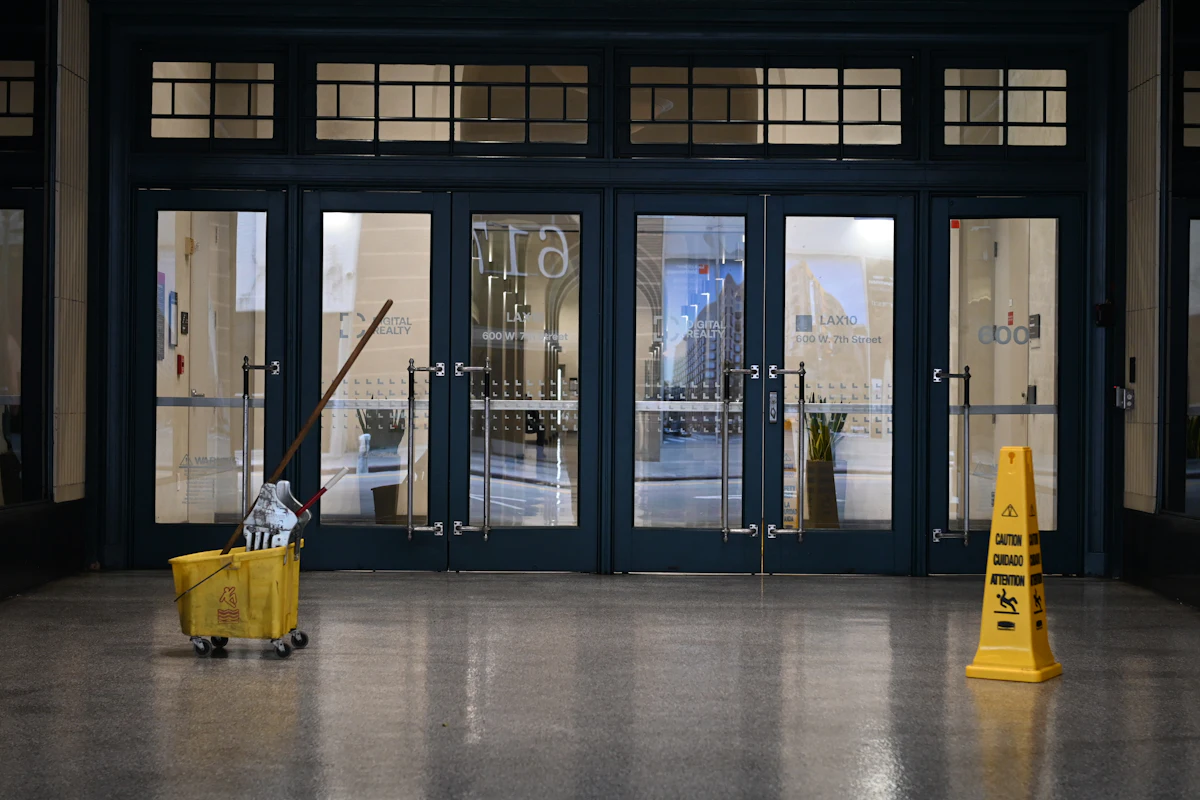
Commercial janitorial and office cleaning
The core profile: recurring contracts, net terms, invoices that can be factored, payroll ahead of the money. Working capital leads, then invoice factoring.

Residential maid and house cleaning
Paid same day by card or cash: steady deposits, no receivable. Working capital and revenue-based structures fit, factoring does not. Smallest tickets in the trade.
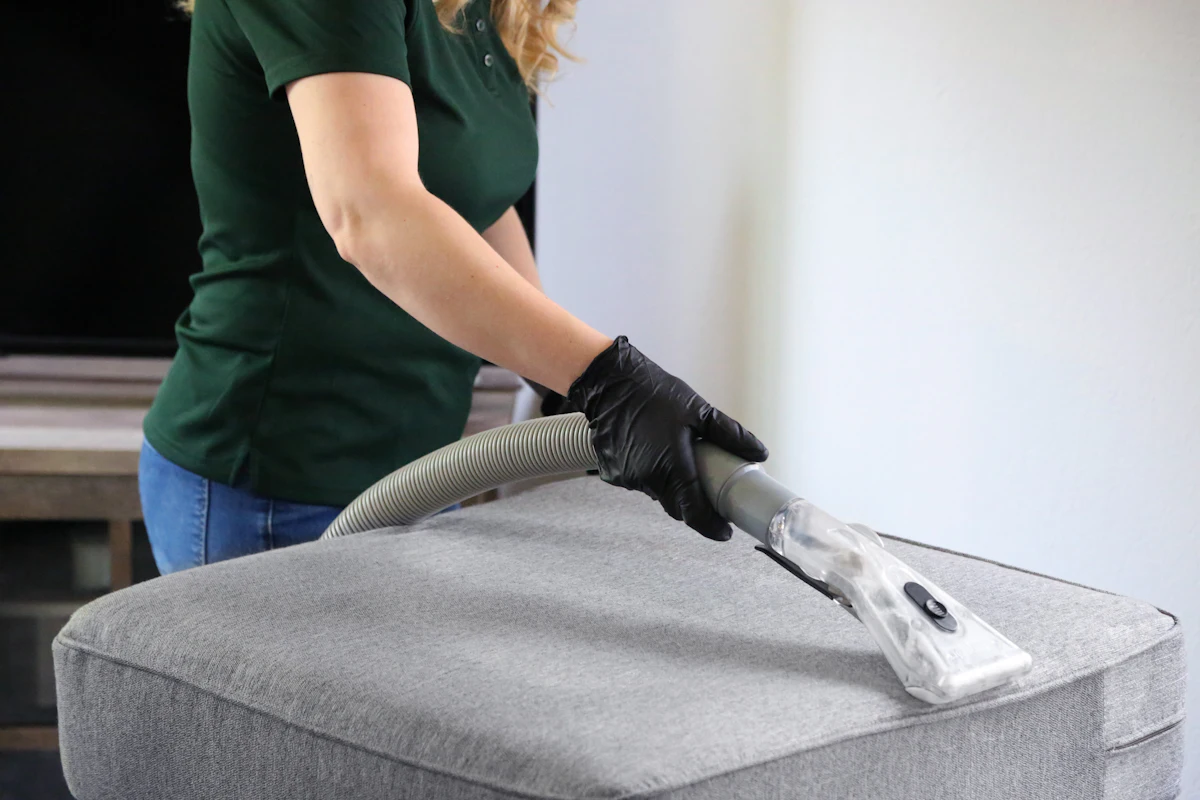
Carpet, upholstery and floor care
Equipment-led: a truck-mount, extractor or burnisher has a resale market, so equipment financing often comes first. Mixed residential and commercial revenue is normal.

Window and post-construction cleaning
Project-based, often weather-dependent, with lumpy deposits; pressure washing too. Post-construction bills a GC on net terms, at construction's slow pace.

Restoration, water and fire damage
The outlier: large jobs, heavy equipment, and insurers paying weeks or months later. Those large, slow receivables make factoring matter most here.

Franchises and new companies
Franchise fee, starter equipment, first contract. Under most minimums, try startup business financing or equipment financing for startups; see how to get a startup loan.
What does a cleaning business need to apply?
Some providers consider applications at these minimums. Meeting a minimum does not guarantee an offer. The application is a soft credit pull only.
12 mo
time in business
$15K
monthly revenue
525
credit considered from
3 mo
bank statements
5 min
application
Bring, on top of the statements
- A government ID
- More statements in some states: four in CA, NY, FL and GA with some providers
- Your contracts and customer mix. How many accounts, how large the biggest one is, and what terms each is invoiced on.
- The unpaid invoices, for factoring. The contract, the invoice schedule and your customer's details, because the customer's credit is part of the decision.
- The vendor quote, for a machine. Model, condition, hours where it applies, delivery and any installation cost.
- A number and a purpose
Providers ask what the money is for, and "payroll on the new contract until the first two invoices pay" reads better than "working capital".
Capital Gurus is not a lender. We collect your application, present it to funding providers in our network, and help you compare the offers they make. Each provider sets its own rates, fees and terms, which are disclosed in that provider's agreement.
Frequently asked questions
In short
Cleaning and janitorial businesses are labour first and assets second: the crew is paid weekly, and a commercial contract pays on net terms. Working capital financing is the lead product for this industry through Capital Gurus' network, with invoice factoring on commercial contracts beside it. Providers in our network consider $10K–$10M, depending on the funding provider, and cleaning requests usually sit at the small end of that range.
Can a small cleaning business get financing?
Usually yes, and the trade itself is rarely the obstacle: cleaning and janitorial work is generally accepted by providers in our network. The honest limit is size. Revenue per contract is low, so first offers are small and schedules are short. The route that fits most cleaning companies is a modest advance against deposits rather than a term loan.
Can I factor my cleaning contracts?
Commercial contracts, often yes. When your customer is a business or a property manager that is invoiced on net terms, the invoice and your customer's credit carry much of the decision, which helps a young company with creditworthy customers. Residential rounds are different: a house cleaned and paid for on the day produces no invoice, so there is nothing to factor.
How much can a janitorial company expect?
Less than the headline range, in most cases. Providers size working capital from your deposits, and a crew-led business with modest monthly revenue supports a modest amount. Treat the first offer as a starting position: many providers in our network increase amounts on renewal once a file has a repayment history, which is the normal growth path in this trade.
Can a brand-new cleaning business get funding?
Some providers in our network consider applications from 12 months in business with $15,000 in monthly revenue and credit from 525. Below that, the realistic routes are startup business financing, equipment financing against the first machine or van, or a personal-credit-based product. Amounts are small and terms are short. Meeting a minimum does not guarantee an offer.
Can I finance a truck-mount, an extractor or a floor scrubber?
Yes. Equipment financing is tied to the machine or the van itself, so the asset carries part of the decision and a weaker credit profile is less decisive than it is on a term loan. Some providers consider up to $500K on the application alone on the application alone. Expect a vendor quote and, on a used machine, a shorter schedule.
What do providers ask a cleaning company for?
At minimum three months of bank statements plus a government ID, with every page and no screenshots. Beyond that, expect questions about your contracts, your customer mix and whether crew are employees or subcontractors. Factoring requests also need the contract itself, the unpaid invoices and your customer's details, because the customer's credit is part of the decision.
Still have a question?
talk to a funding advisorDecisions from some providers the same day, depending on the provider.
Subject to provider approval and document turnaround.
about 5 minutes, soft credit pull only · Talk to a funding advisor