

Wholesale and Distribution Business Loans and Financing: Inventory, Supplier Discounts and Receivables
A line of credit for inventory buys and supplier discounts, with term loans and factoring behind it.
Soft credit pull only, no obligation
- Same-day decisions
- from some providers
- Subject to provider approval and document turnaround.
- 700+
- industries served
- Reviews
- Supplier paid
- Goods shipped
- Customer pays
Weeks later
Bridged by a business line of credit for wholesalers and distributors
Rates, factor rates, fees and terms are set by the funding provider that makes your offer and are disclosed in that provider's agreement. Figures on this page are illustrative ranges from providers in our network, not offers.
The structure that fits first
- Lead productBusiness line of credit
Standby capital for a buying cycle that repeats; draw for the discount, repay when the stock sells
The need comes back with every buying cycle, so standby capital you draw and redraw fits better than a lump sum.
a business line of credit - Business term loan
A known amount for a known project: a warehouse, a second depot, one large order
For a warehouse, a second depot or one large order, where the amount and the end date are known at the start.
business term loans - Invoice factoring
Cash sits in B2B invoices, so the decision rests on your customers' credit rather than yours
Where cash is tied up in receivables from business customers; a factoring company advances a share of eligible invoices.
invoice factoring
Decisions from some providers the same day, depending on the provider.Subject to provider approval and document turnaround.
The numbers before you apply
Typical amount
$10K–$10M
Across the products in our network
Amount considered on a line
$10K–$5M
Depending on the funding provider
Speed
As fast as 6 hours
Same-day decisions from some providers; funding as fast as 6 hours, subject to provider approval and document turnaround
Amounts considered by providers in our network, depending on the funding provider. Not an offer. Cost is stated on each product page.
What do wholesale and distribution businesses use financing for?
Five requests cover most of what distributors ask about, and they sit at different points in the same cycle.
Buying inventory at a supplier discount
The request that pays for itself when the arithmetic works.
More: Buying inventory at a supplier discount
Suppliers price volume and early payment differently from standard terms, and a line of credit lets you take the better price instead of the better timing. The test is yours to run: the discount offered, against the cost of the money for the weeks you hold the stock. Using a Business Line of Credit for Inventory Management walks through that cycle; How to Establish Trade Credit With Suppliers covers getting terms from the supplier in the first place.
Paying suppliers before customers pay
The structural problem in distribution, month after month.
More: Paying suppliers before customers pay
Cash leaves for stock and freight, the goods ship, and the customer pays on net terms you did not set. Payroll, rent and the next order do not wait for that. A line is drawn for the weeks the gap is open and paid down when the remittance lands.
A large order from one customer
You won the order and must buy the stock before anyone pays.
More: A large order from one customer
A term loan funds a single known outlay, with a schedule set against when the order invoices rather than against the calendar.
Receivables, once the invoices are out
Cash sitting in invoices to business customers can be advanced against.
More: Receivables, once the invoices are out
A factoring company advances a percentage of eligible invoices and charges a factoring fee, disclosed in the factoring agreement. Invoice Factoring vs Line of Credit compares it with standby capital; the difference is whose credit is being read.
Warehouse and depot capacity
Leasehold improvements, shelving, a management system.
More: Warehouse and depot capacity
A term loan fits because the amount and the end date are known at the start. A forklift or a delivery truck is the exception: it can sit on its own equipment financing, secured by the asset, so it does not consume room on the line.
What do providers look for in a wholesale or distribution business?
Acceptance still varies: a file one provider restricts is routine for another, which is the point of applying once to a network.
The cycle, read in the statements
Providers can see your cash conversion cycle unprompted: payments out for stock and freight, then customer deposits weeks later.
More: The cycle, read in the statements
That pattern is normal here and providers know it. What they read for is that it repeats and that the gap is funded rather than improvised: few negative balance days, no month without deposits, and no existing financing a new payment would sit on top of. Say how long your cycle runs and ask each provider to set the first payment accordingly.
Inventory is rarely strong collateral
Stock on a shelf looks like an asset and is treated as a weak one: it turns over, it is hard to value, and selling it after a default is slow.
More: Inventory is rarely strong collateral
Expect a general lien on business assets rather than a stock-backed facility, and expect a personal guarantee to be commonly required. That is why deposits and credit still do most of the work, and why unsecured business financing is worth reading if the warehouse and the vehicles are leased.
Customer concentration
Distribution often means a handful of large accounts, and that is the first thing providers ask about.
More: Customer concentration
When one customer is most of the revenue, the offer is sized against the risk of losing that customer. On a factoring file it is the entire decision: the factoring company is underwriting your customers' credit rather than yours, which cuts both ways — a distributor with weak credit and strong customers can reach factoring when a line of credit is out of range.
Margins, against the cost of the money
Distribution runs on thinner gross margins than most industries on this site, so the cost of financing matters more per dollar.
More: Margins, against the cost of the money
Run the same test before you accept an offer: what the money costs over the weeks you need it, against the discount or the sale it buys you. What is working capital sets out the arithmetic, and each product page states how its own cost is expressed.
Import and export, as a category rule
Some providers in our network exclude import and export businesses, which has nothing to do with your numbers.
More: Import and export, as a category rule
If your revenue comes from bringing goods in or selling them abroad, fewer guidelines fit your file, and that shows up as fewer offers rather than worse ones. Two things help. Say on the application which part of your revenue is cross-border, because a domestic distributor with some imported stock reads differently from a customs-driven import business. And look at the SBA export working capital program, offered by SBA-participating lenders over weeks rather than days — Capital Gurus is not an SBA lender; SBA loans are made by SBA-participating lenders.
Worked example
A food and beverage distributor with a seasonal buying peak and one large retail customer, funded through two structures rather than one.
Business line of credit
$300,000
Stock bought ahead of the peak at a supplier discount
Drawn and repaid as the stock sells
Business term loan
$200,000
Racking and a second chilled bay at the warehouse
Illustrative example, not an offer. Amounts, rates, fees and schedules are set by the funding provider that makes each offer and are disclosed in that provider's agreement.
Sub-segments of wholesale and distribution
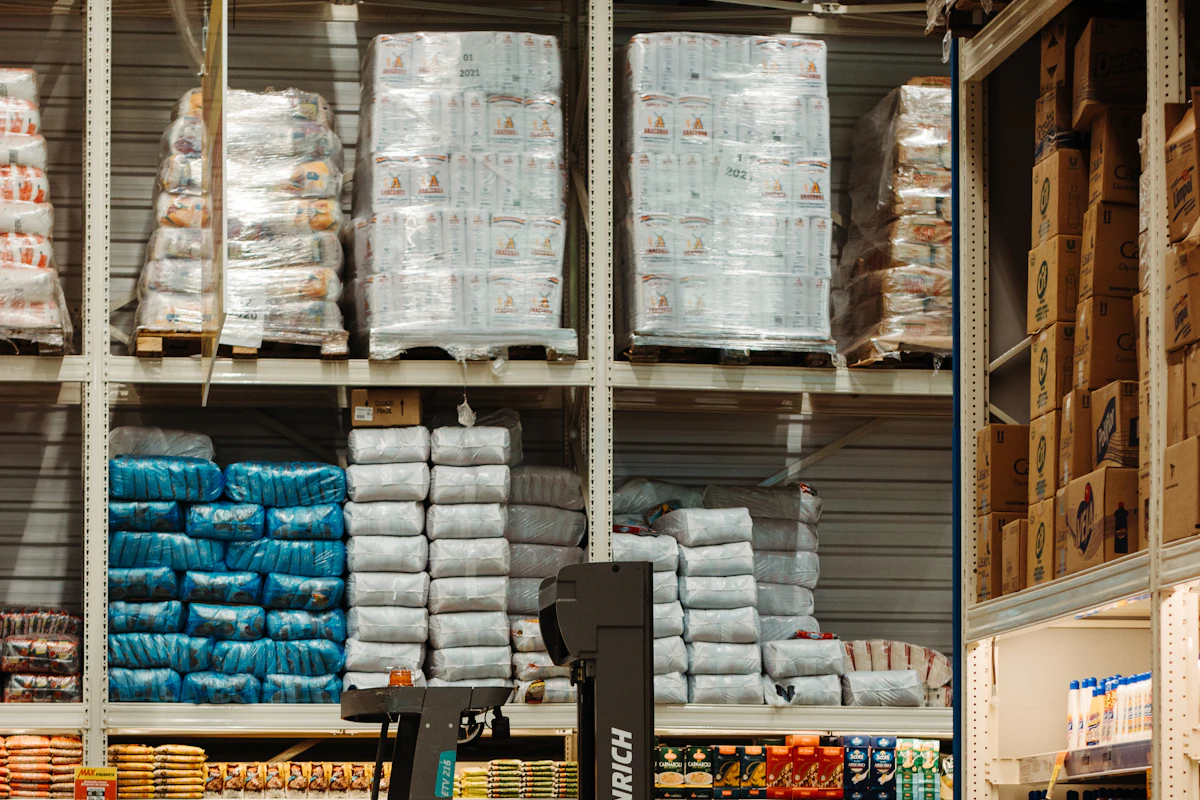
Food and beverage distribution
Fast turns, hard net terms; providers ask about spoilage and buyer concentration. Lines and factoring lead.
More: Food and beverage distribution
The trade runs on short dating and a cold chain.

Building products, industrial and auto parts
Slower stock and trade accounts with large, verifiable receivables: the likeliest to reach both a line and factoring.
More: Building products, industrial and auto parts
Catalogs run deeper here, and trade customers buy on account.

Consumer goods, apparel and general merchandise
Seasonal peaks and returns. Providers size from the average month, so applying at the season's low reads thinner.
More: Consumer goods, apparel and general merchandise
Discount arithmetic weighs heavily, and providers read every month of statements.

Import, export and cross-border businesses
Excluded by some providers, which narrows the field rather than closing it; expect questions on customs and currency.
More: Import, export and cross-border businesses
The one carve-out here. Providers also ask which revenue crosses a border.
What does a wholesaler or distributor need to apply?
Some providers consider applications at these minimums. Meeting a minimum does not guarantee an offer. The application is a soft credit pull only.
12 mo
time in business
$15K
monthly revenue
525
credit considered from
3 mo
bank statements
5 min
application
Bring, on top of the statements
- A government ID
- More statements in some states: four in CA, NY, FL and GA with some providers
- A receivables ageing and your customer list
- A payables ageing and your supplier terms
- The order or the quote, where there is one
- Tax returns and financial statements, for larger amounts
Capital Gurus is not a lender. We collect your application, present it to funding providers in our network, and help you compare the offers they make. Each provider sets its own rates, fees and terms, which are disclosed in that provider's agreement.
Frequently asked questions
In short
Wholesalers and distributors pay suppliers long before customers pay them. The lead product is a business line of credit — standby capital for an inventory buy or a supplier discount — with a business term loan, invoice factoring and revenue-based financing behind it. Providers in our network consider $10K to $10M. The category is generally accepted, though some providers exclude import and export businesses.
What financing do wholesalers and distributors usually use?
A business line of credit, more often than anything else, because the need comes back with every buying cycle rather than once. Providers in our network consider $10K–$5M on a line, depending on the funding provider. A term loan suits a warehouse or a single large order, factoring suits receivables from business customers, and revenue-based financing is decided mainly on deposits.
Can I use my inventory as collateral?
Rarely on its own. Providers discount stock heavily, because it turns over, it is hard to value and selling it after a default is slow. Some providers file a general lien on business assets instead, and a personal guarantee is commonly required. What applies to you is set out in the agreement you sign, so read it before you sign it.
Is purchase order financing available?
Purchase order financing is its own product category and it is not one of the structures in our network. The same need is usually met another way: a line of credit or a term loan funds the stock before you ship, and invoice factoring turns the resulting invoice into cash sooner. Which fits depends on where in your cycle the cash runs short.
Can an importer or exporter get financing?
It narrows the field. Some providers in our network exclude import and export businesses as a category, so fewer guidelines fit a file whose revenue comes from cross-border trade. The other route is the SBA export working capital program, offered by SBA-participating lenders and measured in weeks rather than days. Capital Gurus is not an SBA lender; SBA loans are made by SBA-participating lenders.
Does one large customer hurt the application?
It is sized against rather than ignored. When one customer is most of the revenue, providers read the risk of losing that customer and reduce the offer accordingly, whatever the total looks like. On a factoring file concentration becomes the whole decision, because the factoring company is underwriting your customers' credit rather than yours.
How quickly can a distributor be funded?
same-day decisions are available from some providers, and funding as fast as 6 hours in some cases, subject to provider approval and document turnaround. Speed follows the structure: a file reviewed on bank statements moves quickest, while a line or a term loan that needs tax returns takes longer. Complete statements are the one part of the timeline you control.
Still have a question?
talk to a funding advisorDecisions from some providers the same day, depending on the provider.
Subject to provider approval and document turnaround.
about 5 minutes, soft credit pull only · Talk to a funding advisor