

Invoice Factoring: What It Is, How It Works, What It Costs and How to Qualify
Turn unpaid B2B invoices into cash before your customer pays. It is not a loan and carries no interest.
Soft credit pull only, no obligation
Rates, factor rates, fees and terms are set by the funding provider that makes your offer and are disclosed in that provider's agreement. Figures on this page are illustrative ranges from providers in our network, not offers. Factoring is not a loan and charges no interest: the factor advances against invoices you have issued, for a fee set in its agreement.
- Same-day decisions
- from some providers
- Subject to provider approval and document turnaround.
- 700+
- industries served
- Reviews
At a glance
| Amount available | Scales with your eligible receivables, depending on the funding provider |
|---|---|
| Advance rate | Commonly 70–90% of each eligible invoice, depending on the funding provider |
| Structure | Sale of, or an advance against, issued invoices. Not a loan; no interest |
| Speed | Slower to open than a single decision; then invoice by invoice, subject to provider approval and document turnaround |
| Minimums | No published minimum; each factoring company sets its own |
| Collateral | The receivables, commonly with a UCC lien |
| Cost expressed as | A factoring fee, or discount fee, per period an invoice stays open |
| Recourse | Recourse or non-recourse, per the factoring agreement |
|---|
No factoring fee is quoted on this page: no single network figure fits every file. Providers in our network consider financing from $10K to $10M across all products; compare factoring with the rest on all financing options.
What is invoice factoring?
Definition
Invoice factoring is the sale of an unpaid invoice, at a discount, to a factoring company. It pays you part of the invoice's value straight away, holds the rest as a reserve, and releases the reserve minus its factoring fee when your customer pays.
Nothing is borrowed, there is no payment schedule, and no interest is charged.
Who pays whom, and in what order?
Three parties: you, who invoiced; your customer, who owes it (the account debtor); and the factoring company.
Read moreRead less
The factoring company verifies that the work was delivered, then pays the advance. Your customer pays the factoring company directly, which deducts its fee and sends you what is left of the reserve. The money that settles the transaction comes from your customer, not out of your own revenue.
Why is factoring not a loan?
Three differences, and all three are written into the agreement you sign with the factoring company.
Read moreRead less
- You are not the one who repays. Your customer discharges the invoice; you owe something back only if it goes unpaid on a recourse facility.
- The price is a fee on an invoice, not a rate on a balance. Nothing accrues, and there is no amortization schedule.
- There is no payment to budget for, only a reserve released when your customer pays.
How is a facility set up?
It takes longer: the factoring company underwrites your customers as well as your business.
Read moreRead less
It reviews your aging report, checks your customers' credit, looks for an earlier lien and sets the advance rate and fee schedule. Then it files a UCC lien on your receivables, a public filing under Article 9 of the Uniform Commercial Code, and, in most facilities, sends your customers a notice of assignment. After that, each invoice is funded once proof of delivery is verified.
Who collects from your customer?
Usually the factoring company: the notice of assignment tells your customer where to pay.
Read moreRead less
That helps if chasing invoices eats your week, and hurts if you would rather your customers never knew. Some facilities are confidential and leave collection with you, at a higher fee.
How much you can get
There is no fixed limit: the amount scales with your eligible receivables, depending on the funding provider. Advance rates commonly run 70–90% of invoice value, with the balance minus fees paid when your customer pays.
The amount available follows
- Your eligible invoices
- Your customers' credit
- Spread across customers
- Your lien position
Which invoices are eligible?
Owed by a business
Or a public agency. Consumer invoices are not factored.
For work already delivered
Not a deposit, a progress claim or a purchase order.
Undisputed and current
Disputed or long-overdue invoices are excluded.
Not over-concentrated
Funding against one dominant customer is usually capped.
An existing blanket lien on your receivables has to be released or subordinated first: see what a blanket lien is.
Two habits that keep invoices moving
Send clean proof of delivery: verification decides how fast the money arrives.
Have a new customer approved first, so its first invoice is not held up.
Decisions from some providers the same day, depending on the provider.
Subject to provider approval and document turnaround.
How the cost of invoice factoring is expressed
Factoring companies in our network typically advance a percentage of eligible invoices and charge a factoring fee disclosed in the agreement. The fee is quoted per period an invoice stays open, so slow payers cost more. Nothing is quoted as an interest rate, because nothing is borrowed.
Recourse factoring
If your customer never pays, the advance is charged back to you.
Carries the lower feeNon-recourse factoring
The factor absorbs defined losses, typically insolvency; disputes over your work are normally excluded.
Narrower protection than the word suggests
Agreements commonly add, depending on the funding provider
- Set-up or UCC filing charge
- Monthly minimum shortfall
- Wire, ACH or verification charge
- Termination charge
Each one belongs in the fee schedule rather than in a conversation.
The comparison that matters is not the headline fee. It is the all-in cost of a typical invoice of yours, from set-up to released reserve, and what it costs to leave.
See what an offer statesHow one invoice settles: an illustrative example
| Stage | Illustrative invoice |
|---|---|
| Invoice issued to your customer | $100,000 |
| Advance paid at 80% | $80,000 |
| Reserve held | $20,000 |
| Factoring fee while the invoice is open | $3,000 |
| Reserve released when your customer pays | $17,000 |
$97,000 reaches you in total. Illustrative example, not an offer.
What moves the fee
Your customer's credit, the size of each invoice, the volume you factor each month, and whether the facility is recourse or non-recourse. Read the exclusions before the fee: a recourse facility you understand beats a non-recourse facility you have assumed things about.
Who qualifies for invoice factoring
There is no published minimum we can state for a factoring facility: each factoring company sets its own floor. Time in business and the owner's credit carry less weight here than in any other product, but a personal guarantee is commonly required; personal guarantees explained sets out what signing one means.
Meeting a factoring company's floor does not guarantee an offer.
What a factoring company weighs
Factoring is underwritten on the receivable, in roughly this order.
Customers' credit.
Their payment record is the decision.
Clean invoicing.
Clear terms, proof of delivery, few credit notes.
A sound aging report.
The whole facility is built on it.
The right industry.
Some specialize in freight, staffing or construction.
How to apply for invoice factoring
We check your options with a soft credit pull only, so looking does not change your score.

What you'll send
- three months of bank statementsfour in CA, NY, FL and GA with some providers
- A government ID
- An accounts-receivable aging report
- Sample invoices and the customers you want to factor
Before a facility opens, the factoring company also
- Checks each customer's credit
- Searches for an earlier lien
Worth asking before you sign
What is the all-in cost of a typical invoice of mine? And what does it cost to leave? A low headline fee with a long lock-in can cost more than a plainer fee with a short notice period.
To read an offer with a specialist, talk to a funding advisor.
Apply once
about 5 minutesOne file reaches the providers in our network whose guidelines fit your receivables and your industry.
Send your documents
Complete months, all pages, no screenshots.
Review the file
A funding specialist reads your ledger, your customers and any lien, and says plainly whether factoring or another product fits better.
Same-day decisions are available from some providers on other products, subject to provider approval and document turnaround; a factoring facility takes longer, because your customers are verified first.
Compare the offers and sign
You sign with the factoring company you choose. Each offer states:
- Advance rate
- Fee schedule
- Reserve
- Recourse terms
- Minimums
- Notice period
When factoring fits, and when it does not
The work is done, the invoice is good, and the wait for payment is longer than your payroll cycle.
| Ask yourself | Fits | Not for |
|---|---|---|
| Is the work done and invoiced? |
|
|
| Do you invoice other businesses? |
|
|
| Are your customers stronger credits than you? |
|
|
Is the work done and invoiced?
- Carriers and subcontractors waiting on shippers or payment applications.
- Work not yet delivered.
Do you invoice other businesses?
- Staffing agencies and wholesalers on net terms.
- Selling to consumers. There is no invoice to factor.
Are your customers stronger credits than you?
- That imbalance works in your favor here and nowhere else.
- An asset or a long project. Financing priced over a term costs less.
Better fit elsewhere
- A recurring, modest gapUse insteadBusiness line of creditwhich your customers never see
- One machine or vehicleUse insteadEquipment financingwhere the asset secures its own deal
- A one-off, urgent needUse insteadA merchant cash advancepriced with a factor rate
A merchant cash advance is not a loan: it is priced with a factor rate rather than an interest rate and has no maturity date.
Invoice factoring, invoice financing and accounts receivable financing
The names overlap; what differs is who owns and who collects the invoice.
- The factoring company collects
Invoice factoring
The invoice is sold or assigned, and your customer is notified.
- You keep collecting
Invoice financing
Your invoices secure an advance; your customer deals only with you. See invoice financing.
- Either, by facility
Accounts receivable financing
The broader term, with revolving facilities on your whole ledger. See accounts receivable financing.
If an assignment notice would worry your customers, look at invoice financing or a business line of credit.
Invoice factoring vs. other options
| Compare | Invoice factoring | Line of credit | Merchant cash advance |
|---|---|---|---|
| Product | An advance against issued invoices | Revolving credit you draw and redraw | Purchase of future receivables |
| Typical range | Grows with your eligible invoices | $10K–$5M | $10K–$500K |
| Cost expressed as | A factoring fee per period an invoice is open | A rate or a fixed cost of funds, plus any draw or maintenance fee | A factor rate |
| Speed | Slower to open; then invoice by invoice | Slower to open; draws are quick | same-day decisions from some providers |
| Best for | B2B sellers waiting on payment | A recurring gap | A one-off, urgent, revenue-generating need |
- Product
- An advance against issued invoices
- Typical range
- Grows with your eligible invoices
- Cost expressed as
- A factoring fee per period an invoice is open
- Speed
- Slower to open; then invoice by invoice
- Best for
- B2B sellers waiting on payment
- Product
- Revolving credit you draw and redraw
- Typical range
- $10K–$5M
- Cost expressed as
- A rate or a fixed cost of funds, plus any draw or maintenance fee
- Speed
- Slower to open; draws are quick
- Best for
- A recurring gap
- Product
- Purchase of future receivables
- Typical range
- $10K–$500K
- Cost expressed as
- A factor rate
- Speed
- same-day decisions from some providers
- Best for
- A one-off, urgent, revenue-generating need
Amounts, costs and terms depend on the funding provider and are disclosed in its agreement. Speeds are subject to provider approval and document turnaround.
Invoice Factoring vs. Line of CreditRelated financing
- business line of credit
Standby capital you draw only when you need it, then draw again.
- working capital financing
Cash for payroll, stock and the gaps between deposits and bills.
- merchant cash advance
Capital priced mainly on your revenue, with the full cost shown up front.
Invoice factoring by industry
Capital Gurus works with businesses in over 700 industries; factoring concentrates where slow commercial invoices are structural.
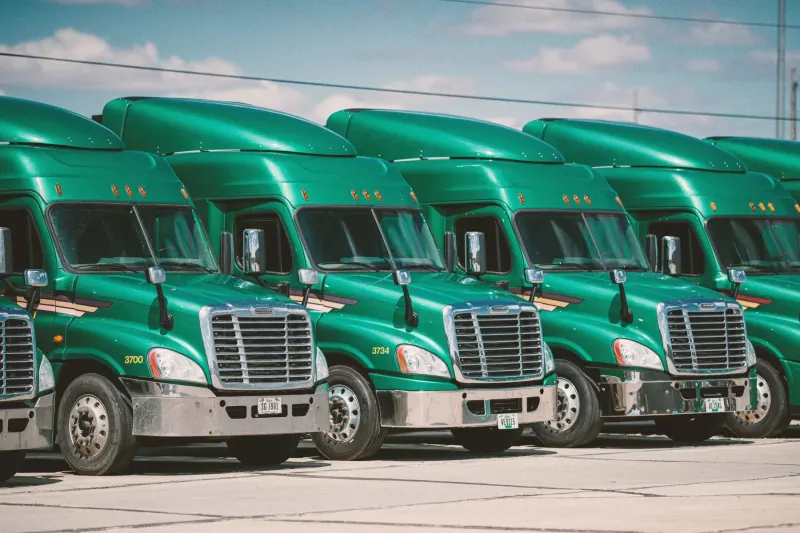 Transportation & LogisticsFreight factoring: shippers pay late, drivers weekly.
 Construction & ContractorsSubcontractors behind payment applications; retainage factors narrowly.
 ManufacturingLong net terms with strong industrial buyers.
 Wholesale & DistributionNet terms with retail buyers, invoice after invoice.
Freight has its own page: invoice factoring for trucking and logistics companies. Staffing and commercial cleaning factor well too. For the alternative, see why a line of credit makes sense for the trucking industry and how a line of credit fits for contractors.
Can an LLC or a business with only an EIN use factoring?
Yes; entity type rarely decides. An EIN alone is not enough: the factoring company verifies the owner, checks personal credit with a soft credit pull only and underwrites your customers. The receivable decides, not the registration.
What providers ask for in an applicationInvoice factoring questions
In short
Invoice factoring turns unpaid business-to-business invoices into cash before your customer pays. A factoring company advances part of each eligible invoice, holds the balance as a reserve, and releases that reserve minus its factoring fee once your customer settles. It is not a loan and carries no interest. It fits B2B and government suppliers waiting on slow invoices.
What is invoice factoring and how does it work?
Invoice factoring turns unpaid B2B invoices into cash. A factoring company in our network advances a percentage of each eligible invoice, holds the balance as a reserve, and charges a factoring fee for each period the invoice stays open. When your customer pays, the reserve minus fees is released to you, under terms stated in the factoring agreement.
Is invoice factoring a loan?
No. Nothing is borrowed and no interest is charged. You sell or assign an invoice at a discount: the factoring company pays part of its value now and the rest when your customer settles, keeping a factoring fee. The paperwork is a factoring agreement, not a promissory note.
How much does it cost to factor an invoice?
Factoring is priced as a factoring fee, a percentage of the invoice value for each period it stays unpaid, set by the factoring company. It depends on your customer's credit, invoice size, monthly volume and whether the facility is recourse or non-recourse. The full fee schedule is in the factoring agreement.
Will my customers know I use a factoring company?
In most facilities, yes. A notice of assignment tells your customer to pay the factoring company instead of you, and it may verify invoices directly with your customer. Some arrangements are confidential and leave collection with you. Ask which applies before you sign.
What is the difference between recourse and non-recourse factoring?
Under recourse factoring, if your customer never pays, you owe the advance back. Under non-recourse factoring, the factoring company absorbs the loss in defined situations, usually your customer's insolvency, and charges more. The exclusions are listed in the agreement, and disputes over your work are normally excluded.
What are the disadvantages of invoice factoring?
It costs more than credit priced over time, it only works if you invoice other businesses, and your customers usually learn about it. Agreements often add monthly minimums, concentration limits, a UCC lien on your receivables and a notice period before you can leave.
What documents does a factoring company ask for?
Expect a short application, three months of bank statements, a government ID, an accounts-receivable aging report, sample invoices and the customers you want to factor. The aging report matters most: it shows who owes you, how much and for how long. Your funding specialist confirms the exact list.
Can I factor a single invoice?
Sometimes. Factoring one invoice at a time is often called spot factoring, and some factoring companies offer it at a higher fee than a whole-ledger facility. Others require every invoice for the customers you name. The agreement sets which applies.
Still have a question?
talk to a funding advisorPut your unpaid invoices to work: see which factoring offers fit your business.
about 5 minutes, soft credit pull only · talk to a funding advisor