

- Same-day decisions
- from some providers
- Subject to provider approval and document turnaround.
- 700+
- industries served
- Reviews
Latest articles

How to Set Working Capital Targets for Your Small Business
Setting and regularly reviewing working capital targets can help your small business safeguard cash flow and maintain financial resilience. This guide explains how to analyze your statements, account for business cycles, and calculate targets that fit your needs.
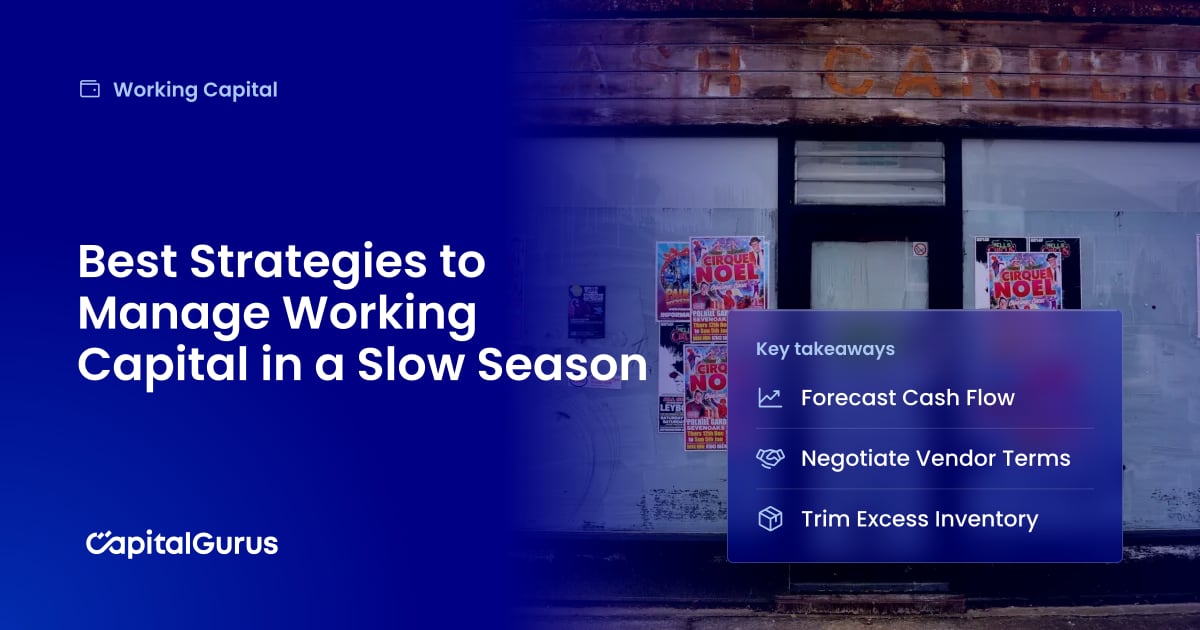
Best Strategies to Manage Working Capital in a Slow Season
To manage working capital in a slow season, forecast cash flow with conservative revenue estimates, negotiate longer payment terms with vendors, trim excess inventory, cut or defer non-essential expenses, and consider flexible funding such as a business line of credit, subject to approval. Then review your numbers monthly and adjust.

7 Effective Ways to Improve Working Capital Without Debt
You can improve working capital without debt by freeing up cash already in your business: trim excess inventory, collect receivables faster, negotiate longer supplier terms, cut unnecessary expenses, pay bills on time rather than early, run operations more efficiently, and review pricing to drop low-margin items. These changes strengthen cash flow without repayment obligations.

How to Optimize Working Capital for Daily Operations: Practical Steps for Small Businesses
To optimize working capital for daily operations, cut excess inventory, negotiate longer payment terms with suppliers while encouraging customers to pay sooner, trim discretionary expenses, automate invoicing and tracking, and keep a regularly updated cash flow forecast. For temporary gaps, flexible funding such as a line of credit may help, subject to approval.

Top Funding Options for Seasonal Businesses (and What to Consider)
Seasonal businesses can use short-term loans to stock up before the busy season, business lines of credit to cover slow-month gaps, and merchant cash advances, which take a share of card sales and usually cost more. Apply before peak season, size the amount from past sales and planned expenses, and compare total costs.
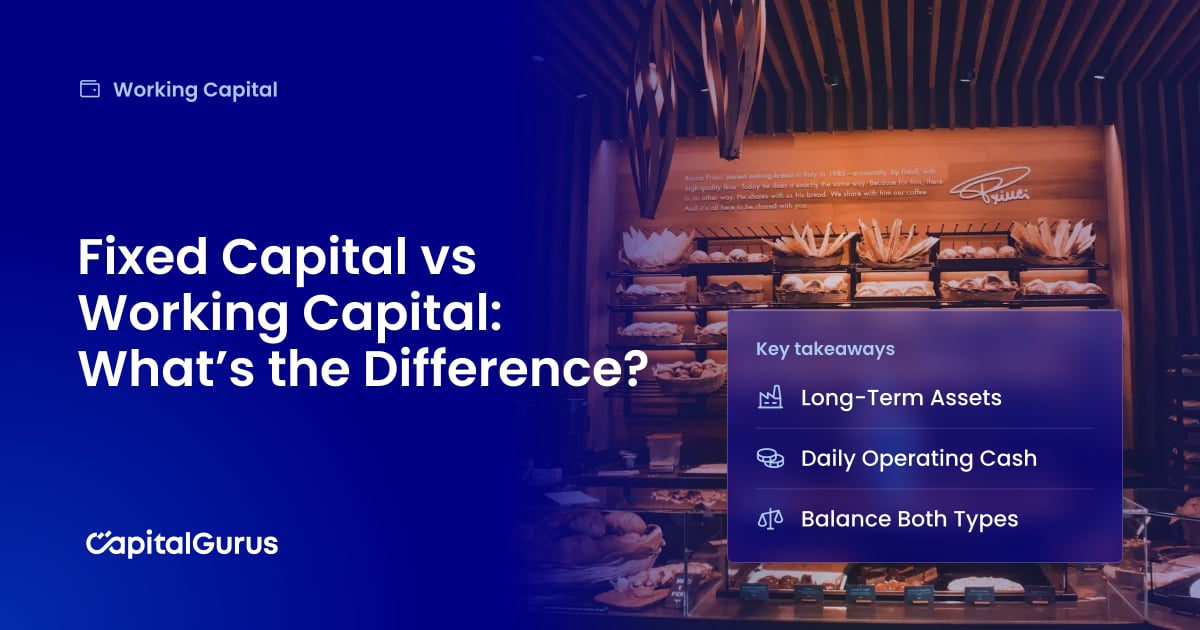
Fixed Capital vs Working Capital: What’s the Difference?
Fixed capital is money invested in long-term assets such as land, buildings, machinery and vehicles, which are not easily converted to cash and serve the business for years. Working capital is current assets minus current liabilities: the liquid funds that cover payroll, inventory and other daily costs. A healthy business balances both.


New to business financing? Start here
One application. Every funding option.
Skip the lender-by-lender chase. One application, three months of bank statements, and a dedicated advisor who brings the offers back to you side by side — terms set by the provider, disclosed before you sign.
about 5 minutes, soft credit pull only · talk to a funding advisor