

Working Capital for Trucking Companies: Fuel, Repairs, Insurance and Driver Pay Between Loads
For fuel, repairs, insurance and driver pay between settlements. Most providers restrict trucking; a few accept it.
Soft credit pull only, no obligation
Rates, factor rates, fees and terms are set by the funding provider that makes your offer and are disclosed in that provider's agreement. Figures on this page are illustrative ranges from providers in our network, not offers. Working capital is a need rather than a single product, so cost and terms belong to the structure you are offered and are stated on that product's page.
- Same-day decisions
- from some providers
- Subject to provider approval and document turnaround.
- 700+
- industries served
- Reviews
As financing for trucking and logistics companies says, most providers in our network restrict this industry for working capital, and the wait between a delivered load and the broker's payment is a job for factoring. The structures, what each costs and how to qualify in any industry are on working capital financing.
How a provider reads a trucking file
Working capital in this industry is decided on cash flow, and the facts of trucking count against it before your own numbers are read.
Deposits, not trucks
The offer is sized from your deposits. A truck is poor collateral here.
Revenue that moves
Rates and fuel swing month to month, so deposits read lumpy.
Out of service
A truck in the shop stops earning that day, and the provider knows it.
Fleet size
A couple of providers look only at fleets. More trucks, more providers.
Most providers restrict this industry
Some decline transportation outright, some price it as higher risk, and a few accept it with no industry restriction. We send your file only to providers that accept it, so say that you haul freight, how many trucks you run and who your customers are.
Already factoring? Say so first
An advance buys a share of your future receivables, and a factoring company usually holds a lien on them already. Some advance providers decline a factored file; others need the factoring company's consent. An earlier blanket lien raises the same question.
What the money covers between loads
Operating costs that are not an unpaid invoice. Providers ask what the funds are for, and a named cost reads better than "working capital".

Fuel
One of a carrier's largest outlays, and it spikes before a busy run, not after.
A factoring fuel advance can cover a load in progress.
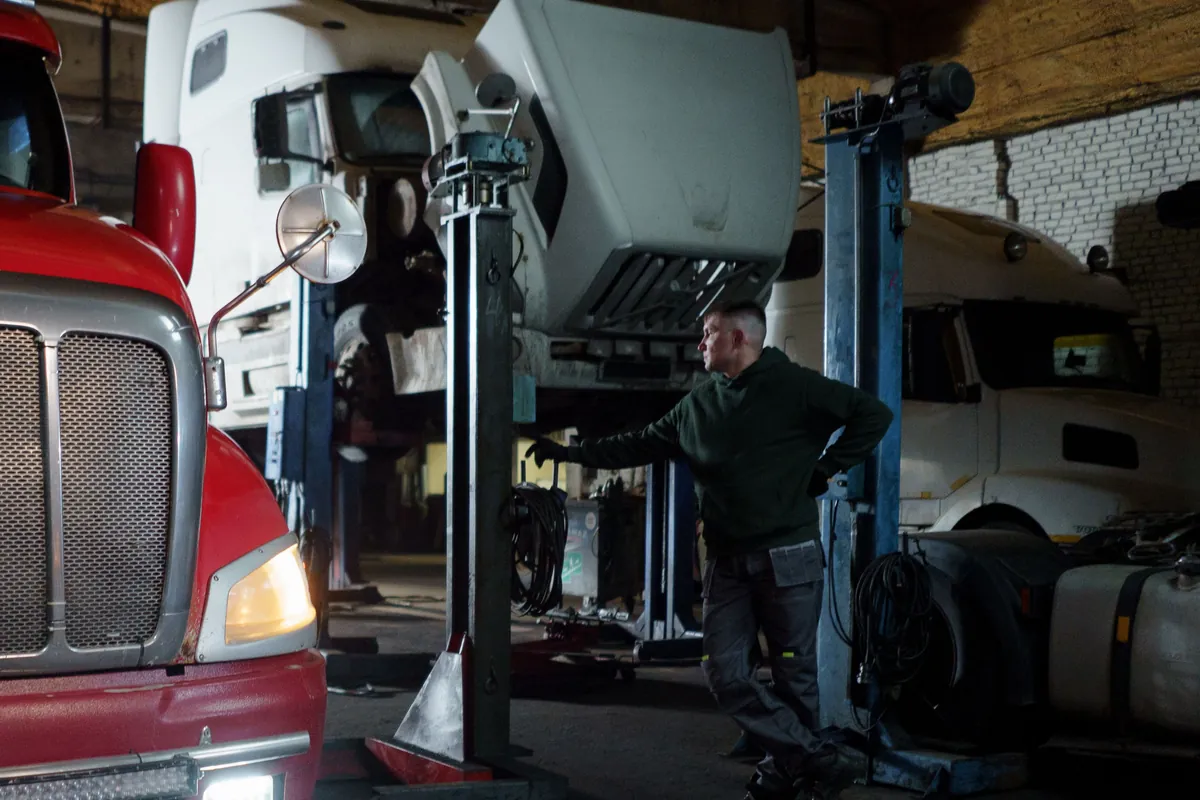
Repairs and downtime
An engine, a transmission or tires on a truck you own: a repair, not a purchase.
A new truck or trailer is a different deal: equipment financing.

Insurance and compliance
An insurance renewal's down payment, permits, fuel-tax filings, logging devices.
A renewal date is fixed and known: name it on the application.

Driver pay
Drivers are paid weekly, whether or not the last loads have settled.
If the wait is a broker's payment terms, factoring fits that gap first.
Advance, line of credit or factoring
Working capital names the need, not the product. In trucking the realistic structures are few, and each states its own cost on its product page.
A merchant cash advance
A purchase of a fixed amount of your future receivables, decided mainly on your deposits. Not a loan: no interest is charged, and the cost is a factor rate.
Fits: a one-off cost, from one of the few providers that accept trucking. Merchant cash advance
A business line of credit
A limit you draw, repay and draw again. Rarely the first answer here: providers want stronger credit than a young carrier usually has.
Fits: an established fleet with steady deposits. Business line of credit
Factoring on delivered loads
An advance against freight invoices you have already earned, decided on your brokers' and shippers' credit. Not a loan: your customer settles it.
Fits: a gap that is a broker's payment terms, load after load. Invoice factoring
Worked example
Illustrative example, not an offer.
A carrier running five trucks for a mix of brokers and direct shippers, its loads already factored, with deposits in every month of the year. In the same month the insurance renewal comes due and one tractor needs an engine rebuild. Neither cost is an unpaid invoice, so factoring does not cover it.
- The down payment on the fleet's insurance renewalWorking capital from a provider that accepts trucking, sized from the deposits$18,000
- An engine rebuild on a tractor the carrier ownsOn the same application, with the factoring agreement disclosed$26,000
No cost is shown here: working capital names the need, and each structure states its own cost on its product page. Amounts, costs and schedules are set by the funding provider that makes each offer and are disclosed in that provider's agreement.
Decisions from some providers the same day, depending on the provider. Subject to provider approval and document turnaround.
What you need to apply
Some providers consider applications at these minimums.
- time in business
- 12 months
- monthly revenue
- $15K
- credit considered from
- 525
- bank statements
- 3 months
Bank statements: four in CA, NY, FL and GA with some providers. Meeting a minimum does not guarantee an offer.
Bring, on top of the statements
- Your operating authority details and the number of trucks you run
- A current certificate of insurance
- Any factoring agreement, and the liens already filed on your receivables or titles
- A short note on what the money is for
- A government ID
Transportation is restricted by most providers in our network, so the panel for this file is smaller than for most industries. We send it only to providers whose guidelines accept it, and tell you plainly if none does. Capital Gurus is not a lender; the provider decides and funds.
Where this fits, and where it does not
It fits
- A one-off cost with a date on it: an insurance renewal, a repair, a filing
- A fleet with steady deposits: revenue in every month
It does not fit
- Waiting on brokers to pay: a gap for factoring
- Rates below cost per mile: financing won't fix it
- A truck or a trailer: an asset question
Frequently asked questions
In short
Working capital for a trucking or logistics company covers the costs that cannot wait for the next settlement: fuel, repairs, insurance and driver pay. Most providers in our network restrict this industry. Where one accepts it, the offer is usually an advance sized from bank deposits, $10K–$500K, depending on the funding provider, priced with a factor rate rather than interest.
Can a trucking company get working capital?
Sometimes, and it is worth knowing why it is hard before you apply. Most providers in our network restrict transportation for working capital, a couple look only at fleets, some price it as higher risk, and a few accept it with no industry restriction. Where one accepts it, the decision rests on your bank deposits, so steady deposits across every month matter more here than the trucks you own.
Is this the Transportation Working Capital Fund?
No. The Transportation Working Capital Fund is a Department of Defense working capital fund, managed by U.S. Transportation Command, that pays for common transportation services for defense customers. It does not finance private carriers, and Capital Gurus has no connection with it. This page is about working capital for a private trucking or logistics business, through providers in our network that accept the industry.
Can I take an advance if I already factor my invoices?
Possibly, but disclose the factoring first. An advance is a purchase of a fixed amount of your future receivables, and a factoring company usually holds a lien on your receivables already, so the two can claim the same money. Some advance providers decline a factored file; others need the factoring company's consent. Tell each one what the other has filed before either funds.
Can an owner-operator with one truck get working capital?
It is one of the harder files in the industry. Some providers in our network require a fleet, so a single truck narrows the panel before anything else is read. Some consider credit from 525 with 12 months in business and $15,000 in monthly revenue. Some providers consider applications at these minimums. Meeting a minimum does not guarantee an offer. For a waiting broker payment, factoring usually works first.
Is every working capital offer for truckers a loan?
No. A term loan and a line of credit are loans, priced with an interest rate or a fixed cost of funds. A merchant cash advance is a purchase of a fixed amount of your future receivables, not a loan: no interest is charged, and its cost is a factor rate. In this industry the advance is the usual offer, so ask which one you hold before comparing two numbers.
Still have a question?
talk to a funding advisorKeep reading
Related pages
- Working capital financing
- Equipment financing for trucking and logistics companies
- Invoice factoring for trucking and logistics companies
- SBA loans for trucking and logistics companies
- What providers ask for in an application
- Why a line of credit makes sense for the trucking industry
- What is a blanket lien?
- Blog
Keep the trucks moving between settlements: see which working capital offers fit your trucking business.
about 5 minutes, soft credit pull only · talk to a funding advisor